

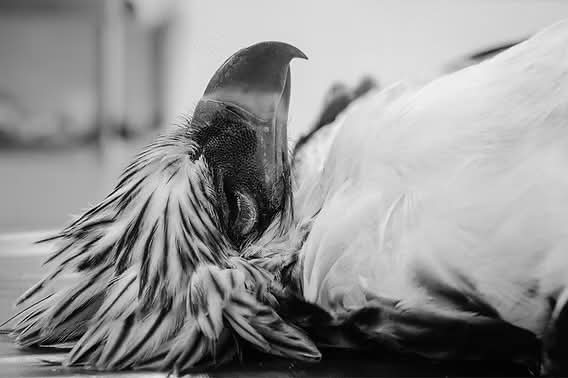
THE PHILIPPINE Eagle Foundation (PEF) pushed for a site assessment in Salay, Misamis Oriental, where a female Philippine Eagle died due to electrocution.
Jayson Ibañez, PEF director for operations, in a letter dated October 5 sent to DENR X regional director Paquito Melicor Jr., requested a joint site assessment of the site and surrounding electrical infrastructure with the agency and other concerned.
Ibañez said the assessment will document and identify the potential electrocution risks and push mitigation measures to protect the critically endangered Philippine Eagle and other wildlife.
To note, a young female Philippine Eagle was found dead near an electrical post in Barangay Guinalaban, Salay, Misamis Oriental on Oct. 1, 2026, at around 10 am.
The eagle was reportedly observed flying in the area on September 30.
Responders noted burn marks on the foot pads at the time the bird was recovered.
PEF reported that the eagle was estimated to be less than five years old and weighed 5.25 kilograms.
The bird was turned over to PEF on October 2 and was examined by veterinarian Dr. Danielle Kirsten D. Pasion, who conducted the post-mortem examination.
In the post-mortem report from PEF, green-purple discoloration was noted over the abdominal region, and there were no external injuries observed aside from the burn marks present on the left foot pad.
According to the report, maggots were present within the oral cavity and around the eyes.
Meanwhile, its body cavity also exhibited marked dark-green discoloration, with ruptured internal organs.
The veterinarian added the heart of the eagle appeared to be enlarged, with blood accumulating in the pericardial sac.
“The presence of burn marks on the foot pads, together with the gross internal findings, is consistent with electrocution as the suspected cause of death,” the report reads.
However, it noted that interpretation of internal findings is limited by the advanced post-mortem decomposition of the carcass.
Not the first case
PEF said the Salay case is also not the first documented accidental electrocution of a Philippine Eagle as far as records are concerned.
The first involved Kabayan, a captive-bred Philippine Eagle that had been released into the wild and later died after coming into contact with electrical infrastructure.
The second documented case was in 2018, when a two-year-old free-living Philippine Eagle from Arakan, North Cotabato, was found dead near a power line.
The electrical inspection report found an exposed secondary line carrying 220 volts.
PEF said the eagle apparently contacted two energized wires at the same time, allowing the voltage to pass through its body.
PEF validated a Philippine Eagle nesting site in 1995 in Mt. Sinaka in Arakan, where at least 11 young eagles have successfully hatched there through years of conservation work.
The electrocution accident led to action at Mt. Sinaka, where the Philippine Eagle Foundation, COTELCO, and partners began work to make the power line safer around the eagle nesting area.
Suntory Japan, through the Asian Raptor Research and Conservation Network (ARRCN), funded the Mt. Sinaka power line retrofitting, while COTELCO contributed manpower, transport, installation, and maintenance support.
In 2023 and 2025, a total of 3 kilometers of the planned 4.5-kilometer powerline retrofit was completed at Mt. Sinaka.
“Mt. Sinaka shows that accidental electrocution does not have to remain an unavoidable cost of development. Conservation groups, communities, electric utilities, and international supporters can work together to reduce the risk,” PEF said.
Forest surveys, safer powerlines pushed
PEF proposed two actions: field surveys to determine whether the critically endangered raptors still use the area, and an assessment of electrical lines near possible eagle habitat for electrocution risks.
The foundation called on the provincial government of Misamis Oriental, the municipalities of Salay and Lagonglong, the DENR, other local government units, and conservation groups to jointly assess the forests around Barangay Guinalaban in Salay and Dampil in Lagonglong.
Targeted field surveys would look for eagle sightings, prey, nesting trees, possible territories, and other signs that the birds are present.
If eagles are confirmed, the sites should be placed under long-term monitoring and protection rather than treated as one-time sightings.
PEF’s history of eagle rescue in the area goes back to 1984, when an adult male Philippine Eagle was rescued in Lagonglong.
The eagle, originally named Jag and now known as Dagitab, was kept for conservation breeding and went on to sire six young eagles for the Philippine Eagle Foundation’s conservation breeding program.
A year later, in 1985, a young Philippine Eagle was rescued after it crashed into the sea off Barangay Dampil, also in Lagonglong. The eagle was eventually released back to Lagonglong forest after rehabilitation.
Guinalaban site, where the female Philippine eagle died due to electrocution, and Dampil are only several kilometers apart.
PEF said that three historical records of Philippine Eagles in the area may be isolated incidents or part of a larger pattern.
The electric utility serving Salay and Lagonglong is called to assess poles and lines near known or potential eagle habitat.
PEF said a power line recently identified near Barangay Guinalaban should be among the first sites checked for electrocution risk.
“Where dangerous configurations are identified, the utility should develop a schedule for bird-safe retrofitting, prioritizing lines that pass through or close to important eagle habitat,” PEF stressed.