



POWER generator Therma South Inc. (TSI) is evaluating the feasibility of expanding its generation capacity to support rising electricity demand, an official reported on Monday.
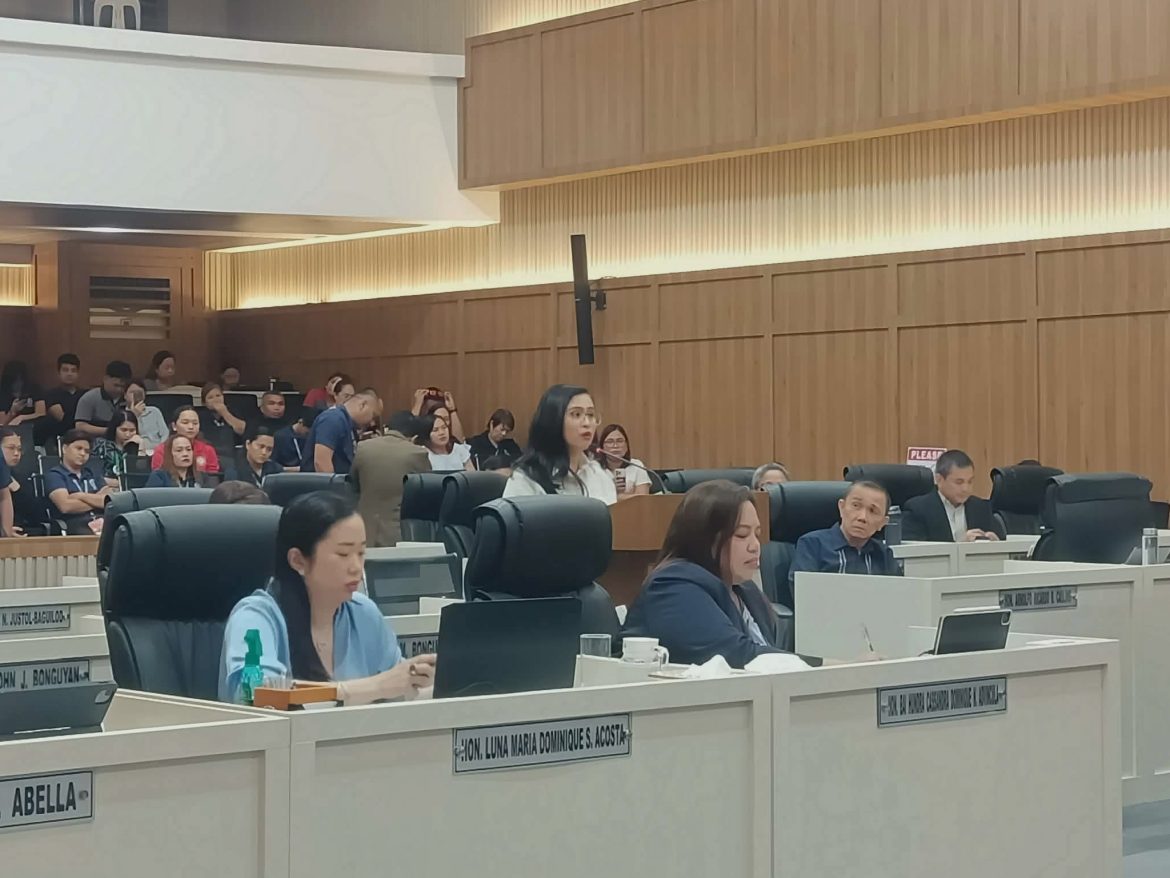
During its regular session on Monday, Atty. Alona Borromeo, AboitizPower Transition Business Group Corporate Services head, told lawmakers—pressed for solutions to soaring electricity bills and spot market price volatility—that the power firm is studying options to construct additional coal-fired power generation capacity.
“As Davao continues to grow, we at TSI are actively and rigorously studying the feasibility of additional capacity to support the city and Mindanao’s future energy needs,” Borromeo said.
To note, in March 2014, the Davao City Council approved Phase II of the plant, two additional 172-MW coal-fired units, which would apparently expand total capacity to 645 MW.
She noted the decision is expected within the year, as building energy infrastructure requires long-term planning and regulatory processes.
The move comes as councilors expressed growing concern over Davao Light and Power Co.’s (DLPC) reliance on the Wholesale Electricity Spot Market (WESM) to meet consumer demand.
Councilor Diosdado Angelo Mahipus Jr. pointed out during the session that while Davao Light currently requires around 600 megawatts (MW) of electricity, it contracts only 108 MW from TSI under its existing bilateral agreement.
Mahipus noted that purchasing energy from the spot market drives up utility bills for residents, including low-income earners facing stagnant wages.
Borromeo said TSI is currently operating at full capacity, producing 300 MW gross and 270 MW net output, with 30 MW reserved for internal plant operations.
With this, approximately 92% or 249 MW of its net capacity is contracted to 22 distribution utilities and electric cooperatives across Mindanao through Competitive Selection Processes (CSP). The remaining 8% is supplied directly to WESM.
Addressing inquiries on why Davao Light does not source more power from TSI, Borromeo explained that existing affiliate limitation rules limit the utility’s purchases from TSI at 50% of its total energy requirements.
However, the official noted that Davao Light remains a priority bidder and that the volume of electricity supplied could increase proportionally as DLPC’s overall energy demand grows.
Borromeo confirmed in response to an inquiry from Councilor Ragde Ibuyan that an Emergency Power Supply Agreement (EPSA), which is similar to an existing arrangement TSI holds with a Misamis electric cooperative, is legally feasible for Davao City if executed through Davao Light.
Addressing the broader impact of capacity on rates, TSI explained that spot market price spikes typically occur during tight supply conditions and unannounced plant outages.
Borromeo noted that adding generation capacity would expand the supply available for both bilateral contracts and the spot market.
“Increasing overall capacity increases the supply both that you can offer in BCQ [Bilateral Contract Quantities] and in WESM, thus stabilizing the prices,” Borromeo said.
“We would be studying the viability of additional capacity, because more capacity, higher supply, more stable prices,” she added.
Borromeo also underscored the facility’s contribution to grid reliability, pointing out that during a major 7.8-magnitude earthquake on June 8 that tripped multiple power plants across Mindanao, TSI kept its Unit 1 operational and restored Unit 2 on the same day to maintain stability in the Southern Mindanao grid.
Following the discussions, TSI assured the council it will keep public officials and community stakeholders updated as soon as its expansion feasibility studies progress.
