

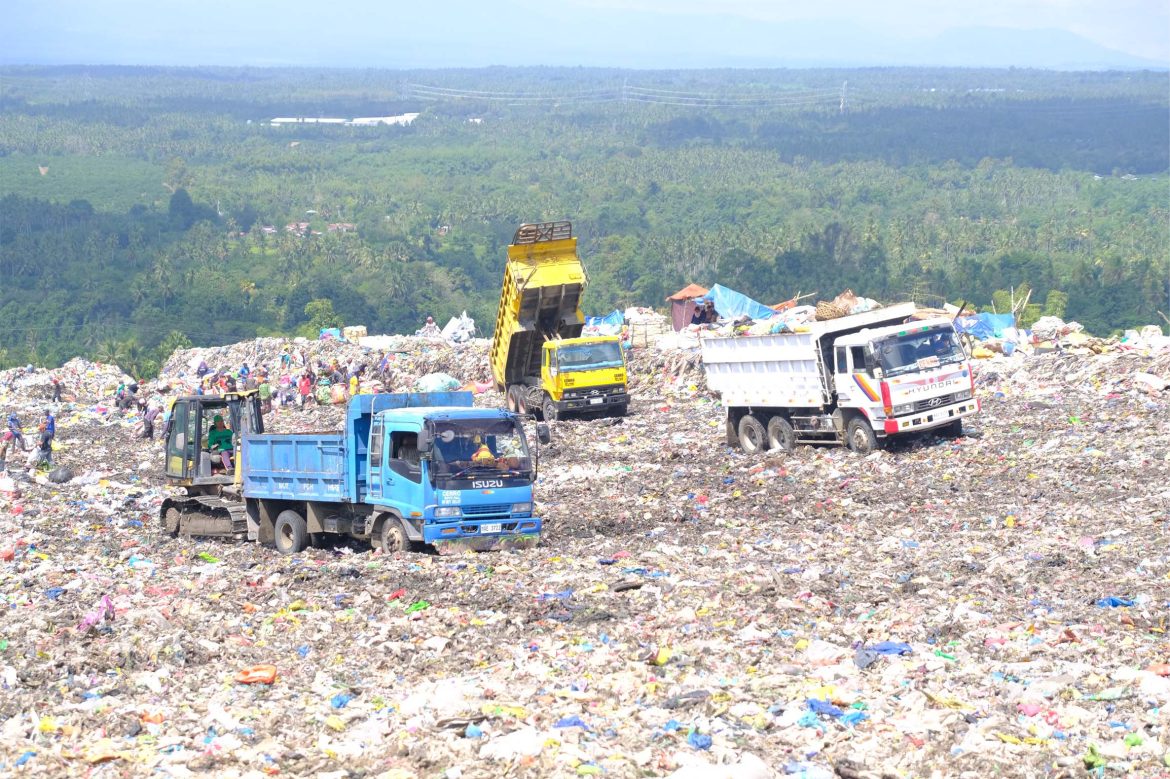
- Environmental group to consider legal remedies vs Waste to Energy project
INTERFACING Development Interventions for Sustainability (IDIS) is not ruling out legal action against the city’s proposed Waste-to-Energy (WtE) incineration facility.
IDIS executive director Atty. Mark Peñalver revealed this following the approval of the P11 million bid bond required to participate in the Department of Energy’s (DOE) Green Energy Auction Program (GEAP) for the facility.
“We will have to review the documents and maybe consider legal remedies that we can take for that. We believe this is democratic and there are due processes in that regard,” Peñalver said during the Davao Peace and Security Press Corps on Wednesday, Oct. 7.
Peñalver stressed that WtE incineration is not a green energy solution and should not be presented or recognized as such, citing the United Nations Environment Programme (UNEP).
While IDIS said it supports Davao City’s efforts to strengthen its waste management system, the local government’s participation in the GEAP for the WtE facility undermines its circular economy gains.
Circular economy prioritizes waste prevention, reuse, recycling, composting, and resource recovery.
The group said UNEP treats WtE as a “waste treatment option” that should come only after waste prevention, reuse, recycling, and other higher-priority measures are implemented effectively.
“UNEP warns that WtE can undermine waste reduction efforts and poses significant health, environmental, and climate challenges, including greenhouse gas emissions, toxic pollutants, and hazardous residues,” it said.
To note, the 21st City Council authorized on Sept. 8 the release of P11 million from the General Fund to cover a bid bond.
Davao City aims to secure around 10 to 11 MW from the pool, matching the required output capacity of its proposed WTE facility.
IDIS added that controls do not eliminate the generation of toxic substances or the hazardous residues produced by combustion.
Persistent and bioaccumulative toxic substances, IDIS said, cannot simply be made harmless through regulation or filtration.
“We therefore cannot accept the premise that an incinerator becomes sustainable simply because its emissions are regulated,” it stressed.
Urgency and resources, the group said should be directed toward “fixing the waste management system itself”, from the household to the barangay and city levels.
Fixing waste management means fully enforcing the ban on single-use plastics, streamlining the transition toward sustainable products, and making responsible practices more accessible to consumers, businesses, and institutions.
“Most importantly, ensuring effective segregation at source,” IDIS said, calling for a clear “no segregation, no collection” policy.
IDIS cited their Knowledge, Attitudes, and Practices (KAP) study highlights the need for a more connected system of segregation, collection, diversion, and disposal.
The city should work directly with barangays by capacitating them to establish and maintain functional waste management systems at the barangay level.
“Barangays should ensure the collection and diversion of compostable and recyclable materials, while the City should manage the collection and proper management of residual waste,” it stressed.