



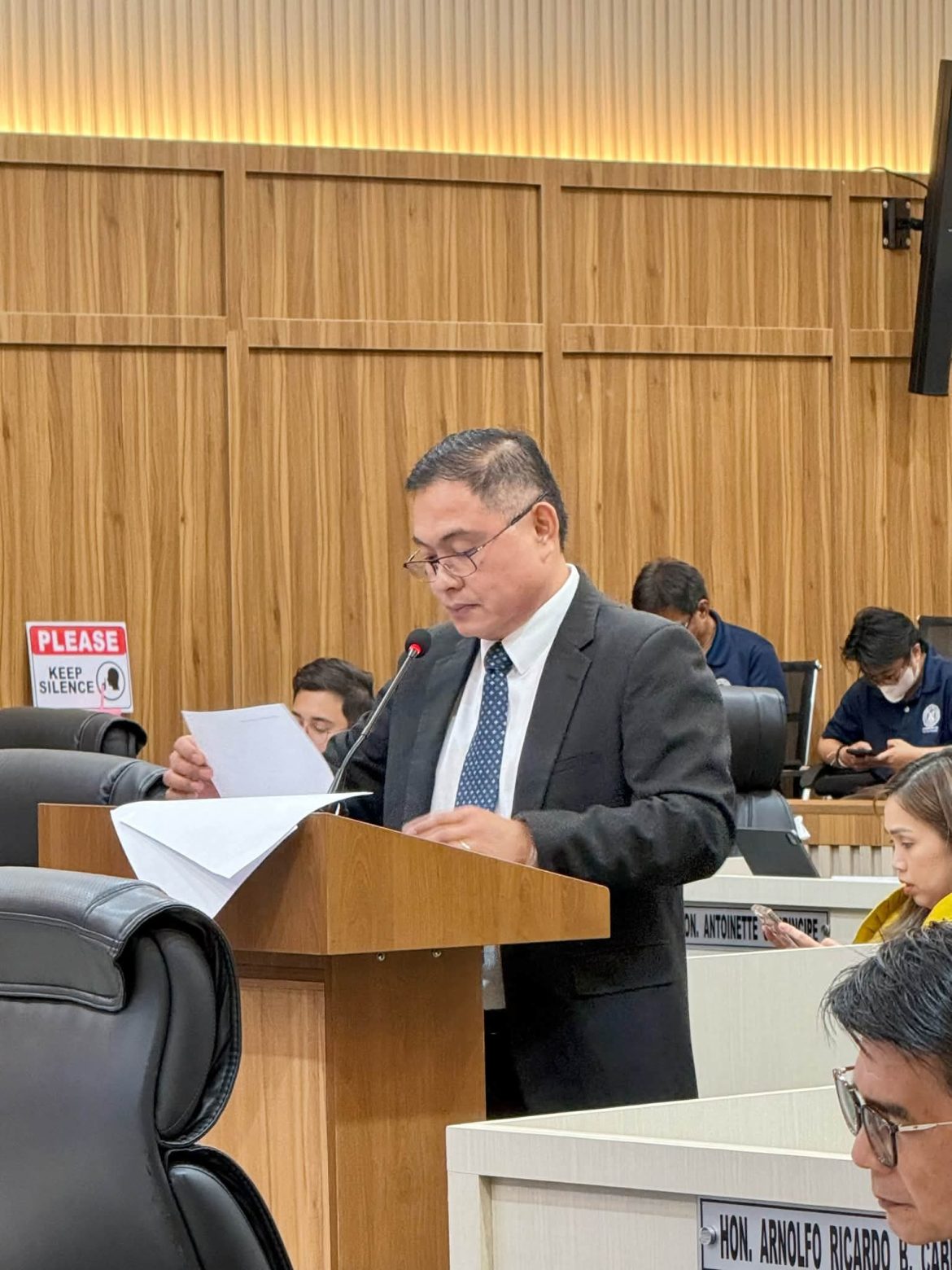
THE CITY Council approved, on final reading, the ordinance adopting the bidding documents for the city’s waste-to-energy (WTE) project during its regular session on Tuesday, Nov. 17.
Proponent Councilor Temujin Ocampo said the city will only be a recipient of the project, which will use a build-transfer-operate (BTO) scheme, which means Davaoeños won’t shoulder the construction costs.
The project is covered by Japan’s Grant Aid to the Philippines under the Exchange of Notes and Agreed Minutes on Procedural Details signed on March 20, 2018.
The adopted documents include the Invitation for Bids; Part 1 (Bidding Procedures), covering the Instructions to Bidders and the Bid Data Sheet; Part 2 (Employer’s Requirements) for the engineering, procurement, and construction (EPC) works and for operation and maintenance (O&M) services; and Part 3 (Conditions of Contract and Contract Forms), including term sheets for the O&M agreement, the Comprehensive Agreement, and the EPC contract.
Procurement will follow the Government of Japan’s grant aid guidelines, which the city also expressed conformity to, in the bidding process under its authority.
The ordinance states that its adoption is not an award of the project, an acceptance of any bid, a designation of a preferred bidder, or an approval or execution of any project contract.
It also does not authorize the city to incur obligations not otherwise authorized by law, nor waive later approvals, clearances, or permits.
Ocampo, in an interview on Monday at Kapehan sa Dabaw, said the Crown Agents Japan will facilitate the bidding, and the winning bidder will fund its share of the project.
“So they will get the bidders qualified for the project, and whoever wins the project will fund half of the required budget,” Ocampo said.
Previously, Japan’s commitment covered 50 percent of the required budget, currently estimated at around P3.5 billion, but the figure may be adjusted depending on the cost of construction materials once the project starts.
Ocampo said after the ordinance is approved, the city will appropriate an additional P88 million for the performance bond for the power bidding.
“We are aiming to finish the plant by December 2029 so operations can begin,” he said.
Ocampo said the city already secured a 9-hectare lot in Biao Escuela, Tugbok district.
The plant is projected to generate about 13 megawatts, but part of this will be used to run the plant, leaving only about 11 megawatts available for sale.
The facility is designed to process all of the roughly 600 tons of garbage Davao City produces daily.
Ocampo added that waste segregation will become mandatory, not optional, as it needs waste with a high calorific value so that it burns efficiently.
“The city will tap barangays to enforce segregation at source, starting with households, so that organic and other types of waste are separated before collection,” the councilor said.
He stressed strict segregation will start this year or next and will push the implementation of its solid waste management ordinance.
Emission safeguards
Arnufo Alvarez, chief of the Environmental Management Bureau (EMB), said the national WTE implementing rules and regulations require the facility to have air pollution control devices that capture and treat dioxins and furans, which are highly toxic gases.
EMB will ensure the facility runs 24-hour emissions monitoring, with results displayed outside it, and the plant must also have wastewater treatment facilities.
The official said the technology from Japan is expected to meet these parameters.
“On our part, we will ensure that this facility will not emit obnoxious or very polluting gases that are harmful to the environment. And we are committed to assisting the LGU, including the JICA consultant, and they are regularly coordinating with our office,” Alvarez said.
The agency is also coordinating with the city and the JICA-hired consultant on the environmental impact statement.
It can be noted that a public scoping session “to evaluate potential social and environmental impacts” was conducted last April 15, 2026, at the Barangay Biao Escuela gym.
The public scoping process is a preliminary step in the environmental impact assessment (EIA) process, governed strictly by DENR Administrative Order (DAO) No. 2017-15.
Under DAO No. 2017-15, the EIA process is designed to ensure that environmental and social safeguards are addressed before any decision is made on the issuance of an environmental compliance certificate (ECC).
Alvarez said a review committee made up of experts on air, water, toxic chemicals, land, and people has also been formed.
Photo: Tek Ocampo
