


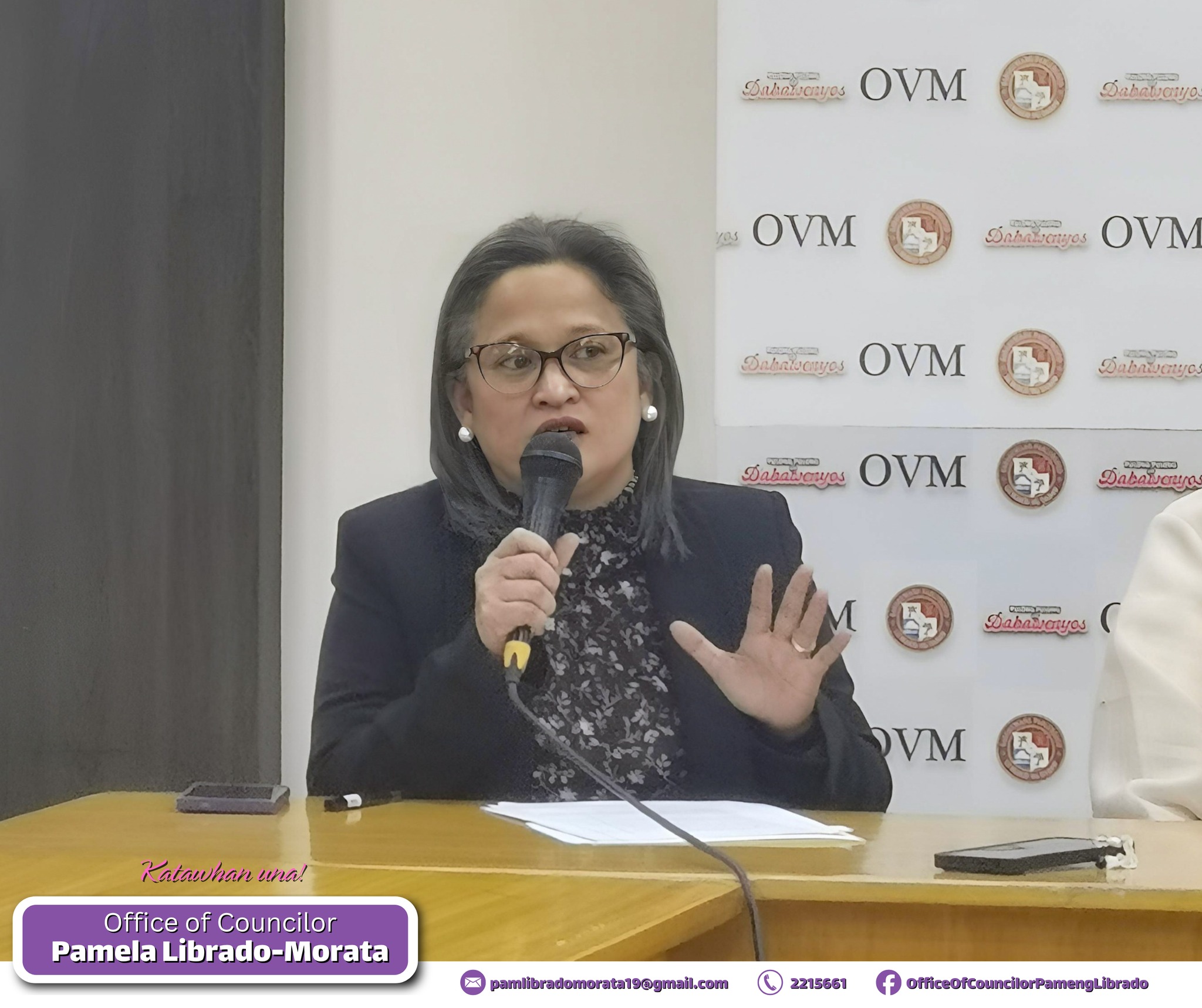
- Councilor wants occupational permit for women in prostitution removed
A LAWMAKER here pushed to remove the city government’s policy of requiring occupational permits for women in prostitution.
In a privilege speech, Councilor Pamela Librado-Morata said collecting fees from the vulnerable sector contradicts the Women’s Development Code or City Ordinance No. 5004, which strictly prohibits the commodification of women.
Librado stressed to examine the provision through a gender lens and align local policies with legal and moral commitments.
“By requiring an occupational permit and collecting fees from prostituted women, we are effectively sanctioning an act that both national and local laws recognize as exploitation,” the committee chair on civil, political and human rights said.
The move follows the formal request of Talikala Inc., a Davao City-based, women-led non-profit organization combatting exploitation, trafficking, and prostitution of women and children.
Jeanette Laurelo-Ampog, executive director of Talikala, called for the amendment or removal of a specific provision in Section 229, Article 27 of Ordinance No. 0291-17, otherwise known as the 2017 Revenue Code of Davao City—the Occupational Permit requirement for women in prostitution.
The councilor said the matter reflects a legal and moral inconsistency in the local governance.
She added it violates the Anti-Trafficking in Persons Act, which penalizes the procurement and exploitation of persons for sexual purposes.
“We are therefore compelled to ask: How can the City Government collect a revenue fee from an exploitative or illegal activity? A fee imposed to regulate an illegal act may itself be considered void,” she added.
To secure this permit, one is required to fill out application forms, secure health certificates, and obtain employment certifications—each requiring separate procedures and additional costs which total expenses can exceed P4,000 annually.
Citing data as of 2023, approximately 600 women are registered under these permits as guest relation officers (GROs), massage attendants, or “taxi dancers.”“These are not mere statistics.
These are 600 lives navigating vulnerability, exploitation, and systemic barriers, while paying the government to do so,” she said.
Librado said there is a need to shift from regulation to development, citing Section 16 of the Women’s Development Code.The section seeks to provide socio-economic support to women in the entertainment industry, including those working in nightclubs, bars, and resorts.
The support includes immediate health assistance; alternative livelihood programs; and continuous protection against discrimination and gender-based violence.
“Our role is not to tax vulnerability. Our mandate is to create pathways out of exploitation. Let us ensure that we do not continue collecting revenue at the expense of women’s dignity,” she stressed.
