

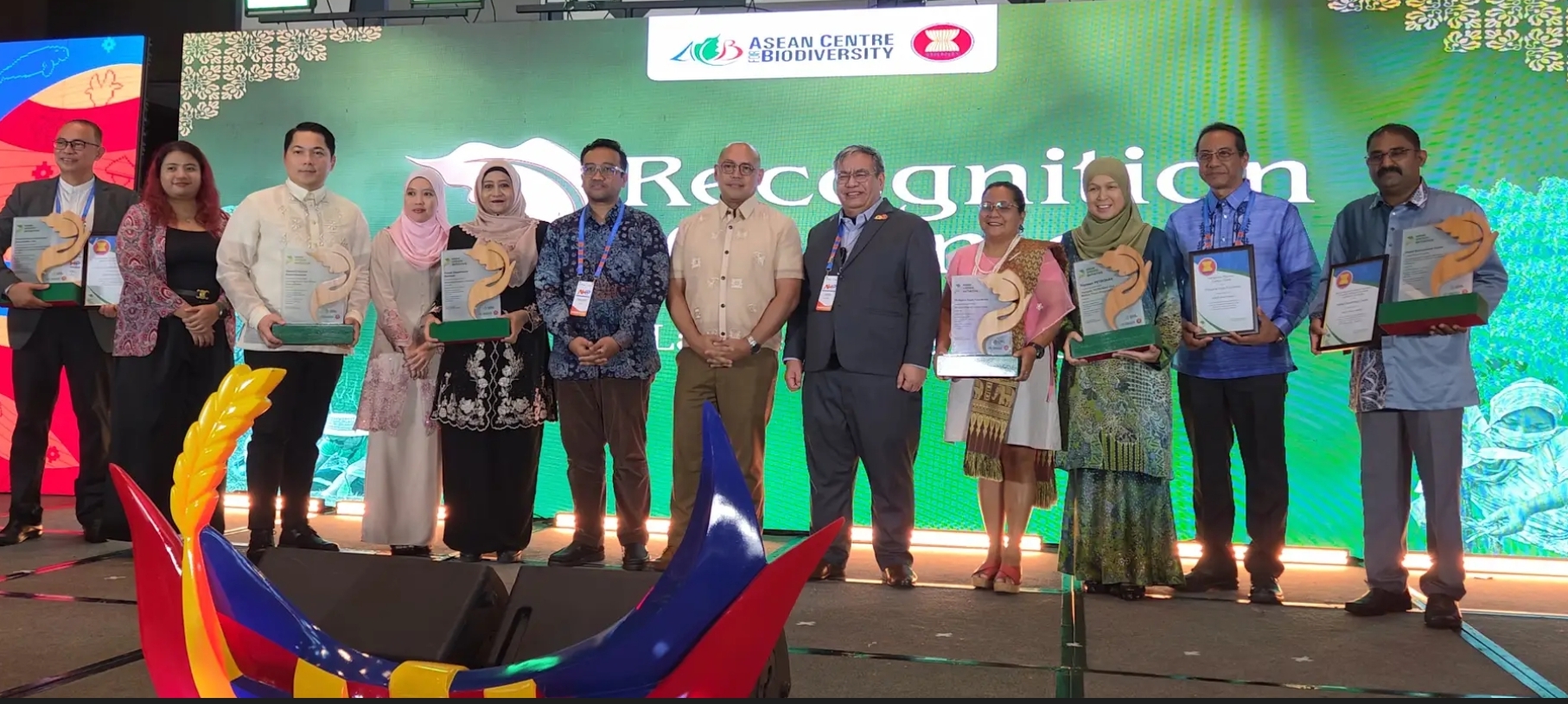
THE MONKAYO Pag-asa Carbon Forest (MPCF), a 22.4-hectare restoration site of the Philippine Eagle Foundation (PEF) in Barangay Banlag, Monkayo, has been named a 2026 ASEAN Green Initiative (AGI) Large-Scale awardee.
The recognition was handed out at the Second ASEAN Green Initiative Recognition Ceremony, part of the ASEAN Heritage Parks Forum 2026 held Sept. 8 to 10 at Seda Vertis North in Quezon City.
The AGI, led by the ASEAN Centre for Biodiversity (ACB), recognizes ecosystem restoration efforts in the region.
Large-scale initiatives are those that have planted more than 5,000 trees, and entries are also assessed on ecological soundness, socioeconomic benefits, sustainability, and governance, according to PEF.
For PEF, the carbon forest is more than just counting trees, but a full restoration of former agricultural land to lowland dipterocarp forest.
Planting at the site began in March 2022, and about 22,800 seedlings from over 80 native and endemic species have been established.
The Iloilo-based Yap family donated the land to PEF in 2017 in memory of their parents, inspired by the documentary about the Philippine eagle.
PEF said much of the restoration work is done by the Banlag Santol Kinaiyahan Workers Association (BASAKWA). Most of its members come from informal-settler families who fled mountain communities during years of insurgency and eventually settled in Banlag.
BASAKWA members collect wildlings, raise native seedlings, haul planting materials, prepare restoration plots, plant trees, control weeds, replace mortalities, and monitor survival.
Some families remaining around become partners and guardians of the property, while others have voluntarily relocated.
The foundation has documented 45 bird species at the site, including the Vulnerable Japanese Night Heron and the Mindanao-endemic South Philippine Dwarf Kingfisher, as well as a Mindanao tree squirrel.
ACB executive director Jerome Montemayor said the project “demonstrates that forest restoration works when it is sustained by science, communities, government and committed partners working toward a common purpose.”
PEF executive director Dennis Salvador credited BASAKWA, the field team, local government, the Department of Environment and Natural Resources (DENR), plot adopters and other partners.
“Success is not simply the number of seedlings planted. It is seeing those seedlings survive, become forest and make room for wildlife to return,” he said.
The Municipality of Monkayo has declared MPCF a Local Conservation Area, while DENR offices have provided seedlings and technical assistance.
Mayor Manuel Jayr Zamora Jr. said the recognition shows the forest “is protecting biodiversity while creating work, knowledge and opportunities for our people.”
The project is also funded through PEF’s plot-adoption program, in which corporations, organizations, and individuals cover the long-term costs of nursery production, planting, maintenance, and monitoring.
MPCF shared the Philippine Large-Scale recognition with Luntiang Kyusi: One Million Trees Initiative. The ALIMA Eco, Agri, and Heritage Park Development and the Daang Kalikasan Native Trees Arboretum and Ecological Restoration Initiative were recognized in the Medium-Scale category.