

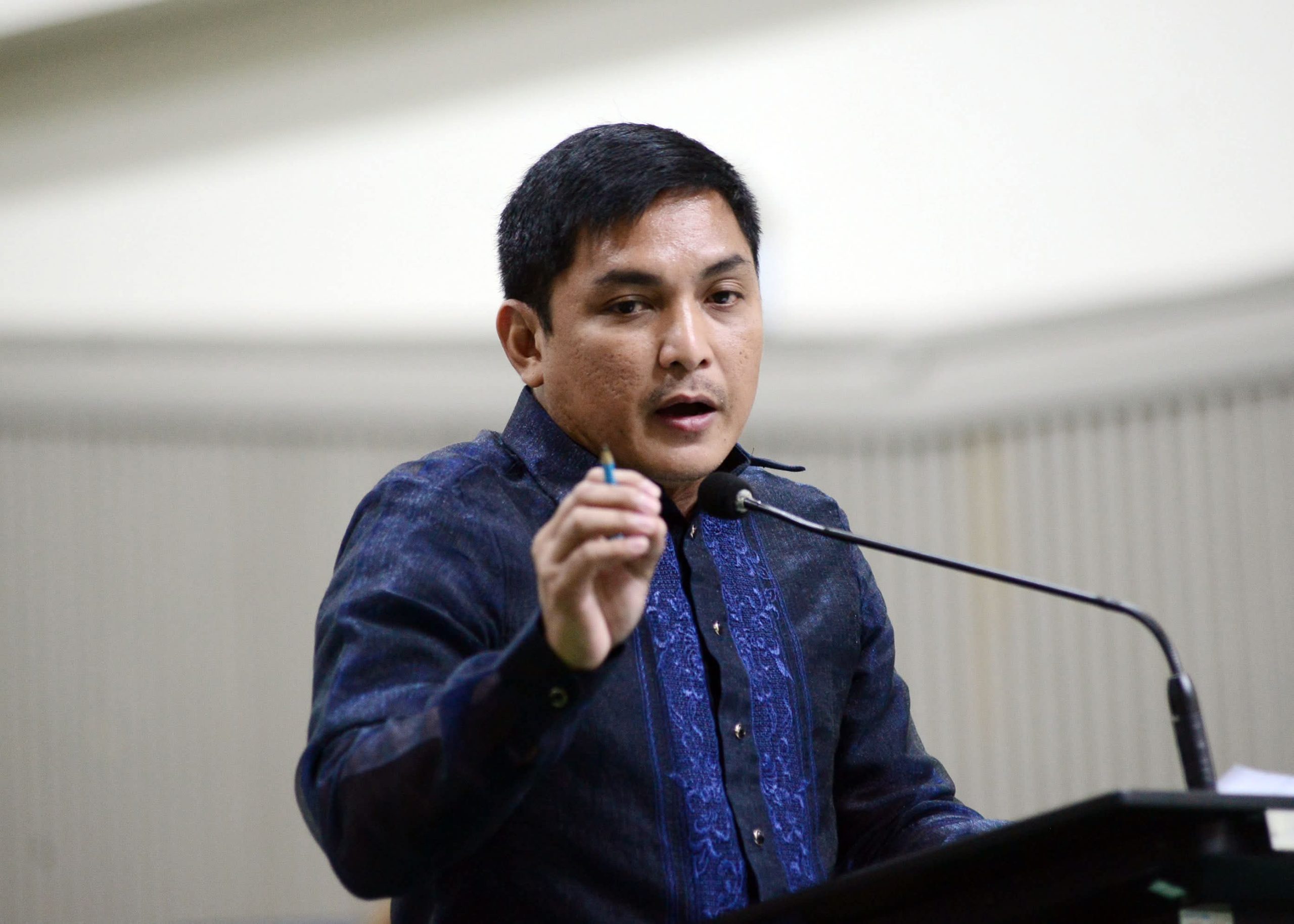
THE CITY Council passed a resolution on Tuesday requesting local executive offices to study the inclusion of non-recognized indigenous cultural communities, specifically the Mandaya tribe, in future celebrations of the annual Kadayawan Festival.
Councilor Diosdado Mahipus Jr., who introduced the measure during the regular session, said the City Mayor’s Office, the City Tourism Office, and the Davao City Culture and Arts Office must provide opportunities for migrant indigenous groups to showcase their heritage during the festival.
The resolution urged the City Mayor’s Office, the City Tourism Office, and the Davao City Culture and Arts Office to provide opportunities for migrant indigenous groups living in the city to showcase their heritage during the festival.
“Recognizing another culture does not diminish the cultures already recognized. Giving another indigenous community an opportunity to participate does not take history away from the 11 ethnolinguistic groups of Kadayawan,” Mahipus stressed.
While the principal ancestral domains and traditional settlements of the Mandaya are found in Davao Oriental, he said another reality that should be recognized is that many of them live in the city.
“They study here, they work here, they raise their children here, they participate in our economy, they contribute to our communities, and they are actually leaders of governance in the city. Many have called Davao City home for so many generations,” he said.
He said that if the Mandaya community of Davao City desires to participate and showcase its identity, traditions, music, dances, craftsmanship, and culture during Kadayawan, the city should seriously consider creating an avenue for that participation.
Currently, the festival officially recognizes 11 ethnolinguistic groups—five Indigenous Peoples communities (Ata, Bagobo-Klata, Matigsalug, Obo-Manobo, Bagobo-Tagabawa) and six Moro communities (Kagan, Iranun, Maguindanaon, Maranao, Sama, Tausug).
Councilor Danilo Dayanghirang, himself a member of the Mandaya tribe, expressed gratitude for the initiative, noting that updated demographic data would assist city departments in formulating recognition mechanisms.
However, Councilor Arnulfo Cabling cited statutory limits under the Indigenous Peoples’ Rights Act (IPRA), which reserves formal legislative representation to the city’s original ancestral groups.
Instead, Cabling suggested that the executive branch consider creating an Office of the Deputy Mayor for the Mandaya tribe to institutionalize their participation and community support.
“I would like to suggest that we just don’t pass a resolution or asking the different offices involved in cultural promotion and enhancement that we also consider asking the mayor, if possible, that the Mandaya tribe be also represented in the Deputy Mayor’s Office, so that there will also be somebody to attend to their needs,” Cabling said.
Councilor Myrna Dalodo-Ort highlighted that the Mandaya culture already plays a major role in the festival’s history.
She noted that Balangay City High Performing Arts from City of Mati, Davao Oriental recently secured a historic three-peat victory in the Open Category of the Indak-Indak sa Kadayawan by showcasing traditional Mandaya heritage.
“We give emphasis also to the cultural community of Mati belonging to the Mandaya cultural community. So they deserve particular emphasis on the subject matter. Davao City welcomes the other cultural communities, but as Councilor Cabling made mention of, this is the prerogative of the Chief Executive of Davao City,” Ortiz said.
Mahipus clarified that the proposal does not necessarily mean redefining overnight the historical recognition accorded to the 11 ethnolinguistic groups, but can be shown in other mechanisms such as expanded cultural showcases, designated cultural exhibitions and performances, or other spaces.