


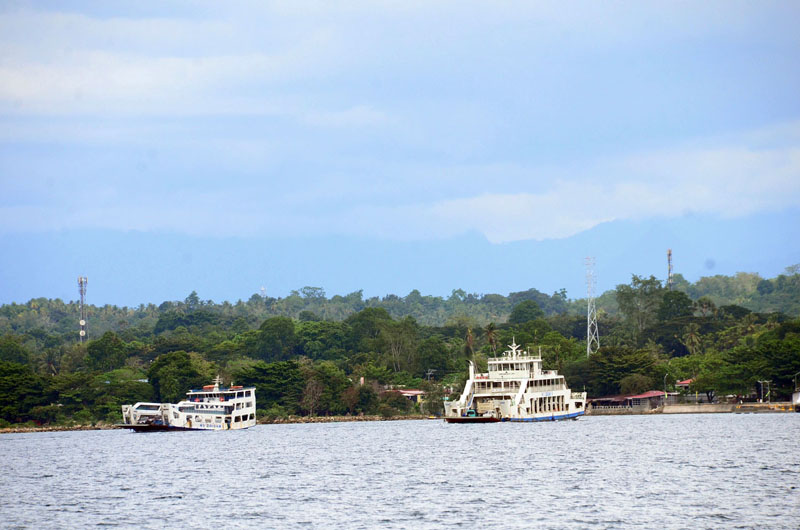
ISLAND GARDEN CITY OF SAMAL, Davao del Norte — On this island famous for its white sands and laid-back charm, the hum of daily life is often interrupted by silence—the kind that comes when the power cuts off without warning. For visitors, these power interruptions might seem a slight inconvenience but for small business owners, they have become a regular battle for survival.
What to do with melted ice cream?
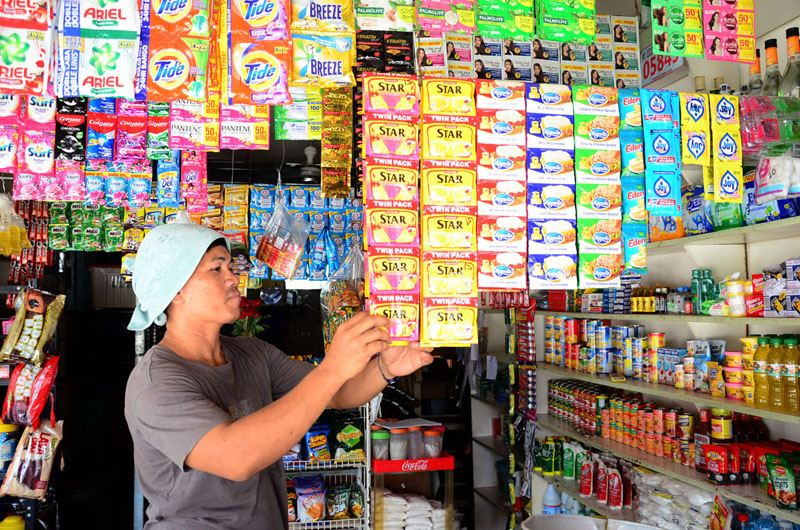
Banggat Randie, 40, a helper at a sari-sari store in Barangay Villarica in Babak District, just a few minutes from the ferry wharf, said that every power interruption is a gamble, particularly for their ice cream products.
“Mag melt ang ice cream kung dugay mubalik ang kuryente pero wala ta mahimo (The ice cream will melt if power won’t return quickly, but we can’t do anything),” he said, with a shrug. He said that it’s not just ice cream but also frozen food that tends to spoil when the electricity cuts off without warning.
However, it’s not just the uncertainty. He also shared the high per kilowatt hour rates they have to pay to the utility provider. For instance, in October 2025, the sari-sari store was billed P14,000 for its energy cost, while his own household bill reached P1,500. For a family of four, that meant sacrifices — no television, fewer comforts, and constant worry about how to stretch their earnings.
“We don’t even use our TV anymore to save money. My wife and I only earn so much,” he explained.
He recounted that around three years ago, his children had to study by candlelight or move from house to house during rotational brownouts. “Thankfully, their grades did not suffer,” he said, though the memory lingers—the warm nights, the flickering candles, and the frantic calls of whose house was lucky enough to have power.
While outages happen only once or twice a week and only for about 15 minutes, Randie said that luxury is contained in Barangay Villarica, which is considered the business center of the island. For remote barangays, brownouts still extend to hours and residents have no choice but live with it.
At this point, Randie admits he is ready for change. He said that he took out a P50,000 loan because the cost of applying for an electrical connection was too steep. However, he happily shared that he already settled that debt.
“If Davao Light will take over, I think most of us will transfer. I will even apply for another loan if necessary because the rates are cheaper, and I think even the installation fee is more affordable,” he said.
The hotel where guests slept in heat
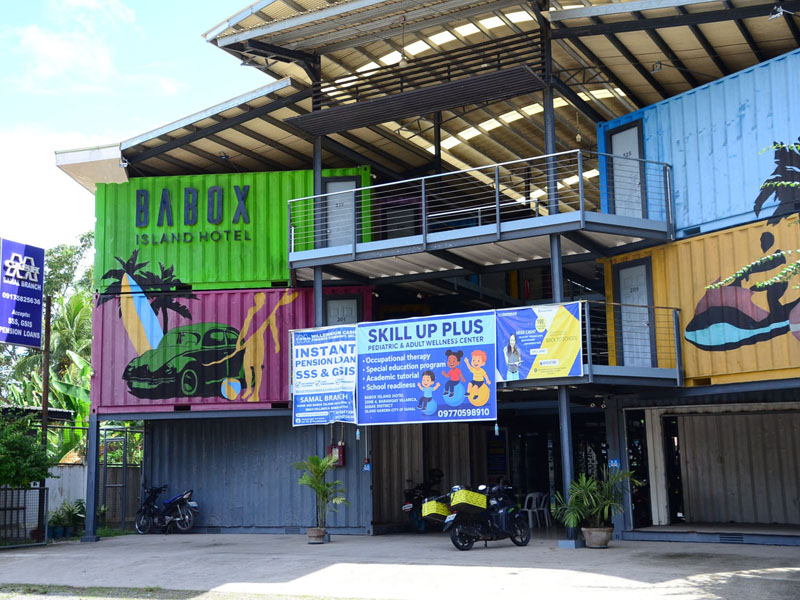
At Babox Island Hotel, cashier Shiela Gantalao remembers nights when guests fanned themselves in the dark, waiting for the generator to sputter back to life. Their machine could only power 10 air conditioners out of 32 rooms, leaving families restless and frustrated.
“During the peak of the brownouts, we had four or five zero occupancies in a month,” she recalled.
The hotel was teetering on the edge since expenses piled up as they had to purchase 10 gallons of diesel per month to keep the generator running, and the rooms remained unoccupied. In addition, broken appliances added to the losses. To her recollection, they had more than five air-conditioners that broke due to the fluctuating electricity.
Even now, the hotel is weighed by the aftermath of those two-three-hour power outages. They still receive inquiries from guests asking if Samal still experiences prolonged brownouts.
“They always ask us if we still have brownouts, and, of course, we couldn’t lie to them,” she said. The answer often discouraged bookings, leaving rooms empty and staff anxious. At the time of the interview, they only had one occupied room. Yet in October 2025, the hotel racked up P20,000 in electricity bills.

Even her own family felt the strain. She recalls nights when her four-year-old child had to sleep under the sweltering heat, cooled only by a handheld fan. “Usually, maabtan ka kadlawon so mabuntagan ka pinaypay sa imong anak (You’ll be up until dawn fanning your child to sleep),” she said.
For her, the hope lies in stability. “We are happy to hear about Davao Light coming in because we only heard good things about how they are providing service to Davao City,” she said.
The car wash that stopped mid-queue
The sound of rushing water is the heartbeat of a self-service car wash in Barangay Miranda, about 15 kilometers from the ferry wharf. Customers pay ₱5 for six minutes of water, but when the power cuts, machines stop, queues grow longer, and income vanishes. “Wala mi income kung mag brownout since our water relies on electricity to run,” said 17-year-old James Aredidon, a student who also works as a watcher of the car wash shop.
He estimates that each nozzle serves about 10 customers per hour. Multiply that by nozzles, and the losses quickly add up during a three-hour brownout. Yet the numbers don’t capture the frustration of motorists waiting in line, coins in hand, staring at machines that won’t run.
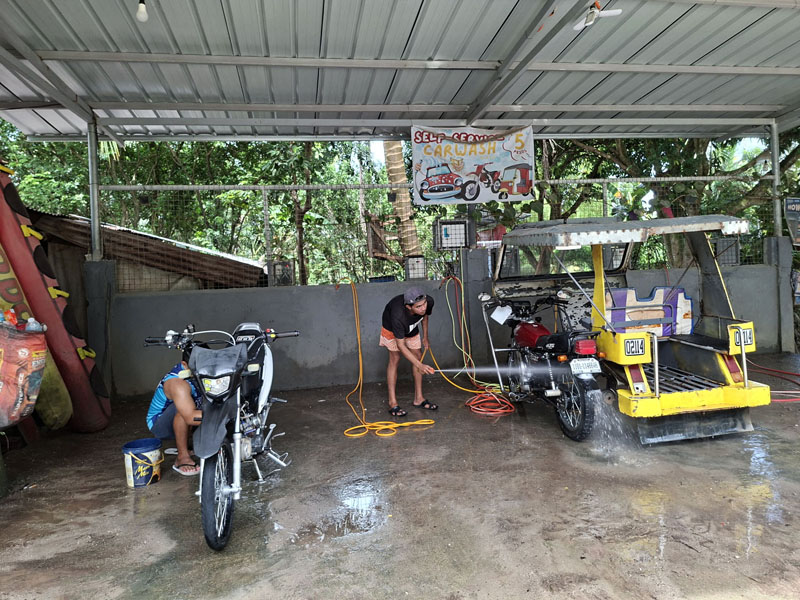
The owner also had some hard decisions to make due to the high cost of energy rates. For instance, bills once averaged ₱5,000 to ₱7,000 monthly, until the owner cut operating hours to reduce costs. Now, the car wash opens only from 5 AM to 7 PM, a far cry from its previous 24-hour service.
“I think that the electricity situation is better now compared to before when I remembered three-hour outages. But we hope the service improves, especially since we don’t receive any notices prior to the brownout,” James said.
Waiting for change
Across Samal, these stories echo the same frustrations: spoiled goods, broken appliances, lost customers, and lost income. But beyond the financial losses lies the human cost. Families endured sleepless nights in sweltering heat. Children struggle to study under dim light, and workers lose hours of productivity, waiting for power to return. The island’s beauty hides a harsher reality. For those who live and work in Samal Island, electricity is not just a utility; it is the backbone of survival. Without it, businesses falter, households suffer, and dreams are put on hold.
