


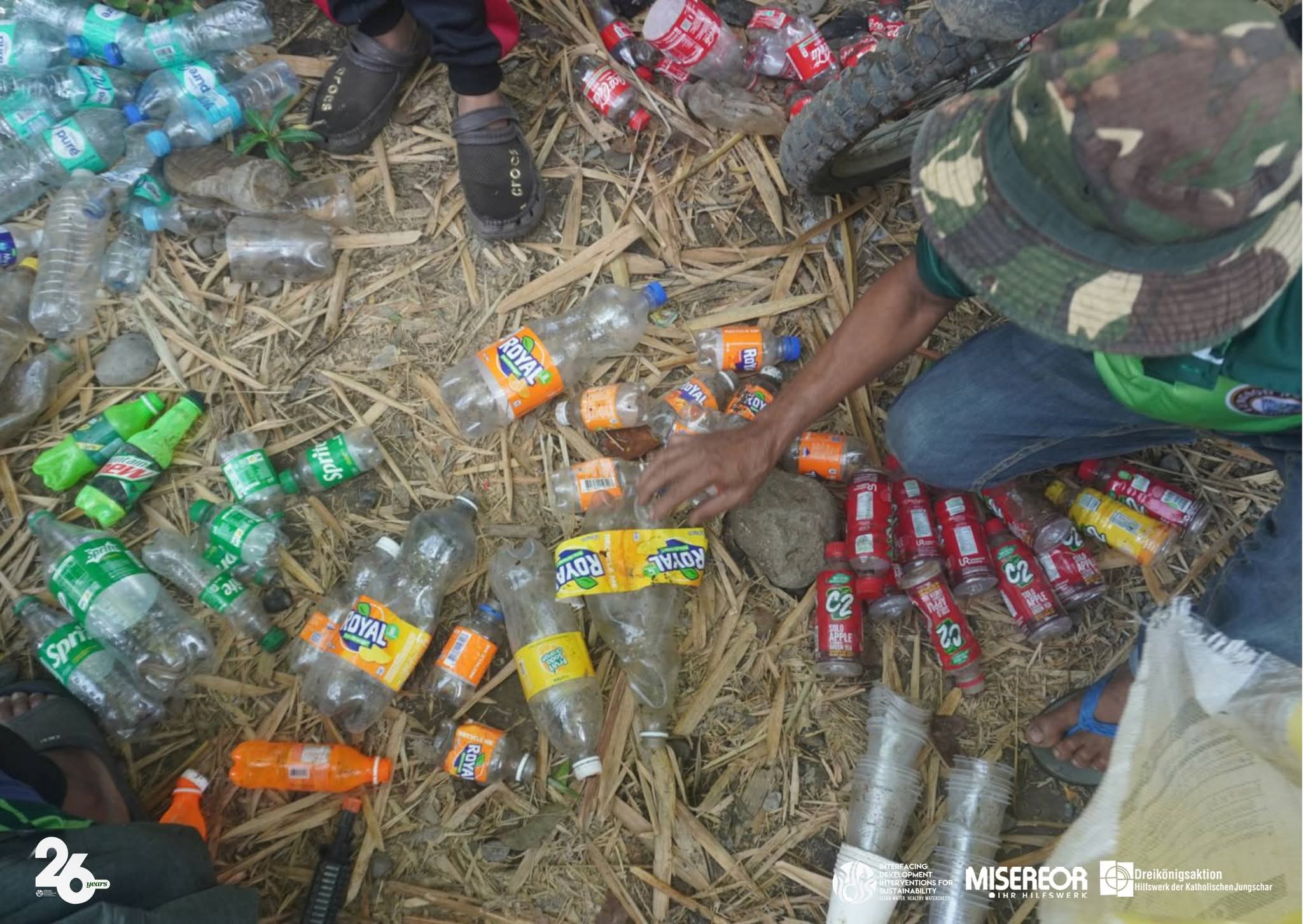
ENVIRONMENTAL group Interfacing Development Interventions for Sustainability (IDIS) revealed on Monday, Feb. 2, that they found discarded plastic PET bottles and plastic wrappers in the Tamugan River.
IDIS, together with Bantay Bukid volunteers, conducted a Waste and Brand Audit cleanup, particularly in Sitio Bakong, Tamugan River, to culminate Zero Waste Month last January.
During the audit, the groups collected seven sacks containing 797 pieces of mixed waste, consisting mainly of Polyethylene terephthalate PET bottles, junk food wrappers, and glass liquor bottles.
PET is a common, lightweight, and durable thermoplastic polymer resin from the polyester family, widely used for food/beverage packaging (bottles).
The group also reported 11 discarded diapers, which are considered highly biotoxic and infectious waste that can affect water quality.
Topping the list, a total of 75 Coca-Cola PET bottles was found, followed by Silver Swan (NutriAsia) with 62 bottles, Nature Spring with 60 bottles, and Tanduay Rhum with 34 bottles.
IDIS noted that Coca-Cola and Nature Spring also ranked highest in waste counts during the Coastal Road cleanup. The group emphasized the widespread presence of plastic waste in both coastal and freshwater environments.
In the Waste and Brand Clean-Up Audit conducted at an open baywalk beside “The Mangroves” along the Coastal Road in Matina Aplaya, volunteers collected 12 full sacks of waste, composed largely of PET bottles, plastic sachets, and glass bottles.
The brand audit revealed that the most frequently collected plastic wastes were from Nature Spring (196 PET bottles), Coca-Cola (78 PET bottles), and Oishi (73 sachets), followed by Jack ‘n Jill (158 sachets) and C2 – Universal Robina (33 bottles).
Eugene Errol Sugano, president of the Bantay Dagat, said the waste problem is alarming as waste was already heavily concentrated even within the first 100 meters of the cleanup area.
Much of the litter was attributed to irresponsible disposal by people who frequent the area for recreational activities like walking, jogging, and picnicking.
“Many studies have shown that plastics break down into microplastics, which can absorb toxic chemicals, enter the food chain, and contaminate drinking water sources,” IDIS stressed.
The group called for stricter and more consistent enforcement of Davao City’s local ordinance banning single-use plastics, along with stricter regulation of recreational activities in watershed areas, especially in the Tamugan-Panigan Watershed.
City Ordinance No. 0500-21, or known as “No to Single-Use Plastics Ordinance,” was approved in May 2021 under then-Mayor and now Vice President Sara Duterte.
The ordinance provides regulation of single-use plastics in business establishments and also their individual use.
Establishments that wish to retail single-use plastic products will have to pay P10,000 for a “special permit to sell” while those who wish to distribute or use these in large amounts (e. g., during events or special occasions) will have to pay P5 for each single-use plastic to obtain a “special permit to distribute”.
The administrative penalty for first-time violators of the ordinance is set at P1,000, or may render an 8-hour environmental service; the second offense is a P3,000 fine or a 16-hour environmental service; and the maximum penalty is P5,000.
Photo: IDIS
