


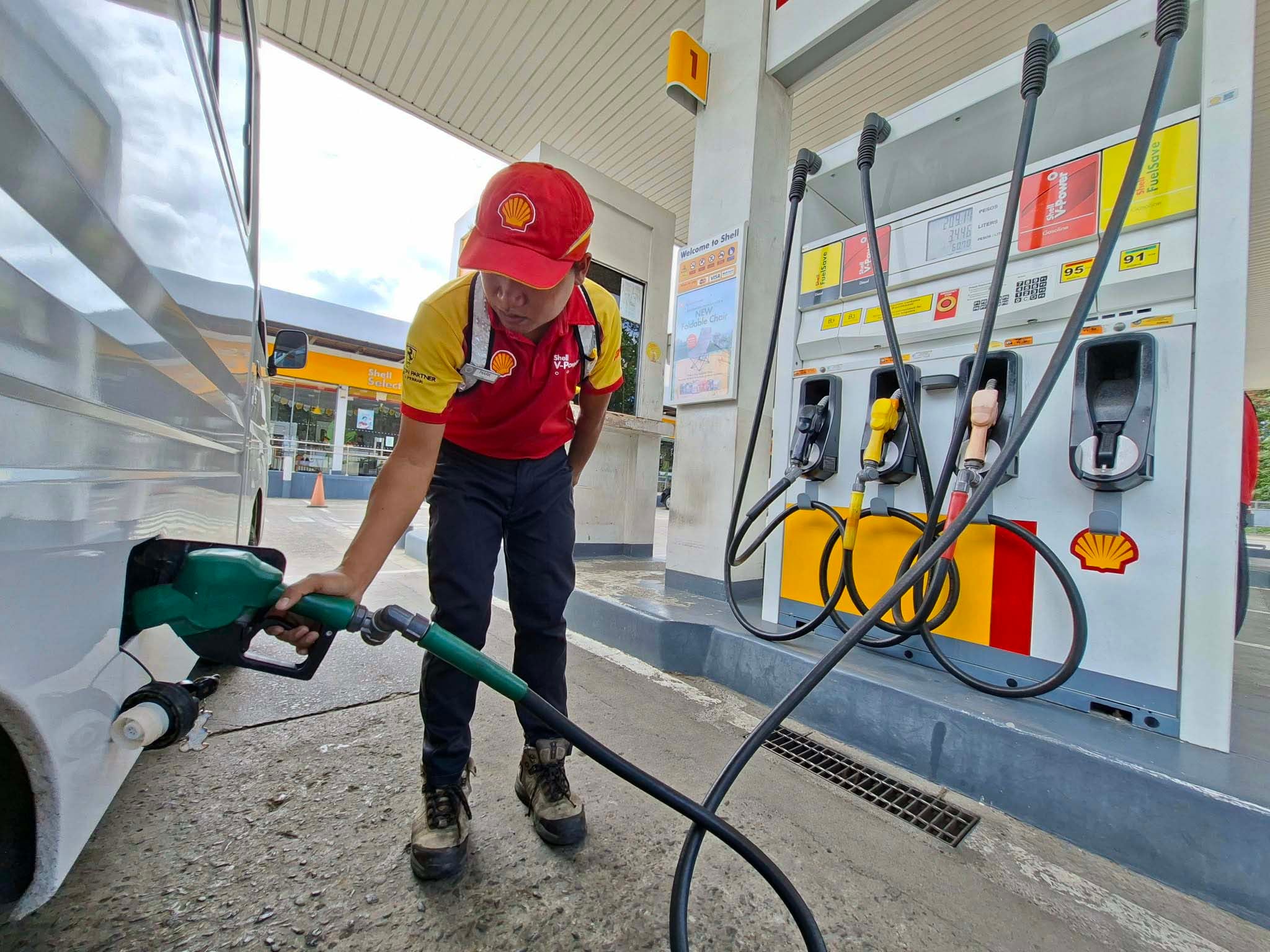
THE FUEL supply squeeze in the Davao Region showed signs of recovery on Friday as authorities confirmed that half of the gas stations previously forced to shut down have now reopened their pumps.
As of March 27, Police Regional Office XI spokesperson Major Catherine Dela Rey reported that only eight gas stations remain closed across the region, down from the 16 closures reported just two days ago.
According to PRO XI, the updated figures for remaining closures are:
- Davao City: 4 stations (down from 8)
- Davao del Norte: 2 stations (down from 6)
- Davao Oriental: 2 stations (unchanged)
“Stations in Davao City and Davao del Norte have begun reopening,” Dela Rey said. “We are now down to eight remaining closures [out of the original 16 recorded at the height of the scarcity].”
Despite the positive trend, the Special Task Force Unified Response to Fuel Issues remains on high alert. Under the State of National Energy Emergency, police are continuing “dipping” inspections of underground tanks to verify actual fuel levels.
These inspections, authorized by the Department of Energy (DOE), aim to distinguish between genuine supply exhaustion and potential hoarding.
Dela Rey reiterated that while the PNP conducts the inspections, the DOE remains the sole authority to penalize violators.
“Our role is to validate if these stations are truly at the critical 10 to 15 percent supply mark,” Dela Rey explained. To date, no official cases of hoarding have been documented in the region.
Public order remains stable
While the State of National Energy Emergency remains in effect, the Davao City Police Office (DCPO) reported that the anticipated friction between the transport sector and the public has not materialized.
DCPO spokesperson Captain Hazel Caballero confirmed that all 19 police stations in the city have registered zero fare-related disputes. “There is a sense of mutual understanding between drivers and passengers regarding the current volatility,” Caballero noted.
