


IN JUST under a month, old tensions between the Philippines and China have flared again over the South China Sea, with the dispute fiercely debated online and in real life. This is happening even as the Philippines rolled out a 14 day visa-free entry for Chinese tourists and business visitors, a move meant to help tourism and strengthen people-to-people exchanges.
Still, China’s diplomatic approach in early 2026 has been anything but quiet. The Chinese Embassy in Manila has issued sharp public pushback, and Beijing has lodged diplomatic protests tied to the remarks and posts of Philippine Coast Guard spokesperson Commodore Jay Tarriela. It also pushed back against Sen. Risa Hontiveros after her statements on China’s intimidation and what she described as disrespect toward Filipinos and Philippine democratic institutions, especially when the discussion began touching on President Xi Jinping.
Relations have only soured further as the Senate pushed back, too. Fifteen senators across party lines, including Hontiveros, Raffy Tulfo, Vicente Sotto III, Kiko Pangilinan, Bam Aquino, and others, signed a resolution condemning recent statements from the Chinese Embassy. The resolution also reaffirmed the Philippines’ right and duty to speak and act on matters of national interest in accordance with international law, while urging the DFA to take the necessary diplomatic measures.
The West Philippine Sea dispute is nothing new; a Chinese vessel normally would cross the 200-mile nautical exclusive economic zone and possible collisions between the Philippine coastguard or navy (sometimes even fishing vessels from both sides) would normally happen.
However, there is no legal ownership to affirm control over those areas within the EEZ (The US itself has not even ratified UNCLOS). In an EEZ, the coastal State has “sovereign rights” for exploring or exploiting natural resources, but it does not have full “sovereignty” like it does on land or territorial sea.
People should remember that other countries such as Taiwan, Vietnam, Malaysia, and Brunei even occupy certain islands within the 200-mile EEZ. The Spratly islands are one good example of this, in which Vietnam occupies 29-48 compared to the 7 major islands that China occupies.
Of course, the good senator can condemn certain aggressive actions that occurred a few years ago with water cannons being fired upon at Filipino vessels by Chinese ships or the attempts of ramming. But the country should also acknowledge the good attempts that China has started to slowly make in its rescue attempts of lost fishermen stranded at sea. Two incidents, in fact where this took place back in January-February.
Just a few weeks ago, Senator Cayetano and Congressman Kiko Pangillian were at odds against each other regarding a Philippine Coast Guard spokesperson’s disrespectful caricature of President Xi Jinping during an academic forum at De La Salle-College of Saint Benilde. Now the obvious defense would be freedom of speech and expression, one could say this was meant to be something of humor. Obviously, the Chinese Embassy did not take this kindly, and retaliated on social media regarding the coast guard officers blatant unprofessionalism.
Here’s a quick breakdown as to why a lot of anti-China netizens may have a difficult understanding the situation:
- For one, it is not technically an official state forum or event, but an academic one. That should be very clear. However it will continue on as to why it gets worse than this.
- He was discussing national security and territorial disputes; matters of high-level state policy.
- A very important one, he used his official title during the keynote, and photos of the event were posted on his social media accounts, which are widely viewed as his primary channel for “Transparency Initiatives.”
- Because Tarriela represents the Philippine government, his actions are seen as the government’s actions. The spokesperson’s job is to deliver facts, not satire. This really lowers the credibility of the Coast guard and the Philippine government as well.
One can counter and say China does the same thing on its social media platforms and Chinese news networks against the Philippines but let’s simply distinguish the separation between “Opinion” (Media) and “Authority” (State).
Newspapers like the Global Times and China Daily are media outlets. So even though they are run by the state, their editorials and cartoons are officially categorized as public opinion and journalistic commentary. When these papers published cartoons in late 2024 showing President Marcos Jr. as a pawn of the United States, China defended it as a critique of Manila’s foreign policy decisions rather than a formal diplomatic attack. Commodore Jay Tarriela is an active military officer and the official spokesperson for the Philippine Coast Guard. When he displayed AI generated caricatures of President Xi Jinping on January 14 2026, the Chinese Embassy argued this was no longer just media satire.
Senator Alan Cayetano made a brilliant display in explaining this. Cayetano pointed out that even in communist countries, news outlets are not considered “Track One” (official diplomatic/state channels). “Kung hindi ka Track One, pwede ka mag-caricature. Media yun eh… sasagutin ka, ‘that’s our news. Hindi kami.’”
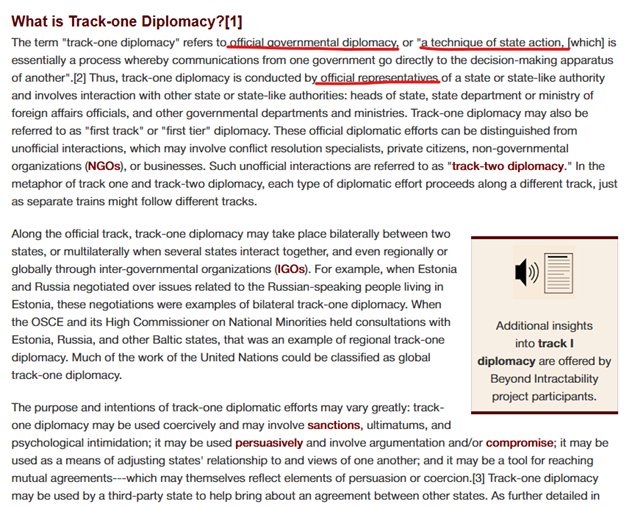
Under the framework of the Philippine government, the authority to issue official statements on foreign policy and international relations belongs exclusively to the executive branch, specifically the President and the Department of Foreign Affairs. Individual lawmakers, military officers, or agency spokespersons do not possess the legal mandate to speak on behalf of the Philippine state in the diplomatic arena.
The foundation for this structure lies in the 1987 Philippine Constitution. The Supreme Court of the Philippines has consistently ruled in multiple cases, notably in Pimentel v. Executive Secretary, that the President is the “chief architect of foreign policy” and the “sole organ and authority in external relations.” Because foreign relations require the country to speak with one unified voice on the global stage, the Constitution vests this power solely in the Chief Executive.
To manage this responsibility, the government relies on a specific legislative framework. Republic Act No. 7157, also known as the Philippine Foreign Service Act of 1991, officially designates the Department of Foreign Affairs as the primary agency responsible for the conduct of Philippine foreign policy. This law establishes the DFA as the official representative of the Philippine government to the international community. The DFA Secretary, along with commissioned foreign service officers and ambassadors, are the only officials legally authorized to navigate diplomatic protocols, issue diplomatic protests, and articulate the state’s official position to foreign governments
Members of the legislative branch, such as congressmen and senators, have a completely different function. Their power over foreign affairs is collective and legislative rather than diplomatic. Under Article VII, Section 21 of the Constitution, the Senate has the power to concur on treaties, and Congress as a whole controls the national budget. A statement, privilege speech, or press release from an individual congressman is an expression of their personal or political opinion. It does not carry the weight of state policy. Even a formal resolution passed by the Senate or the House is legally considered an expression of the chamber’s sentiment, not an official diplomatic communication to a foreign nation.
These strict boundaries also apply to agency spokespersons and uniformed personnel (like if Congressman Kiko or Risa, Commodore Tariella makes a statement). A spokesperson for a specific domestic agency, such as the military or the coast guard, is authorized to release factual information strictly within their operational mandate. They manage public affairs regarding specific incidents or domestic law enforcement. They do not have the legal authority to engage in statecraft. When an agency spokesperson makes public comments targeting a foreign head of state or dictating foreign relations, they step outside their jurisdiction and bypass the DFA.
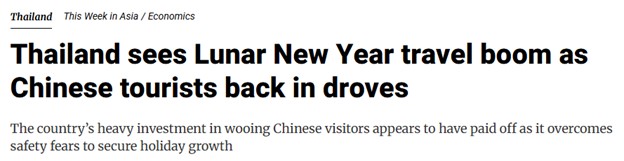
While we are constantly fighting the Chinese over the same issues every single year achieving very little progress in our relations post-Duterte’s presidency. Other countries like Canada, Thailand, and even a few western nations have sought out building better relations with China in response to America’s aggressive claims in the Western Hemisphere (Greenland and Canada).
The recent warming of relations between Canada and China centers around Canadian Prime Minister Mark Carney’s official visit to Beijing from January 14 to 17, 2026. This trip was a major diplomatic milestone, as it marked the first time a Canadian prime minister had visited China since 2017. During the visit, Carney met with Chinese President Xi Jinping and Premier Li Qiang, resulting in a sudden and significant de-escalation of the trade tensions that had defined their relationship over the last few years.
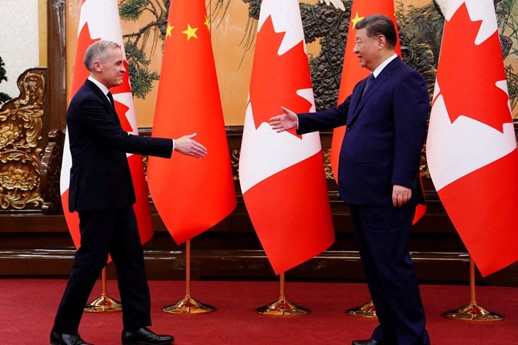
According to the “Preliminary Joint Arrangement on Addressing Bilateral Economic and Trade Issues” released by Global Affairs Canada and official joint statements from both governments, the meetings resulted in a mutual decision to lift heavy retaliatory tariffs.
Canada agreed to drop its 100% tariff on Chinese electric vehicles, replacing it with an annual quota of 49,000 cars taxed at a standard 6.1% rate. By 2030, half of these imported vehicles must be priced under $35,000 CAD. Canada also extended existing tariff relief for certain Chinese steel and aluminum products and canceled planned tariffs on solar goods and semiconductors. In exchange, China agreed to slash its tariffs on Canadian canola seeds from 84% down to roughly 15% by March 1, reopening a massive $4 billion market for Canadian producers. Beijing will also suspend its duties on Canadian canola meal, lobsters, crabs, and peas through the end of the year.
Our SEA neighbors have continued to also build its economic relations with China without having the need to antagonize or isolate them. It’s even a much better advantage for both sides. China and its SEA neighbors secured several major diplomatic and economic agreements. Beijing and the Association of Southeast Asian Nations officially finalized the China-ASEAN Free Trade Area 3.0 upgrade, which focuses on integrating regional digital economies and expanding green technology investments. During an April 2025 regional tour, Chinese President Xi Jinping signed 45 cooperation deals with Vietnam covering railway infrastructure and supply chains, along with new economic pacts in Malaysia and Cambodia.
Later in the year, Indonesia’s new President Prabowo Subianto secured $10 billion in agreements with Beijing to boost electric vehicle manufacturing. China also implemented mutual visa exemptions with Thailand, Malaysia, and Singapore, and introduced a wider regional visa program. The two sides also launched a new five-year action plan for their Comprehensive Strategic Partnership in early 2026 and are currently working to finalize a formal South China Sea Code of Conduct by July.
It is unfair that while our own government officials are at a state of labelling one another as traitors or speaking of treason for simply speaking basic diplomatic protocols, our chances to reap some of the benefits our neighbors get (SEA specifically) are getting slimmer even at the start of 2026. The biggest fallout from this ongoing tension is ultimately economic. In February 2026, the Chinese Embassy in Manila issued a stark reminder that if the political climate keeps degrading and diplomats continue to be targeted, the trade relationship will take a serious hit. They noted this could put millions of Filipino jobs on the line. Financial analysts are already seeing the ripple effects. Right now, the drop in Philippine exports to China, combined with fewer Chinese tourists and investors, is noticeably worse than the economic slowdown the Philippines is experiencing with its other trading partners.
The Philippines is missing out on some massive opportunities. China is still the country’s biggest source of imports and a huge market for its goods, but the uneven political atmosphere has prevented a lot of major investments. Big infrastructure deals, like the roads, railways, and bridges that Chinese backers were previously ready to fund, are now stuck in limbo (Subic-Clark Railway, the South Long Haul Railway, and the Mindanao Railway Phase 1). From Beijing’s perspective, the message is practical. Since the Philippines is dealing with its own domestic economic problems, focusing on solid trade cooperation rather than endlessly escalating maritime disputes would do a lot more to help everyday Filipinos and keep the entire region stable.
There have even been false historical claims circulating online villainizing the Chinese. Which is a distortion of history and propaganda to fuel anger amongst Chinese and Filipinos. Example being the Sangley Rebellion in 1603. Where social media posts outright lie and sometimes demonize Chinese merchants and labourers trying to take over Manila when in fact a lot of it was driven by jealousy and fears by the Spanish in regards to the Chinese dominance in Philippine markets and as well as their high population.
Thousands of Chinese were mistreated, killed, and unfairly charged by local Spaniards. Ming Officials only came to the area in 1603 to ask the local Spanish governor for better treatment of the merchants and locals who frequent the ports of Manila. There is no historical or official documentation from Imperial courts of a planned invasion to take over the Philippines when China was too busy fighting off the Shogunate (Imjin War that happened earlier) and major rebellions and nomadic invasions close to home that eventually led to its collapse in 1644 (rise of the Qing Dynasty later on). It makes zero sense for the Chinese to even consider launching a massive invasion against the Spaniards in the Philippines when the Mings themselves were in their last decades as an Empire. Chinese pirates were outlaws that even the Ming Dynasty does not associate with.
It is not wrong for us to defend our sovereignty but we cannot be ignorant about knowing how diplomacy works or even looking deeper into the rule-of-law for international waters, territories, and other areas. But the greatest weapon to be able to understand any situation is comprehension, context, and a use of critical thinking. Put aside the emotional statements or motherhood cryouts. We should be mature about how we handle things. I want the Philippines to be able to move forward with its cooperation and economic building with China as the senator Alan Cayetano mentioned, “Ano, bulok na yung style na yan eh. Yan yung style na pro-China, anti-China, pro-Philippines, anti-Philippines, no? Paulit-ulit na tayo dito, magkakampi tayo pagdating sa territory ng ating bansa. Magkakampi tayo pagdating sa sovereign rights ng ating bansa.”
Let us always choose peace and diplomacy over harsh discrimination and not antagonize an ethnic group of people or even another nation.
Alex Maestre is an upcoming marketing student at Thames International and a Filipino-Thai writer contributing to the Asian Century Journal. He is also a Youth Committee member of the Association for Philippines–China Understanding (APCU).
