


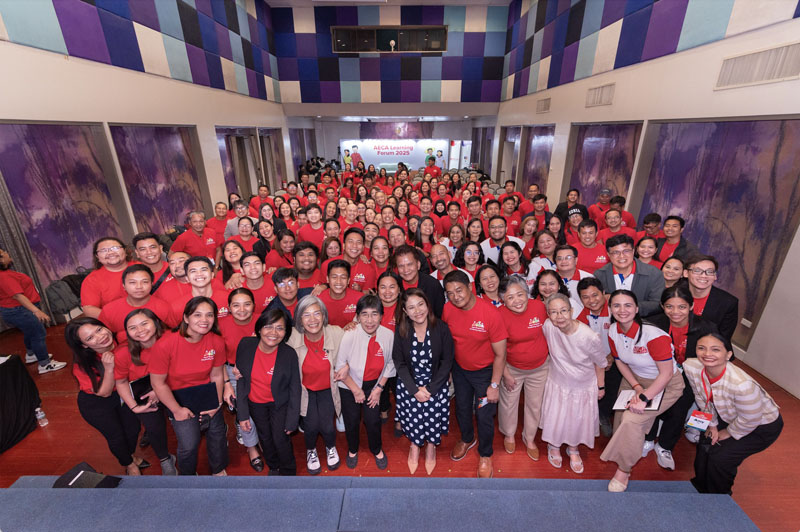
Manila, Philippines – For many Filipino farmers, success has long been measured by how well they can bring their harvests to the market. But across the country, a deeper shift is taking root: farmers are learning that progress becomes more attainable when they plan, decide, and grow together.

At the center of this transformation is the Agro-Enterprise Clustering Approach (AECA), a structured process that helps farmers organize themselves, develop leadership, and build agro-enterprises that can supply institutional markets reliably and competitively.
Clustering enables smallholder farmers to pool their produce, share resources, and make business decisions collectively. Instead of selling individually at low prices, clustered farmers operate as organized suppliers capable of meeting volume and quality requirements. This approach is a core component of the Agro-Enterprise for Inclusive Value Chains (AEIVC) Training Program developed by the Jollibee Group Foundation (JGF) in partnership with Xavier University (XU) – Ateneo de Cagayan in 2021.
Through the training, practitioners, agri-extension workers, and field partners gain the skills to guide farmer groups through the AECA process – from organizing members and studying markets to planning production and improving enterprise operations. By strengthening these AECA facilitators, more farmers are able to run their farms like business and pursue stable, long-term market partnerships.
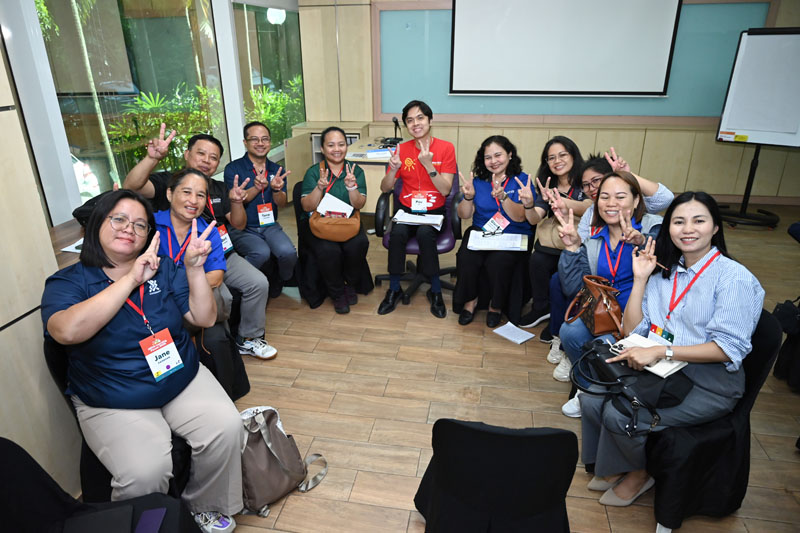
Since 2021, the AEIVC Training Program has capacitated more than 339 agri- extension workers and partners who now guide farmer groups in applying AECA on the ground.
A strong example of AECA’s impact is seen in the work of KAISAHAN, a non- government organization that supports and empowers smallholder farmers and farmworkers in claiming their land rights. Through their participation in AECA Training, KAISAHAN gained a clearer direction and practical tools to guide the farmers they assist, helping them organize effectively and train farmer groups in collective marketing.
Agri-extension facilitators have been instrumental in this transformation. By coaching farmer groups and reinforcing good enterprise practices, they help clusters become more market-oriented and confident in engaging formal buyers.
“Before the training, I thought AECA was mostly about grouping small farmers into clusters and planning production on a larger scale. But as I got more involved and shared AECA with our partner communities, I realized it’s much more than that. The training gave me practical tools and a clear approach to help farmers improve their management and business skills, helping them overcome complex issues so they can actively participate in the agriculture value chain,” said Jec Magbato, KAISAHAN AECA Officer, Negros Occidental.
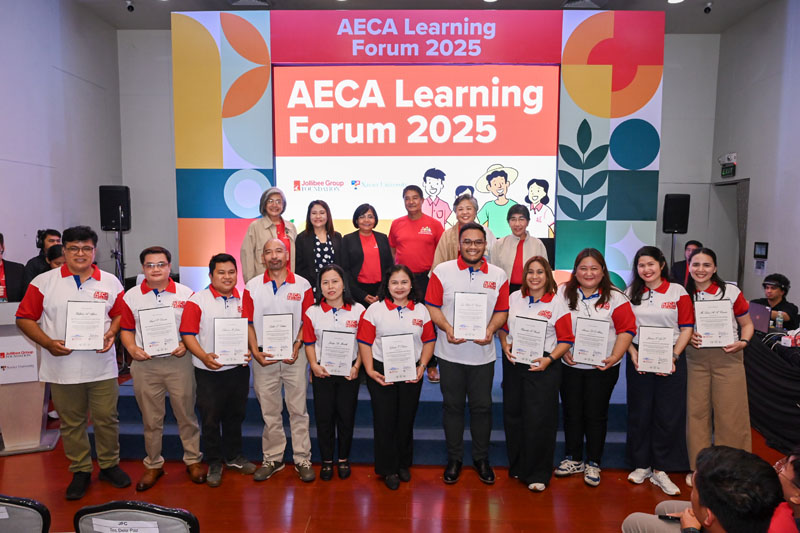
To support these practitioners, JGF and XU continue to provide platforms for collaboration and learning. One of these is the AECA Learning Forum, where trained implementers exchange field insights, share challenges, and strengthen their support for farmer groups nationwide.
Through AECA, smallholder farmers gain the confidence and capacity to plan production, negotiate prices, manage deliveries, and reinvest in their enterprises, thus making a shared, sustainable business out of farming. The approach embodies JGF’s commitment to promoting sustainable agriculture, contributing to food security, and helping communities achieve lasting progress.
When farmers work together and lead with purpose, the journey “beyond the farm” becomes one of dignity, resilience, and shared prosperity, contributing in meaningful ways to the country’s broader efforts towards Zero Hunger.
