



ABOITIZ Renewables, Inc., the renewable energy arm of Aboitiz Power Corporation, partnered with leaders of the Bagobo Tagabawa Indigenous Peoples group in planting 1,000 arabica coffee seedlings along Mt. Apo’s Sibulan Trail, creating a natural biofence to help safeguard strict protection zones while also generating potential income for the tribe.
The tree planting activity was done in partnership with the Tribal Councils of Sibulan Clusters 1 and 2, the Barangay Council of Sibulan, and the Apo Sandawa Porters’ Association (ASPA), with support from the Aboitiz Foundation, Inc.
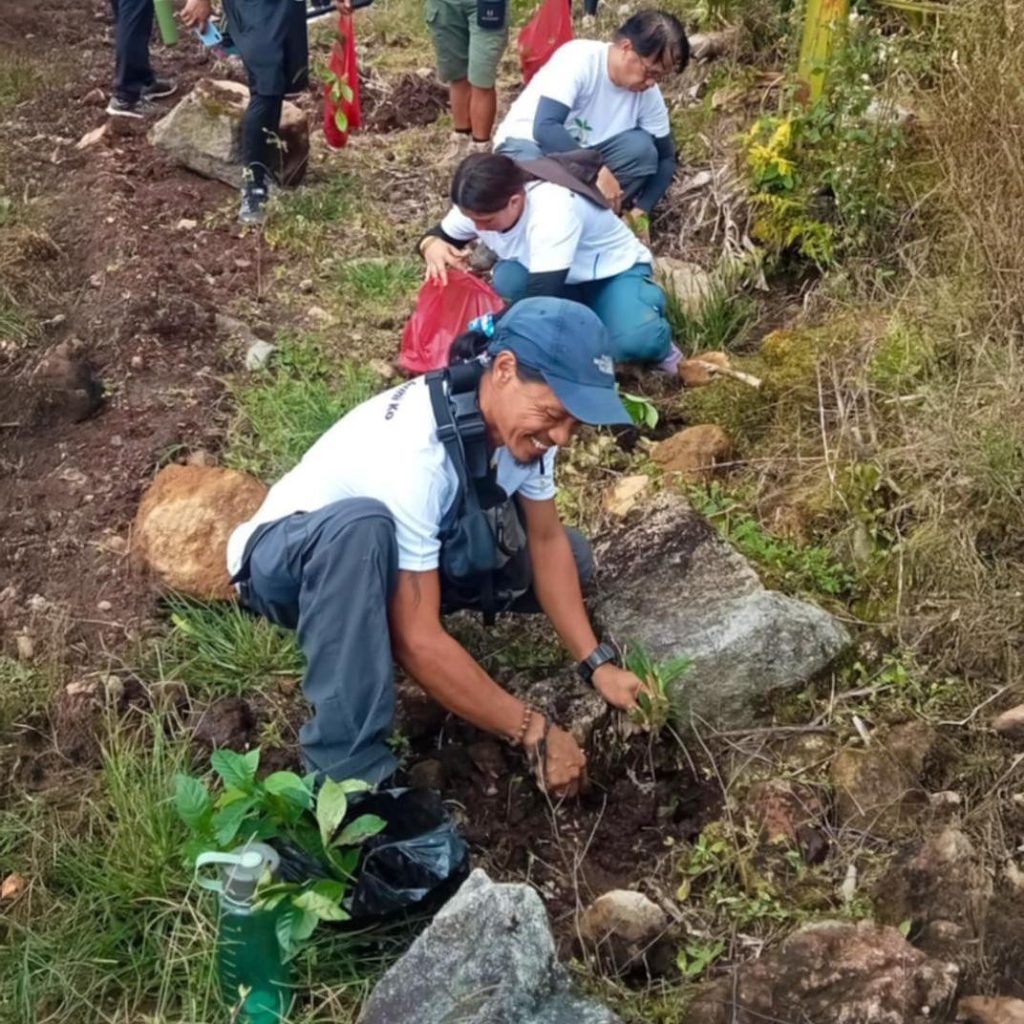
This initiative marks the second year of the ‘Kahoy Mo, Kinabuhi Ko’ project, a community-led reforestation effort designed to prevent encroachment into environmentally sensitive areas of the country’s highest peak. The coffee biofence protects biodiversity-rich zones from unauthorized entry while offering Indigenous communities a sustainable livelihood through future coffee harvests.
“Human namo makigkonsulta sa NCIP XI (National Commission on Indigenous Peoples – Region XI), misugod ang konseho og tanom og kape sa gitudlong lugar niadtong Oktubre 2025. Gipili namo ang kape aron mahimong buhing utlanan sa SPZ, maprotektahan ang lasang sa Mt. Apo samtang naay tanom nga puwede ma-ani ug ibaligya sa IP community “After consulting with NCIP XI, the council began planting coffee in designated areas. We chose coffee as a living boundary for the SPZ, protecting Mt. Apo forest while providing a crop the IP community can harvest and sell,”,” said Aboitiz Renewables external relations supervisor for Southern Mindanao Christe Torres.
Datu Jun Tolentino, Tribal Chieftain of Cluster 1, said that the coffee biofence supports Mt. Apo’s ecosystem while creating livelihood options for upland families.
Noreen Vicencio, first vice president and general manager for Hydro Operations at Aboitiz Renewables, said the project shows that conservation is strongest when communities lead it.
“By supporting a coffee biofence along Mt. Apo, we are helping protect a critical ecosystem while enabling Indigenous families to build a sustainable source of income. This is how we translate renewable energy into shared value, where environmental protection and livelihoods grow together,” she said.
