

THE PHILIPPINE Eagle Center (PEC) is the first zoological facility in the Philippines to receive the Animal Welfare Certificate of the Southeast Asian Zoos and Aquariums Association (SEAZA).
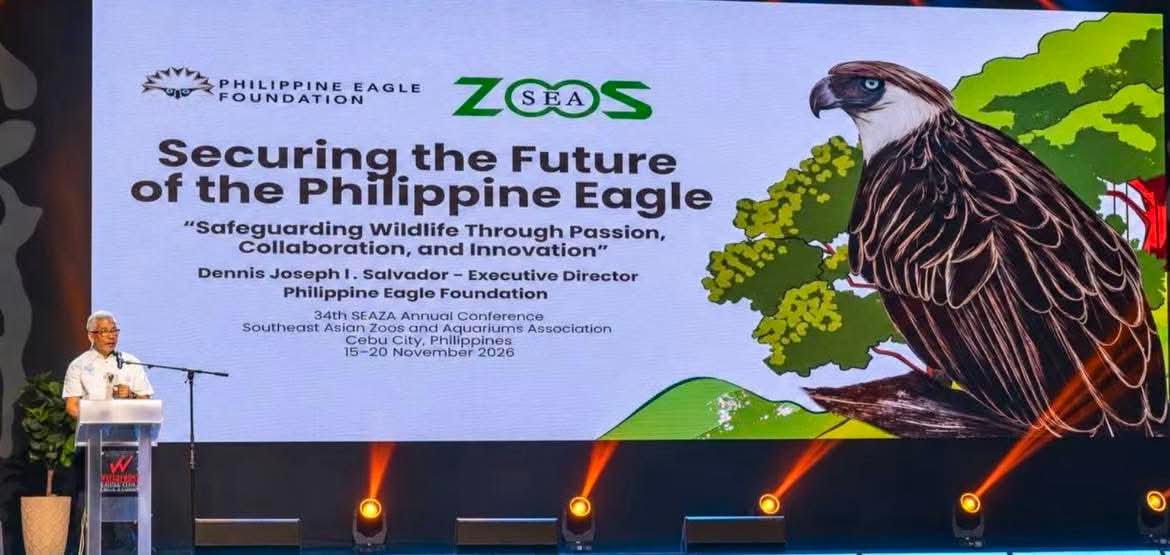
In a statement, the Philippine Eagle Foundation (PEF) said that the certificate was presented during the 34th SEAZA Conference, held from Nov. 15 to 20 in Cebu City.
The gathering brought together wildlife experts, researchers, animal keepers, and zoo and aquarium representatives from different countries.
SEAZA is a group of zoos and aquariums working on continuously improving animal welfare, biodiversity conservation, and public awareness.
The foundation said the certification recognizes the Center’s commitment to proper care and good welfare standards.
“Animal welfare means more than giving animals food and shelter. It also means providing suitable living spaces, proper health care, opportunities to move, and activities that allow animals to show their natural behaviors,” PEF said.
Philippine Eagle Foundation Executive Director Dennis Salvador reflected on lessons from eagles rescued and lost during his plenary.
Salvador said protecting the Philippine Eagle is not only about caring for individual birds but also about protecting their forest homes in partnership with communities and finding solutions to the threats they face.
Biologist Julia Lynne Allong also presented the Leyte reintroduction program.
The program aims to re-establish a wild Philippine Eagle population on the island following its local disappearance after Super Typhoon Yolanda.
Her study, “The Return to a Lost Range: Post-Release Movement, Habitat Use, and Management Responses of Reintroduced Philippine Eagles on Leyte Island, Philippines,” focused on what happens after an eagle is released into the wild.
Among the eagles released there is Lyra Sinabadan, which returned to the wild in Leyte on May 8, 2025, after being rescued in Bukidnon.
Lyra Sinabadan was first released on Mt. Apo and later rescued in Bukidnon. After rehabilitation, she returned to the wild in Leyte as part of the effort to re-establish the species on the island.
“Releasing an eagle is an important achievement. But the work does not end when the bird flies free,” PEF stressed.
“Conservation team continues monitoring the eagle to understand where it goes, which areas it uses, and how it adjusts to its new environment,” it said.
PEF credited the Center’s animal keepers, veterinarians, animal welfare specialists, and conservation breeding personnel, as well as its donors, with helping improve the facility, animal care, and conservation programs.