




THE PARTICIPATION of President Ferdinand Marcos Jr. in the 18th BRICS Summit in New Delhi on September 12–13, 2026, as an invited Outreach Country representative of ASEAN, offered an important opportunity to look beyond conventional diplomatic engagement and explore how wider international economic partnerships could strengthen Southeast Asia’s resilience. It also brought the Philippines’ growing relationship with India into sharper focus at a time when the region faces considerable uncertainty over energy supplies, food prices, geopolitical tensions, and global trade.
President Marcos traveled to India at the invitation of Prime Minister Narendra Modi, with a dual objective: representing ASEAN as its 2026 Chair and advancing the Philippines–India Strategic Partnership established during his August 2025 state visit. In his September 11 departure statement, Marcos identified trade and investment, the proposed Preferential Trade Agreement, pharmaceuticals, digital cooperation, tourism, connectivity, and implementation of the Five-Year Plan of Action for 2025–2029 as important areas for bilateral engagement.
At their September 13 meeting in New Delhi, Modi and Marcos discussed deeper cooperation in defense and security, trade and investment, space, railway infrastructure, financial technology, education, tourism, science, and technology. The Philippine President also engaged Indian business representatives, exploring opportunities in agriculture, healthcare, digital payments, aviation, artificial intelligence, and telecommunications. In his September 14 post-visit statement, Marcos emphasized the need to translate the strategic partnership into concrete programs and results.
These developments deserve attention beyond the bilateral relationship. They illustrate how the Philippines, while pursuing its national interests, can use its position as ASEAN Chair to strengthen the region’s economic engagement with India and other major economies.
The BRICS Summit, held under India’s chairmanship and the theme Building for Resilience, Innovation, Cooperation, and Sustainability, also produced a New Delhi Declaration addressing resilient supply chains, agricultural cooperation, food security, trade facilitation, and financial cooperation. Its discussion of a proposed BRICS Grain Exchange, intended to facilitate agricultural commodity trade and potentially expand to other products, is particularly relevant. Although this remains a proposal rather than an operational trading mechanism, its underlying objective of improving the predictability and efficiency of agricultural trade deserves attention from food-importing countries.
The broader question is whether ASEAN can translate its considerable economic weight and extensive international relationships into greater collective economic security.
From economic vulnerability to collective resilience
Southeast Asia is an economically dynamic region, but its growing integration with the world economy also exposes it to external disruptions. Oil and gas price fluctuations, conflicts in West Asia, shipping interruptions, climate-related agricultural losses, export restrictions, and volatility in international commodity markets can quickly affect production costs, inflation, and household purchasing power.
For countries such as the Philippines, which depend significantly on imported petroleum and remain substantial rice importers, these vulnerabilities have direct consequences for economic stability and household welfare. Higher oil prices raise transportation, electricity, and manufacturing costs, while expensive food imports put additional pressure on family budgets, particularly those of lower-income households.
The issue, therefore, is not simply how individual countries respond to the next external shock. It is whether ASEAN can develop stronger regional arrangements that reduce dependence on concentrated sources of supply, improve collective bargaining capacity, and ensure more dependable access to essential commodities.
Economic security must become an integral part of ASEAN’s development agenda.
Strengthening ASEAN’s internal economic foundations
ASEAN’s first priority should be to deepen economic integration within the region. External partnerships will be more effective when supported by stronger intra-regional trade, better connectivity, integrated production networks, and more predictable movement of goods and services.
The ASEAN+3 framework, bringing together ASEAN, China, Japan, and South Korea, offers considerable opportunities for cooperation in energy, agriculture, industrial production, financial stability, and supply-chain resilience. Its existing food-security arrangements, particularly the ASEAN Plus Three Emergency Rice Reserve (APTERR), provide a useful institutional foundation.
The wider ASEAN+6 framework, which also includes India, Australia, and New Zealand, offers a broader platform for cooperation in food, energy, technology, investment, and regional connectivity. These arrangements should be used more actively to develop complementary production and supply networks.
The 15-member Regional Comprehensive Economic Partnership (RCEP), comprising the ten ASEAN members and Australia, China, Japan, New Zealand, and South Korea, is another important instrument. Representing approximately 30% of global GDP and one-third of the world’s population, RCEP has considerable potential to facilitate trade, investment, and regional production integration.
However, the existence of a trade agreement does not automatically ensure its effective utilization. ASEAN should focus on reducing non-tariff barriers, simplifying customs procedures, improving trade facilitation, strengthening implementation of rules of origin, and enabling smaller businesses to participate more fully in regional value chains.
India’s absence from RCEP remains a significant gap in the wider Asian economic architecture. India withdrew from the negotiations in 2019, although the agreement provides an accession pathway. A stronger ASEAN–India partnership can complement, rather than compete with, existing regional arrangements.
A wider and more diversified energy partnership
Energy security requires a similarly broad approach. ASEAN should avoid excessive dependence on any single source, supplier, or transport corridor and develop mutually beneficial commercial relationships with major energy-producing countries.
West Asia will remain important. Saudi Arabia, the United Arab Emirates, Qatar, and other Gulf countries are significant sources of oil, gas, and petrochemical products. ASEAN should strengthen long-term commercial arrangements with these countries, including cooperation in storage, refining, liquefied natural gas, renewable energy, and investment. The existing ASEAN–Gulf Cooperation Council relationship provides a foundation for a more substantive economic partnership.
Russia also remains an important potential source of oil, gas, fertilizers, and other commodities. ASEAN should explore commercially viable cooperation while fully respecting applicable international sanctions, financial restrictions, and national laws. The ASEAN–Russia Joint Statement on Energy Cooperation of June 18, 2026, provides a basis for advancing dialogue and practical cooperation.
The United States can contribute through energy supplies, particularly liquefied natural gas, technology, investment, and energy infrastructure. Stronger engagement with China can support cooperation in renewable energy, batteries, electric vehicles, solar technology, manufacturing, and other emerging energy industries.
These relationships should be complementary. ASEAN need not regard engagement with one economic partner as incompatible with cooperation with another. Its objective should be to diversify sources, improve supply reliability, and secure favorable commercial arrangements while preserving its strategic autonomy.
Within the region, the ASEAN Power Grid, the Trans-ASEAN Gas Pipeline, and the ASEAN Framework Agreement on Petroleum Security deserve greater attention. The Petroleum Security Agreement envisages coordinated emergency fuel-sharing arrangements. Its implementation and ratification by all member states should be accelerated. Regional energy cooperation should move beyond declarations toward functioning mechanisms for emergencies.
Engaging BRICS and the wider Global South
The Philippines’ participation in the New Delhi BRICS Summit as ASEAN Chair offers an opportunity to explore a more structured economic dialogue between ASEAN and BRICS economies.
BRICS countries collectively represent substantial resources, production capacities, and markets. Their potential contribution extends beyond energy to agricultural commodities, fertilizers, pharmaceuticals, industrial machinery, critical minerals, renewable-energy equipment, and infrastructure.
The New Delhi Declaration’s emphasis on resilient global value chains, trade facilitation, agricultural cooperation, and the proposed BRICS Grain Exchange deserves particular attention from ASEAN. Its underlying objective—improving the predictability and efficiency of agricultural commodity trade—is relevant to food-importing countries.
ASEAN could explore regular dialogue with BRICS on food and energy security, trade finance, supply chain resilience, technology transfer, and investment. Such engagement should complement ASEAN’s established partnerships and respect the different institutional positions of individual members. Indonesia is a full BRICS member, while Malaysia, Thailand, and Vietnam have partner-country status. The Philippines participated in New Delhi as an invited outreach country, representing ASEAN.
Cooperation should also explore more efficient trade settlement and payment arrangements where commercially viable, without assuming that a common BRICS currency or a single alternative payment system is already operational.
Food security: Making rice supplies dependable and affordable
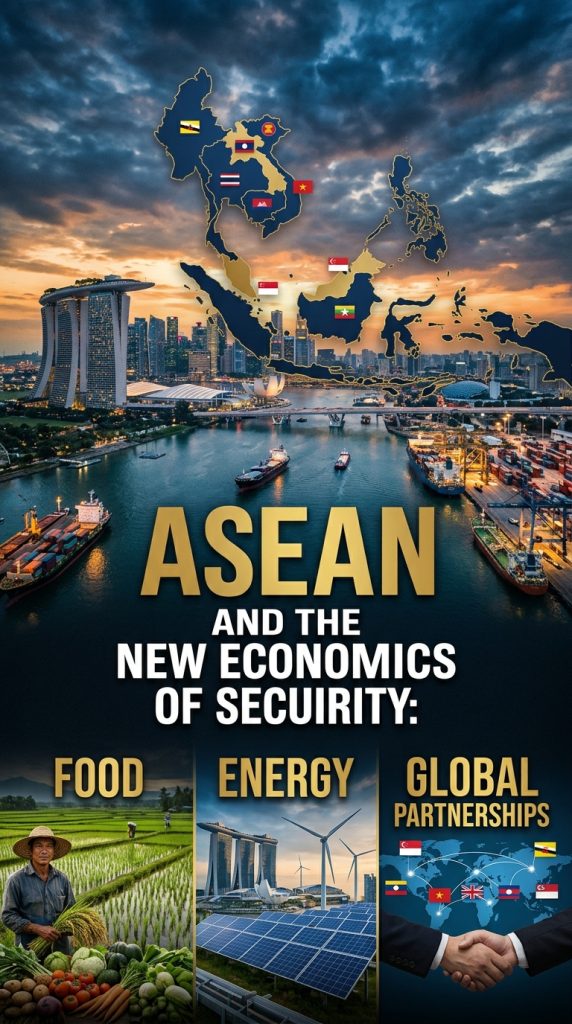
Food security deserves special attention because its consequences are felt directly by households. Rice, in particular, is central to food consumption and price stability in several ASEAN economies, especially the Philippines.
International rice markets can become volatile when major exporting countries restrict supplies, production is affected by adverse weather, or importing countries simultaneously increase their purchases. Such circumstances can push prices upward and place disproportionate pressure on poorer households.
ASEAN should strengthen APTERR, improve regional information-sharing on production, stocks, and prices, and develop more effective arrangements for emergency releases. It should also explore coordinated procurement and longer-term commercial contracts with major suppliers, including India, Thailand, Vietnam, Cambodia, and Pakistan.
Where feasible, collective procurement by importing countries could improve bargaining power, reduce transaction costs, and avoid competing purchases that unnecessarily inflate prices. Such arrangements must, however, respect exporters’ domestic requirements and the interests of farmers. The objective should be predictable and affordable access to supplies, not artificial suppression of international prices.
India deserves particular attention. Its importance as a major agricultural producer means that predictable trade arrangements with Indian suppliers can benefit both sides. ASEAN and India should explore longer-term arrangements for rice, wheat, pulses, fertilizers, and other agricultural commodities, supported by greater transparency regarding export availability and trade policies.
However, imports cannot substitute for stronger domestic agricultural productivity. Investment in irrigation, climate-resilient seeds, research, storage, post-harvest facilities, transportation, and agricultural technology must remain central to the region’s food-security strategy.
Food, water, and energy security: The imperative of climate-resilient agriculture
Securing food supplies cannot depend on imports, emergency reserves, and trade arrangements alone. ASEAN must also strengthen the resilience and productivity of its own agricultural systems. Food, water, and energy security are closely interconnected, and climate change is making this relationship increasingly important.
Agriculture across Southeast Asia faces growing exposure to erratic rainfall, prolonged droughts, floods, heat waves, changing growing seasons, and declining soil quality. These developments can affect crop yields, farmers’ incomes, and regional food supplies. The challenge is therefore to move toward more productive, environmentally sustainable, and climate-resilient agriculture.
ASEAN should accelerate the adoption of green and climate-smart farming practices, including regenerative agriculture, crop diversification, agroforestry, conservation farming, improved soil management, and drought-, flood- and salinity-resistant crop varieties. More efficient fertilizer use, appropriate pest management, and the productive utilization of agricultural residues can also reduce environmental damage and input costs while improving farm productivity.
An equally important, but sometimes overlooked, aspect of agricultural planning is the relationship between cropping patterns and the geographical and water-resource characteristics of individual areas. Agricultural choices should be based not simply on market demand or established cultivation practices, but also on the long-term availability of water, rainfall patterns, soil conditions, groundwater resources and local climate.
Water-intensive crops should not be encouraged indiscriminately in chronically water-deficient areas. Where appropriate, farmers should be encouraged to shift toward less water-intensive crops better suited to local agro-climatic conditions. This requires scientific land and water-use mapping, crop-suitability assessments, water budgeting, and agricultural advisories that take account of both present conditions and future climate projections.
Such transitions must also protect farmers’ livelihoods. Alternative crops need to offer viable markets, reasonable returns, and access to appropriate seeds, technology, credit, and extension services. The objective is not to prohibit particular crops everywhere, but to align agricultural production with the sustainable carrying capacity of local water resources.
Better agricultural and weather forecasting deserves particular attention. National meteorological agencies, agricultural research institutions, and satellite-monitoring systems should work more closely to provide farmers with reliable seasonal forecasts, early warnings of droughts, floods, and typhoons, and crop-specific advice on planting, irrigation, and harvesting. Digital agricultural information systems can also help governments anticipate production shortfalls and prepare for potential food-supply disruptions before they become emergencies.
Water management must become an equally important component of food security policy. Rainwater harvesting, farm ponds, community reservoirs, and improved watershed management can capture and store water during periods of heavy rainfall for use during dry months. Drip and sprinkler irrigation, alternate wetting and drying in rice cultivation, better canal maintenance, and precision irrigation can improve water-use efficiency. Properly treated wastewater can also be reused for suitable agricultural purposes, while groundwater extraction must be monitored to prevent depletion. Protecting forests, river basins, and watersheds is essential to sustaining water availability over the longer term.
Renewable energy can further strengthen agricultural resilience. Solar-powered irrigation, rural mini-grids, solar cold storage, and biogas from livestock waste and biomass from agricultural residues can reduce dependence on expensive fossil fuels. Greater use of renewable energy in food processing, refrigeration, storage, and transportation can lower production costs, reduce post-harvest losses, and improve the economic viability of farming. These initiatives should be designed carefully to avoid competition with food production for land and water.
ASEAN’s own policy framework provides a basis for this transition. The ASEAN Food, Agriculture, and Forestry Sectoral Plan 2026–2030 emphasizes sustainable and regenerative practices, decarbonization, climate resilience, food security, water security, and digital innovation. The Joint Press Statement of the 48th ASEAN Ministers on Agriculture and Forestry meeting, held on October 29, 2026, cites extreme weather, resilient seeds, climate information, early-warning services, efficient water management, and agricultural insurance.
For the Philippines, these priorities have immediate practical relevance. The Department of Agriculture’s National Color-Coded Agricultural Guide Map, developed under its Adaptation and Mitigation Initiative in Agriculture, provides a useful basis for identifying crops suited to particular locations through information on soil, elevation, rainfall, temperature, water availability, and climate-related hazards. Such tools should be used more extensively to guide agricultural investment and cropping decisions.
Greater investment in rainwater harvesting, modern irrigation, solar-powered agricultural infrastructure, climate-resilient seeds, weather forecasting, and post-harvest facilities can strengthen domestic rice production and reduce vulnerability to both climate and international commodity-price shocks.
The larger objective should be to make every unit of land, water, and energy used in agriculture more productive. Food security will be more sustainable when it is supported not merely by dependable imports but also by resilient domestic production, scientifically appropriate cropping patterns, efficient resource management, and a transition toward cleaner energy.
The ASEAN–India partnership: An opportunity that needs greater substance
India’s relationship with ASEAN deserves a more ambitious economic agenda.
The ASEAN–India economic relationship is already substantial. According to the Joint Media Statement of the 23rd ASEAN Economic Ministers–India Consultation, held in Manila on September 22, 2026, preliminary two-way trade reached US$114.1 billion in 2025, while Indian foreign direct investment inflows into ASEAN amounted to US$7.1 billion. India was ASEAN’s eighth-largest trading partner and ninth-largest source of foreign direct investment that year.
These figures demonstrate not only the existing relationship but also the opportunity for expansion. The review of the ASEAN–India Trade in Goods Agreement (AITIGA), alongside discussions on the Trade in Services Agreement, should result in more effective, business-friendly, and mutually beneficial arrangements.
There is considerable scope for cooperation in pharmaceuticals, generic medicines, healthcare, information technology, digital public infrastructure, financial technology, automotive components, electronics, renewable energy, education, and skills development. Indian companies could contribute to manufacturing investment, digital services, and technology partnerships, while ASEAN offers a large and growing consumer market and important production and logistics networks.
The Philippines, in particular, should seek to translate its strategic partnership with India into concrete investment, trade, and technology outcomes. The proposed Preferential Trade Agreement, identified during the Marcos visit, merits sustained attention. Better air connectivity, tourism, pharmaceutical cooperation, digital payments, and agricultural trade can also strengthen the relationship.
The Five-Year Plan of Action for 2025–2029 provides an existing framework. What is needed now is a clear implementation agenda, with measurable outcomes and greater participation by businesses and institutions on both sides.
What ASEAN can do and what the Philippines can contribute
The distinction between regional responsibilities and national action is important.
ASEAN can provide the institutional framework for collective resilience. It can strengthen regional emergency reserves, accelerate petroleum-security arrangements, facilitate coordinated procurement, improve market information-sharing, deepen RCEP implementation, and develop wider economic partnerships with India, China, Japan, South Korea, Australia, New Zealand, the United States, Russia, the Gulf countries, and BRICS economies.
It can also promote cross-border energy connectivity, integrated logistics, agricultural research, regional investment, and more effective mechanisms for responding to supply disruptions.
In agriculture, ASEAN can develop shared agro-climatic information systems, promote regional crop-suitability mapping, exchange climate-resilient seeds and farming technologies, and encourage water-sensitive agricultural planning. It can support research on crop water requirements, improve regional weather and agricultural forecasting, and facilitate investment in water harvesting, irrigation modernization, wastewater reuse, and renewable energy for rural communities.
The Philippines, as ASEAN Chair in 2026, has an opportunity to give practical momentum to these initiatives. It can use its chairmanship to encourage member states to accelerate implementation of regional food and petroleum-security arrangements and to advance cooperation with external partners.
At the national level, the Philippines should diversify its sources of oil, liquefied natural gas, fertilizers, and rice; negotiate dependable long-term commercial supply arrangements; strengthen domestic rice production and storage; improve port and transportation infrastructure; and encourage investment in renewable energy and energy efficiency.
Its agricultural policy should give greater attention to the geographical suitability of crops and the sustainable availability of water. The National Color-Coded Agricultural Guide Map can be used more extensively to guide farmers and local governments in deciding what to cultivate and where. Investment in rainwater harvesting, community reservoirs, modern irrigation, watershed protection, solar-powered agricultural infrastructure, climate-resilient seeds, weather forecasting, and post-harvest facilities should be expanded.
The country should also pursue stronger bilateral economic relationships with India, China, Japan, South Korea, Australia, New Zealand, the United States, and Gulf countries, without compromising its ability to engage constructively with other partners.
The Marcos visit to India provides an immediate opportunity to follow through on these objectives. The Philippines can use its ASEAN–India relationship to encourage greater regional trade and investment, while drawing on its participation in the BRICS Outreach process to explore wider economic cooperation.
In this way, national initiatives can reinforce regional arrangements, and regional cooperation can expand the economic opportunities available to the Philippines.
From declarations to a more secure economic future
The Manila ASEAN Summit takes place at a time when economic resilience is no longer an abstract policy objective. Energy disruptions, food-price volatility, climate risks, and geopolitical uncertainties have demonstrated how quickly external developments can affect domestic economic conditions.
ASEAN has the institutional relationships, geographical advantages, market size, and collective economic weight to respond more effectively. Its challenge is to translate these advantages into practical cooperation.
The region does not need to choose between ASEAN integration and wider global partnerships or between economic engagement with the United States, China, India, Russia, and other major economies. It needs to pursue these relationships with clarity, balance, and an understanding of their respective economic advantages.
Ultimately, the success of ASEAN’s economic community will not be measured only by the volume of regional trade, the number of agreements signed, or the investment commitments announced. It will also be measured by whether ordinary families can obtain food at affordable prices, whether businesses have dependable access to energy and essential inputs, whether farmers can produce more with less water and energy, and whether regional cooperation creates more secure livelihoods and productive employment.
For the Philippines, the opportunity is to use its ASEAN Chairship not merely to host important meetings but to help advance an economic agenda whose benefits extend beyond diplomatic declarations and reach the lives of its people.
ASEAN’s economic security will be strongest when regional integration and global partnerships work together with sustainable agriculture and responsible management of water and energy resources to make its people less vulnerable to the uncertainties of the world economy.

