

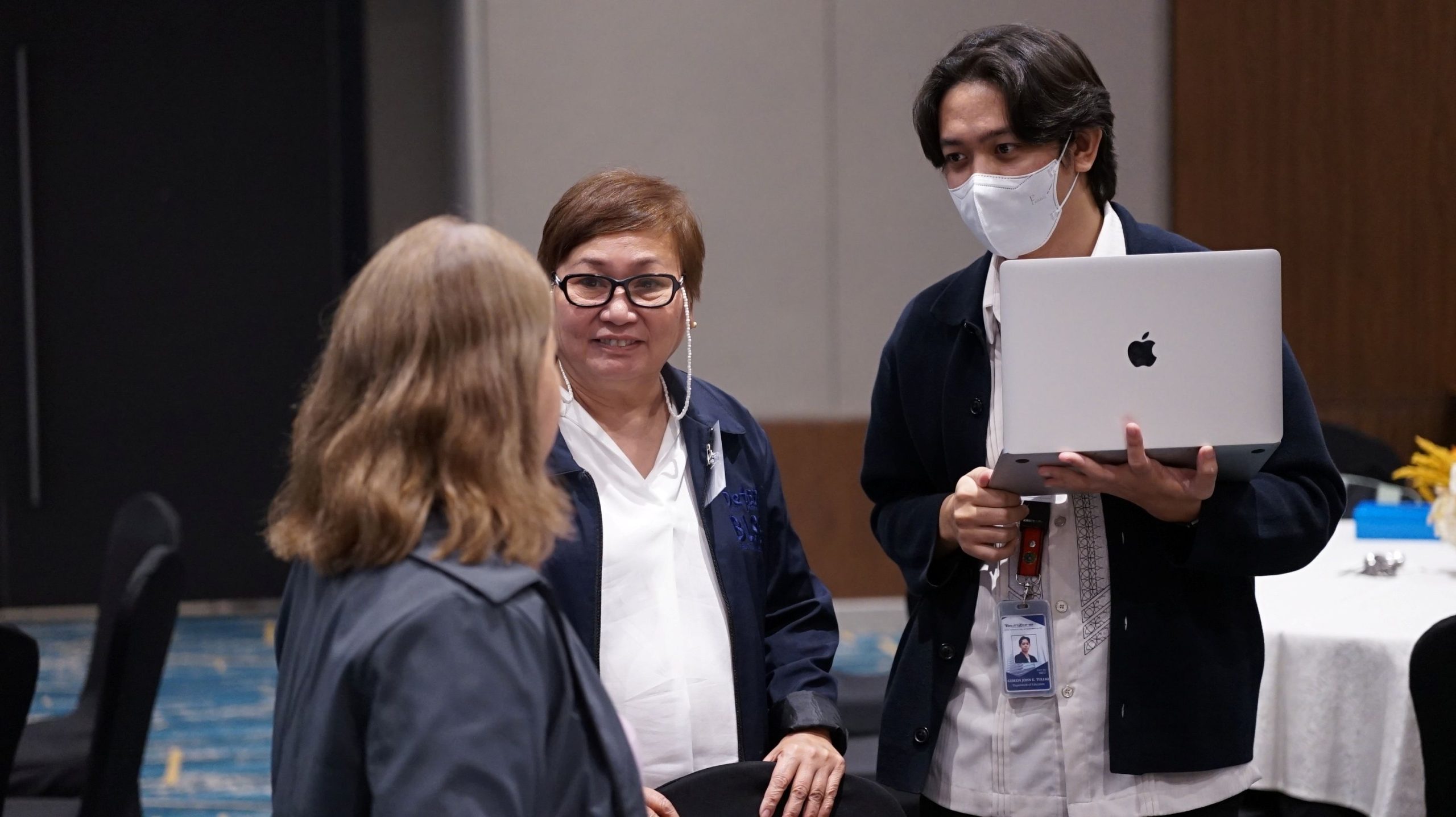
QUEZON CITY — The Department of Education (DepEd) Bureau of Learner Support Services (BLSS) recently conducted a two-day planning workshop for the upcoming school-based immunization (SBI) program for School Year 2026-2027 at the Park Inn by Radisson, SM North EDSA, in Quezon City.
Led by the BLSS-School Health Division (SHD), the hybrid planning workshop brought together physicians, nurses, and dentists from selected DepEd regional offices and schools division offices to prepare for the implementation of school-based vaccination for Grade 1 learners ages 6 to 7 and Grade 7 boys and girls ages 12 to 13 against measles-rubella (MR) and tetanus-diphtheria (Td), as well as Grade 4 girls ages 9 to 10 against human papillomavirus (HPV).
The program targets about 3.6 million Grade 1 and Grade 7 learners for MR and Td vaccination and nearly 1 million Grade 4 girls for HPV vaccination nationwide.
Implemented in partnership with the Department of Health (DOH) since 2017, the school-based immunization strategy aims to protect school-age children and adolescents from vaccine-preventable diseases, including measles, rubella, tetanus and diphtheria, while protecting preadolescent girls from HPV infection and reducing their future risk of cervical cancer.
The workshop provided an opportunity for school health personnel from regional and schools division offices responsible for SBI operations to work with local health offices to strengthen planning and coordination for the upcoming vaccination campaign.
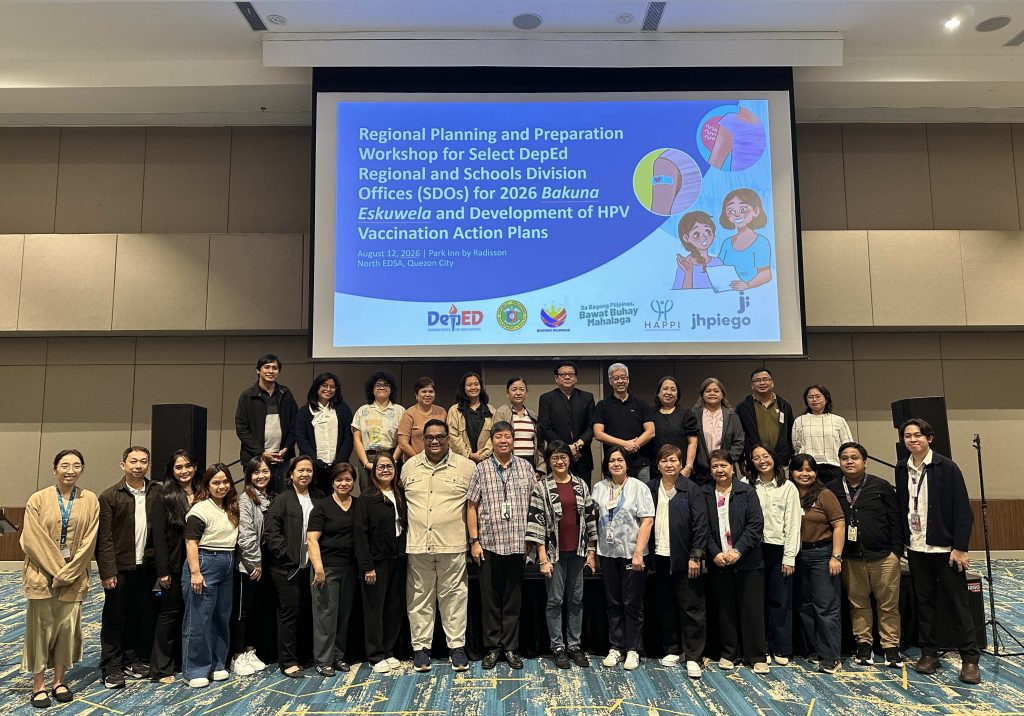
Key activities included reviewing MR, Td and HPV vaccination coverage; analyzing elementary and secondary school participation across provincial, component city, highly urbanized city and independent component city schools division offices; identifying behavioral and social drivers affecting routine and HPV vaccination; and developing short-, medium- and long-term plans to address operational bottlenecks, logistical and administrative barriers, misinformation, access to immunization services, hard-to-reach and underserved areas, and parental support and confidence in vaccines.
Participants from DepEd regional and schools division offices highlighted the value of applying lessons from the Bill & Melinda Gates Foundation-funded HPV Vaccination Acceleration Program Partners Initiative (HAPPI), as well as findings from behavioral and social drivers surveys and interviews on HPV vaccination supported by the U.S. Centers for Disease Control and Prevention’s Enhancing Global Health Security project and implemented by Jhpiego Philippines.
One participant noted that the workshop offered a shift toward more evidence-based and proactive operations planning for school-based immunization.
“Evidence-based operations planning is a big shift from the conventional approach of reactively planning for an upcoming school-based immunization. We appreciate how these numbers involving vaccination of our learners can inform strategies to improve coverage, strengthen immunity and protect them from communicable diseases and cervical cancer.”
Dr. Lilibeth Gonzales, OIC-Chief and Supervising Health Program Officer of the School Health Division, Bureau of Learner Support Services, DepEd, emphasized the importance of translating planning and data into concrete actions at the school and community levels.
“The success of school-based immunization depends on how well we translate data and plans into coordinated action at the regional, division and school levels. This workshop allows us to identify gaps early, strengthen coordination with our health partners and develop practical strategies to ensure that more learners can access the vaccines they need,” Gonzales said.
Dr. Ingrid Magnata, Country Program Manager of Jhpiego Philippines, highlighted the value of collaboration and evidence in strengthening school-based vaccination.
“Protecting children and adolescents through vaccination requires more than delivering vaccines. It requires strong systems, informed communities, and coordinated action across sectors. By bringing together data, behavioral insights and the experience of education and health teams, we can develop approaches that are more responsive to the realities faced by learners, parents and schools,” Magnata said.
Dr. Anthony Calibo, Immunization Technical Advisor of Jhpiego Philippines, said the planning process can help ensure that vaccination strategies respond to the specific gaps and challenges identified by participating regions and schools division offices.
“The value of this planning process is in helping teams move from simply knowing their coverage numbers to understanding what those numbers mean and what can be done about them. By combining vaccination data with behavioral insights and operational experience, regions and divisions can identify practical solutions to improve access, participation and vaccine confidence,” Calibo said.
The workshop concluded with a renewed commitment among participating regional and schools division offices to strengthen the role of schools as healthy settings and key platforms for delivering preventive health services, aligned with the principles of the Universal Health Care Law.
The 2026 SBI preparations build on DepEd and DOH’s continuing efforts to improve school-based vaccination and reach eligible learners with essential vaccines. Current DepEd SBI guidance covers MR and Td vaccination for Grade 1 and Grade 7 students and HPV vaccination for Grade 4 female students.