

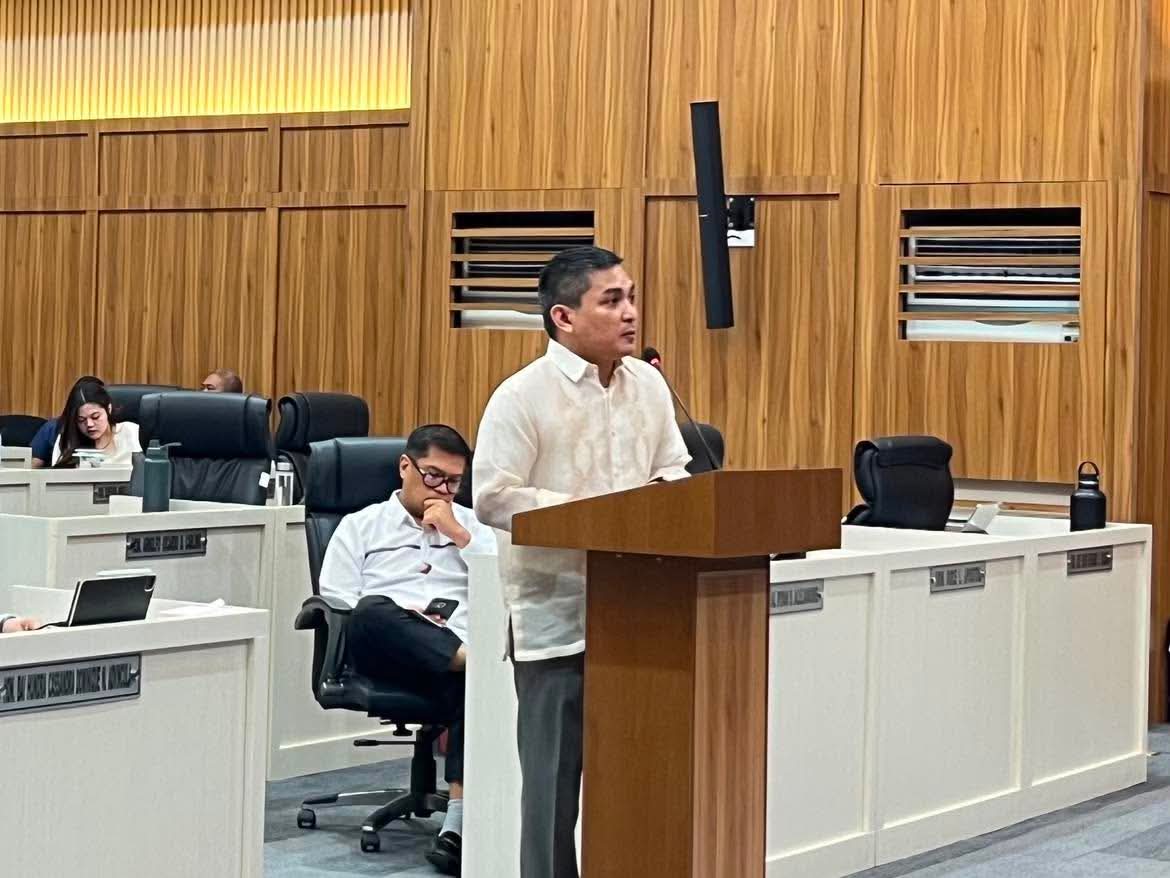
A LAWMAKER urged City Hall to adjust compensation and create new benefit programs for the local government’s job order (JO) workers because of rising inflation.
In a privilege speech on Tuesday, Councilor Diosdado Angelo Junior R. Mahipus said compensation should reflect the cost of living. However, Davao City’s inflation rate hit 6.7 percent in August, which eroded the purchasing power of workers’ pay.
“Our job order workers may not occupy permanent items in our plantilla, but their work is part of the permanent work of the government,” Mahipus said.
He noted that the regional daily minimum wage for the non-agricultural sector rose from P510 to P525, and to P540 effective Sept. 1, though he stressed this should not directly set JO compensation, since some JOs may already earn more and are not covered by private-sector minimum wage rules.
“A rate considered adequate several years ago may have lost a substantial part of its purchasing power today. Sometimes an increase is necessary simply to preserve the real value of what a worker is already earning,” the councilor stressed.
Compensation adjustment, he said, should reflect the current cost of living, nature of work, and the city’s fiscal capacity.
He also proposed a Service Recognition Financial Assistance, which can be a one-time payout for long-serving JOs once their engagement with the city ends, at P1,000 for every completed year of service.
Mahipus noted some JOs have served 10, 20, or even 30 years without any retirement benefit comparable to regular employees.
Emergency medical assistance for JOs, particularly field and frontline personnel, injured while performing their duties is also pushed.
“We should examine the establishment of emergency medical assistance for occupational injuries, with a simple and accessible mechanism for qualified workers,” he said.
He also pointed to transportation as another burden for the JOs, considering workers coming from the north and south of the city have to spend a portion of their income on it.
He added that free or subsidized employee transportation between City Hall and designated points in the northern and southern districts before and after work hours should also be studied.
The councilor also pointed to an educational subsidy for qualified children or dependents of JO workers, which can help with the financial burden.
The councilor linked the proposals to the Civil Service Commission’s recent expansion of the Career Service Eligibility–Preference Rating (CSE-PR) to qualified JO workers, which credits years of actual government service toward civil service eligibility.
While not a compensation measure, he said the policy reflects a broader principle “that years spent in public service have value.”
Mahipus called on the Human Resource Management Office (HRMO) to produce an inventory of the city’s JO workforce, their number, length of service, financial needs, and nature of assignment.
The City Budget Office and Local Finance Committee are also directed to determine what the city can sustainably afford before the council acts on actual numbers.
The resolution requested the HRMO, in coordination with the Local Finance Committee, City Budget Office, City Legal Office, and other concerned offices, to study and recommend the legal bases, implementation mechanisms, eligibility requirements, and budgetary requirements for the five programs.
The resolution also directed HRMO to determine which measures can proceed and which would require a new ordinance.