
THE MINDANAO Development Authority (MinDA) pushed for national action for a set of economic priorities raised by Mindanao’s business community to the national government.
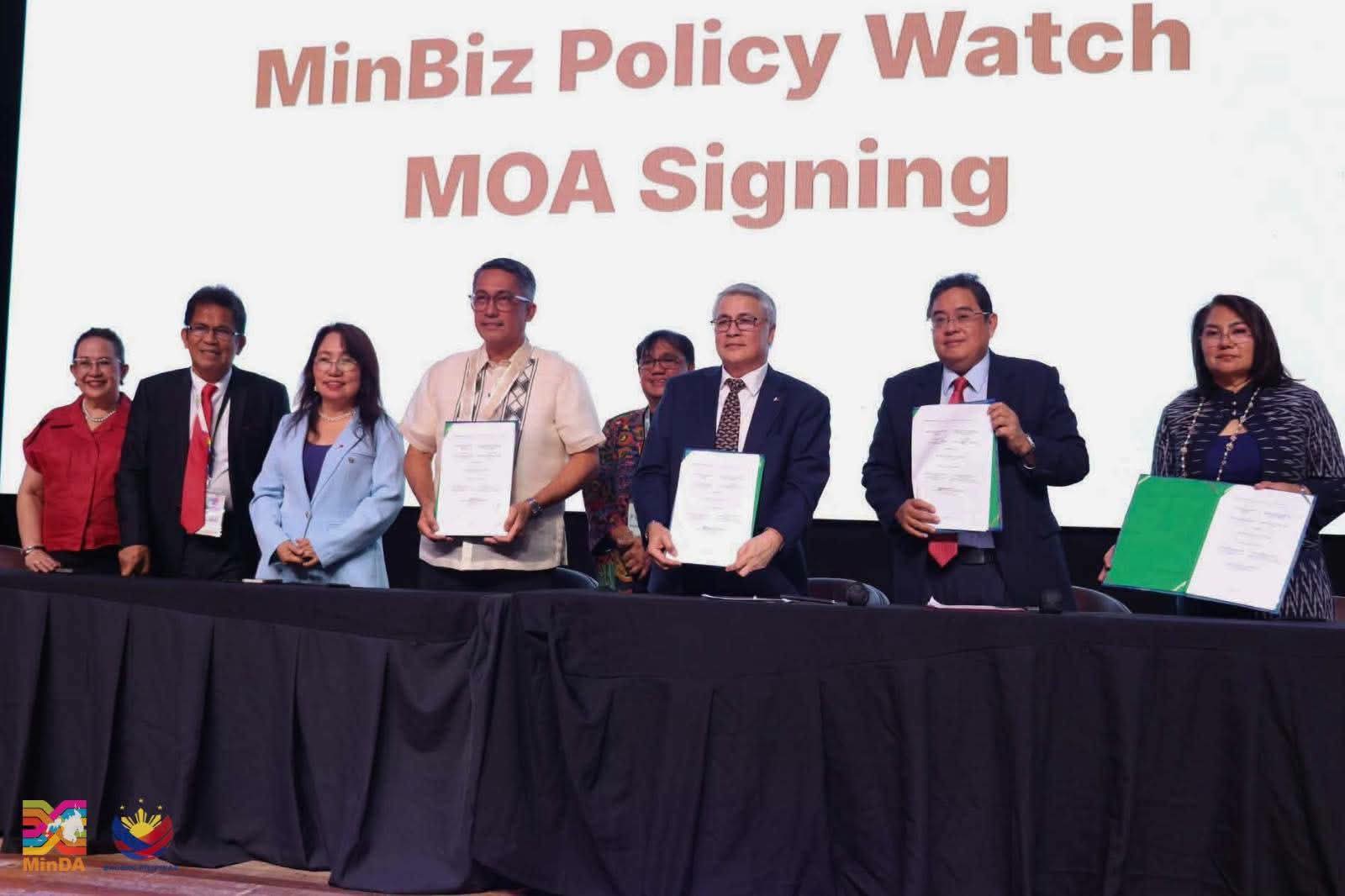
During the 35th Mindanao Business Conference at Cagayan de Oro on Thursday, Aug. 13, MinDA formally accepted the resolutions of business chambers and stakeholders from Mindanao.
In a statement, MinDA said the recommendations—gathered through regional consultations— include digitalization, infrastructure, energy, and the broader business environment.
“Let me assure you that they will be brought to the appropriate national government agencies for consideration, and of course especially for action,” MinDA Secretary Leo Tereso A. Magno said.
Among the priorities Magno highlighted are wider adoption of digital payment systems, infrastructure development including the Mindanao Railway System, and accelerated renewable energy investments to strengthen Mindanao’s energy security and self-sufficiency.
He said the digital economy agenda aligns with the national administration’s push for digital transformation to improve ease of doing business, reduce red tape, and strengthen competitiveness.
On energy, Magno said MinDA supports faster renewable energy investments while ensuring the reliability and resilience of the Mindanao power system.
He said the agency plans to convene the Mindanao Power Monitoring Committee (MPMC) with the Department of Energy for the region’s power requirements.
Investors from Korea, Japan, and Qatar are being facilitated for potential investments in solar, biomass, and other renewable energy projects across Mindanao, with some already in the phase of site selection.
“This is the kind of public-private partnership that we need, the government facilitating the investment environment for investment, and the private sector bringing in capital, technology, and innovation to Mindanao,” Magno said.
The business resolutions also call for a unified Mindanao Tourism Circuit, stronger support for agriculture and the halal industry, including value-adding and logistics modernization, and a more transparent, investment-responsive business environment.
Philippine Chamber of Commerce and Industry (PCCI) Chairman and Director for International Affairs Jude Aguilar said strengthened digital connectivity could help businesses in far-flung areas access new markets while promoting financial inclusion.
“If we achieve digital interconnection with our neighbors — Indonesia, Malaysia, Singapore payments will become seamless,” Aguilar said.
Aguilar also cited renewable energy as a priority, as businesses and consumers are susceptible to rising costs due to dependence on traditional power sources.
“Renewable energy offers a sustainable alternative, lowering costs and reducing dependence on imports,” he said.
He said the resolutions were consolidated from consultations involving the business sector in the National Capital Region, Visayas and Mindanao, and were presented to the President as a proposed plan of action.
“We hope these can be enacted into laws that will benefit businesses and, ultimately, every Filipino,” Aguilar said.
Miguel Rene A. Dominguez, president and CEO of Alsons Development and Investment Corporation, expressed that the government should strengthen support for sectors that can quickly generate jobs and attract investments.
“The government must provide the necessary planning, resources, investments, and incentives so that private capital can flow in,” Dominguez said.
He described tourism as requiring proper planning, infrastructure, and support to encourage businesses to invest in local destinations.
Dominguez also pointed to the long history of conflict in the Bangsamoro Autonomous Region in Muslim Mindanao (BARMM), which left the region unexplored and that the dividends of peace could create opportunities for private investment.
He also called for greater investment in public infrastructure and the removal of delays in doing business, such as in permitting and local government processes.
“Even a single day’s delay in processing permits due to red tape deprives people of jobs,” Dominguez said.
Magno said MinDA, the Cagayan de Oro Chamber of Commerce and Industry Foundation and PCCI are set to formalize a mechanism to monitor the progress of the resolutions to move from consultation and resolution toward concrete government action.