

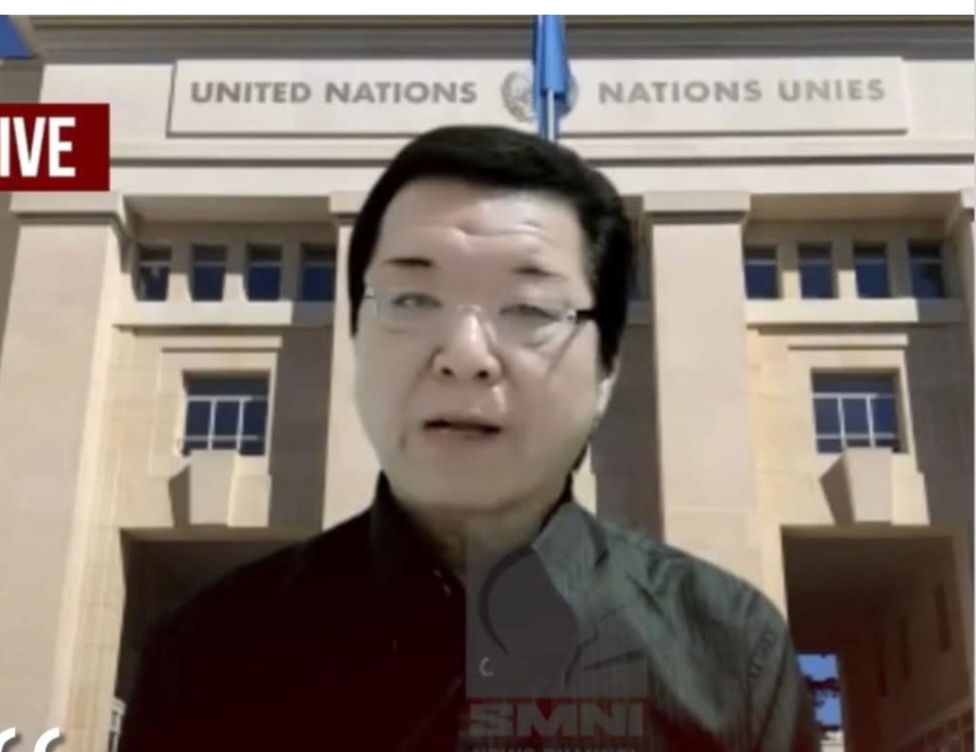
A JAPANESE researcher described the International Criminal Court’s (ICC) focus on former President Rodrigo Duterte as “total nonsense,” arguing that the international probe bypassed the Philippine judicial system and undermined national sovereignty.
Shunichi Fujiki, representing the International Career Support Association (ICSA) and the International Research Institution of Controversial Histories (iRICH), issued the statement during a session of the UN Human Rights Council on March 11, 2026.
Fujiki challenged the procedural legitimacy of the ICC’s involvement, suggesting that any legal action against the former leader must originate within the Philippine court system.
“If you want to criminalize him, you have to bring it to the court first for evaluation or investigation,” Fujiki stated. “However, they didn’t do it. And they just handed, surrendered [him] to ICC.”
Under scrutiny
Fujiki argued on the principle of complementarity —the legal doctrine that international courts should only intervene if national legal systems are proven unwilling or unable to function.
By taking the case directly to an international stage, Fujiki said the Philippines’ own legal institutions are being unfairly sidelined.
“That means ICC is superior to Filipino sovereignty,” Fujiki added. “This is wrong.”
He further characterized the proceedings—related to the Philippines’ previous anti-drug campaign—as a violation of sovereignty, calling instead for “humanitarian intervention” to respect the domestic legal process.
A growing debate
The comments come amid a heated national debate regarding the ICC’s jurisdiction in the Philippines, following the country’s withdrawal from the Rome Statute in 2019.
While international human rights groups continue to push for overseas accountability, defenders of the former administration maintain that the Philippine judiciary remains independent and fully capable of handling domestic legal matters.
Fujiki’s stance mirrors the sentiment among many Davaoeños who view the ICC’s actions as an overreach of international authority into the country’s internal affairs.