

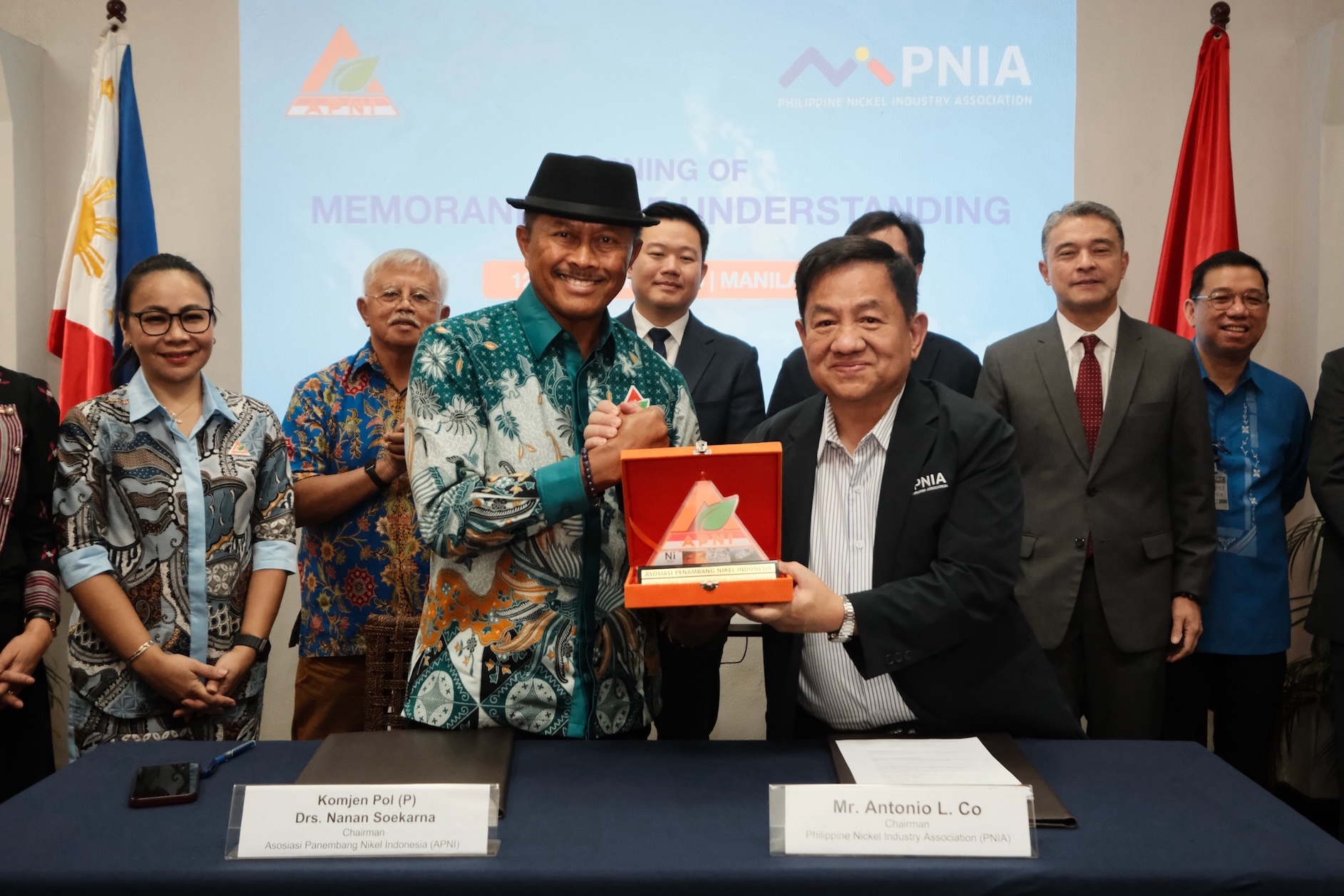
MANILA, Philippines — The Asosiasi Penambang Nikel Indonesia (APNI) or Indonesia Nickel Miners Association and the Philippine Nickel Industry Association (PNIA) recently signed a partnership agreement to shape and deepen cooperation across the nickel value chain, as secure and responsibly sourced critical minerals become central to the global energy transition.
The partnership brings together industry leadership from Indonesia and the Philippines, the world’s leading nickel-producing countries, to define shared direction for investment confidence, policy dialogue, and responsible mining that underpins the future of energy and sustainable growth.
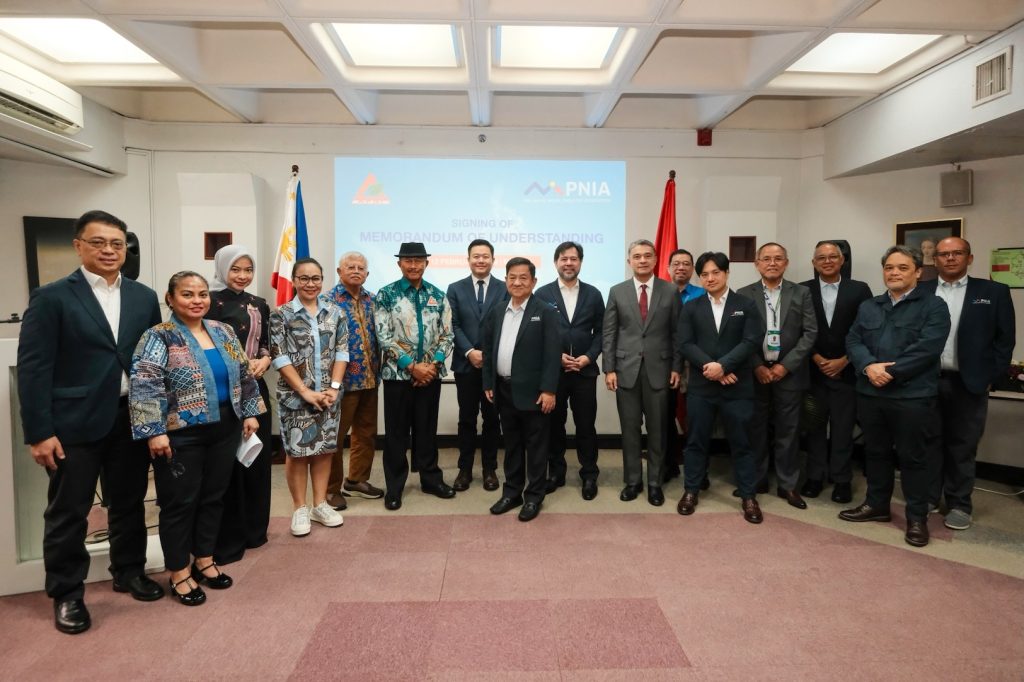
The signing event was hosted by PNIA’s academic partner, the University of Asia and the Pacific (UA&P), and was participated in by APNI chairman Komjen Pol. (Purn) Drs. Nanan Soekarna and PNIA chairman Antonio L. Co, and witnessed by Department of Environment and Natural Resources Undersecretary Juan Miguel Cuna, DTI Undersecretary Ceferino S. Rodolfo, DENR–MGB officer-in-charge Assistant Secretary Engr. Michael V. Cabalda, UA&P president Atty. John Philip Yeung, APNI secretary general Meidy Lengkey, APNI deputy secretary Sucianti Saenong, and APNI advisory board member Djokno Widajatno Soewanto.
PNIA executive director Charmaine Olea-Capili said the partnership is consistent with the ASEAN Principles for Sustainable Minerals Development, adopted by ASEAN Ministers responsible for minerals development on 02 October 2025 in Vientiane, Lao PDR. The Principles recognize the critical role of minerals in supporting strategic sectors such as energy, mobility, infrastructure, and the green and digital transitions, and call for coordinated regional efforts to uphold high standards of environmental stewardship, social responsibility, and good governance to build public trust and investor confidence.
“While this partnership was initiated by industry, we were deliberate in making sure our cooperation is anchored in and responsive to ASEAN’s direction,” Olea-Capili said. “So we set out five collaboration pillars to turn those regional principles into practical industry action: sharing data and policy perspectives; creating platforms for industry dialogue; facilitating industry learning and exposure; supporting capability, human capital, and ESG development; and ensuring cooperation remains adaptive as priorities evolve.”
Olea-Capili explained further that the partnership is anchored on a common agenda expressed through shared priority areas spanning governance and regulatory coherence; ESG, EITI, and Sustainable Development Goals alignment; investment promotion and value-adding minerals; human capital and talent development; and community development and social acceptance, which together guide how the industry collectively engages governments, investors, industry, and host communities across the nickel value chain.
“These priorities send a clear signal to investors, governments, and other stakeholders about where our industries are headed,” Olea-Capili said. “They show that APNI and PNIA are serious about building a nickel value chain in the IndoPhil Nickel Corridor that people can rely on to support the energy transition, deliver shared prosperity, and earn long-term trust.”
IndoPhil Nickel Corridor as platform for regional nickel leadership
One immediate outcome of the APNI–PNIA partnership is the promotion of the IndoPhil Nickel Corridor as a platform to position the shared regional significance of Indonesian and Philippine nickel for investment, policy coordination, and the global energy transition.
“The Corridor signals that Philippine and Indonesian nickel is developed with clearer standards and accountability,” Olea-Capili said.
From framework to shared action
With the partnership in place, APNI and PNIA will move into implementation through technical working meetings, stakeholder engagement rounds in Indonesia and the Philippines, reciprocal mine visits, and joint learning sessions to turn shared direction into practical cooperation.
“This is where plans meet practice,” Olea-Capili said. “We invite government partners, investors, communities, and other stakeholders to work with us, because responsible nickel development has to support not just the global energy transition, but also deliver real benefits for communities on the ground, and APNI and PNIA are committed to listening and keeping this cooperation moving forward to build trust.”