

RIZAL Commercial Banking Corp. (RCBC) advised businesses to stay vigilant on trade and currency risk amidst geopolitical disruptions, warning that the financial pressures built up over months of conflict will not unwind overnight even as oil prices ease and shipping routes show signs of normalizing.
It added that relief may be coming for Philippine businesses that have spent the past several months absorbing the shock of disrupted trade routes, currency swings, and rising input costs; they still need to actively manage their cash flow and risk.
Oil prices fell, and global markets rallied this week following a landmark framework agreement signed on June 18 to end regional hostilities, which includes commitments to fully reopen the Strait of Hormuz to commercial shipping and lift the corresponding naval blockade on regional ports.
RCBC head of trade and supply chain finance Alexei Jabola said, “The right solution for your business depends entirely on your position in the supply chain and your specific liquidity needs.” He added that RCBC offers a full suite of trade and supply chain finance products and services, including digital capabilities which will be available in RCBC’s corporate online banking platform this 2026, allowing customers to initiate, approve and manage their trade and supply chain transactions such as Letters of Credit, Bank Guarantees, Bureau of Customs PAS6 payments, and Supply Chain Finance transactions entirely online.
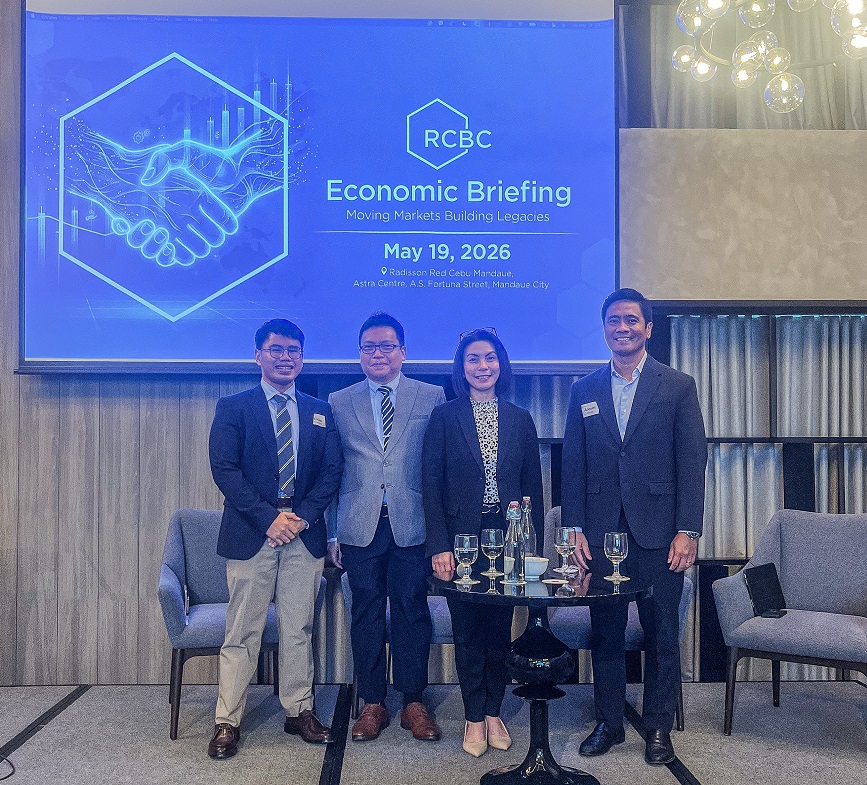
At a recent economic briefing hosted by RCBC held in Cebu and Bacolod, Jabola presented practical tools for businesses to unlock working capital and protect cash flow in what remains a volatile trade environment. He outlined how trade finance solutions such as payables finance and receivables finance can help businesses manage the financial pressures created by currency swings, rising energy costs, and supply chain delays triggered by geopolitical tensions.
Jabola added that choosing the right trade payment method requires balancing competing priorities of security, cash flow, and trust. He noted that supply chain finance can free up the working capital that would otherwise be locked in traditional payment cycles, reduce financial bottlenecks, and maintain healthy vendor relationships, giving businesses more resilience precisely when external conditions are more unpredictable.
For businesses with foreign exchange exposure, RCBC Head of Corporate and Commercial Distribution Maria Pamela C. Macapagal delivered a clear and practical message on starting to manage risk.
“Seeing the dollar-peso rate where it is now, forecasts can help as a guide, but there is no way to know with certainty where it is headed. In my 20 years as a treasury professional, history has shown that you can never call where levels are going to settle. What we are advocating is to adopt a risk management strategy – map out your exposure, define your worst-case rate, and then implement hedging strategies to protect your margins and lock in your costs. There is no way to pick the bottom,” Macapagal further said.
In attendance were business leaders, executives, and entrepreneurs learning about the most pressing financial challenges facing Filipino businesses, from the ongoing geopolitical conflict and its impact on oil prices and inflation to strategies for managing peso volatility and protecting business margins in an increasingly uncertain environment.
During the forum, RCBC chief economist Michael L. Ricafort painted a sobering but measured picture of the year ahead. Under the bank’s base case scenario, which assumes the closure of the Strait of Hormuz until June this year and global crude oil prices remaining just below $100 per barrel, inflation could average six to seven percent in 2026, above the Bangko Sentral ng Pilipinas’ (BSP) own estimate at 6.4 percent (vs. the previous estimate of 6.3 percent).
Ricafort estimates that GDP growth could slow to around 3%-4%, well below the government’s target of five to six percent (that could be revised to 3.5%-4.5%), while the BSP policy rate could climb to between 5.5- and six percent by year-end from the current 4.75 percent.
“The US economy has slowed down, just like the rest of the world. As the largest economy, the US will be hesitant to cut rates. However, most Fed officials have already signaled possible Fed rate hike/s from 2026 to 2027. Investors worldwide will try to cut costs, and we will see margin compression across industries. Investment and expansion plans will have to adjust to the new reality,” the chief economist added.
On the inflation outlook, Ricafort said it would take about 1 to 1.5 years for inflation to return to the BSP’s target of 2%-4%, adding that the structural shift toward renewable energy remains critical. “We really need to ramp up the development of renewables. Otherwise, we will remain largely dependent on imported oil/fuel/petroleum.”
Headline inflation already hit a three-year high of 7.2 percent in April before easing slightly to 6.8 percent in May, still well above the government’s 2 to 4 percent target. This pushed the Bangko Sentral ng Pilipinas (BSP) to raise interest rates to 4.75 percent and signaled another possible rate hike as global oil and fertilizer prices remain elevated.
Currently the 5th largest privately-owned bank in the country, RCBC remains committed to providing innovative financial solutions that help businesses navigate market opportunities, manage risks, and achieve sustainable growth in an increasingly dynamic business environment. Businesses looking to optimize their foreign exchange transactions and strengthen their working capital management through FX solutions and Trade supply chain finance offerings may email GRP-Treasury_Sales_Corporate_&_Commercial@rcbc.com and TSCF@rcbc.com. respectively. Clients may also visit the nearest RCBC branch.