



BY ALEX ALAGON

BY ALEX ALAGON

THIRTY endangered Rafflesia mira plants were documented by the Department of Environment and Natural Resources in the high-altitude, old-growth forests of Tarragona, Davao Oriental.
The joint team of LAWIN Forest and Biodiversity Protection System, and CENRO Mati recorded 30 individuals, all found in a roughly 1-hectare area, at an elevation of approximately 1,053 meters above sea level.
The agency said rapid inventory follows after reports of sightings of the said species.
“Its presence in a relatively high density suggests that the site may hold significant ecological and conservation value,” DENR XI said in a press statement.
It added that the discovery also provides an important baseline for continued study, monitoring, and the strengthening of protection efforts.
Of the individuals found, 10 were fully developed flowers in the anthesis or blooming stage, 13 were developing buds representing the pre-anthesis stage, and 7 were senescent flowers naturally wilting.
DENR said additional individuals may still be hidden deeper within the forest, as the survey was limited to only part of the rugged terrain.
In the recently-issued Updated National List of Threatened Philippine Plants (https://tinyurl.com/DAO-2026-20) of the DENR, the species falls in the category of Endangered Species.
This implies the species is not critically endangered, but its survival in the wild is “unlikely if the causal factors continue operating.”
“Beyond its scientific value, the discovery in Tarragona validates the hidden richness of Mindanao’s forests and botanical gems,” DENR said.
Photo from DENR Facebook page
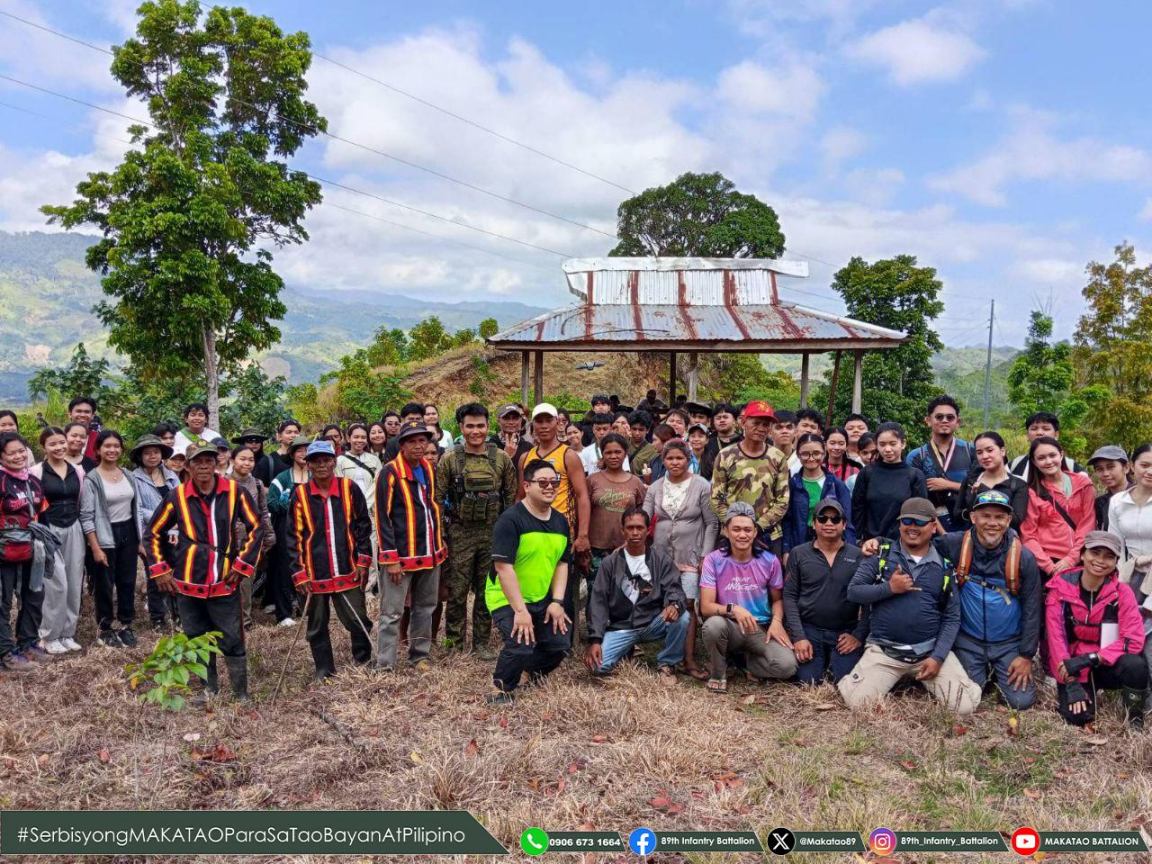
ONE HUNDRED and thirty Evolutionary Biology (BIO48) students from Central Mindanao University (CMU) successfully completed a two-day field research expedition at Mount Malimumu in Barangay Magkalungay, San Fernando, Bukidnon, on April 24-25, 2026.
The expedition, led by Dr. Noel E. Lagunday of the Institute of Biological Sciences and student representative Rodge Danniellette A. Tan, marks a significant shift in the utilization of the highland terrain.
Once utilized as a base of operations by the New People’s Army (NPA), the area is now declared free of insurgent influence and open for academic and environmental exploration.
To ensure the safety of the researchers, the Alpha Company of the 89th Infantry Battalion provided security throughout the two-day study.
The successful venture was the result of extensive multi-sectoral coordination. Before deploying, the university team engaged with the Local Government Unit of San Fernando, the Municipal Tourism Office, the Municipal Environment and Natural Resources Office, and the Indigenous Peoples Mandatory Representative.
The expedition also received a cultural blessing, with Datu Tagyaman Sinangkap (Barangay IPMR) and Bae Layden Esteban (Barangay Tribal Chieftain) leading a traditional ritual to ensure the success and safety of the study.
San Fernando Mayor Rogelio C. Yeke praised the academic institution for adhering to local security protocols.
He emphasized that under Executive Order No. 049, or the “Culture of Security,” all activities within the municipality require prior documentation and coordination to maintain stability.
“Any activity conducted in the area must be properly documented and coordinated… to maintain the peace we have worked hard to achieve,” Yeke noted.
Lieutenant Colonel Antonio G. Bulao I, commander of the 89th Infantry Battalion, highlighted the event as a model for cooperation between civil society and the military.
“Our mandate is to protect the people from the threat of terrorism. This activity is a testament to the effective synergy among the academic sector, the local government, the Indigenous Cultural Community, and the security forces,” Bulao stated. “We remain ready to support similar academic and developmental initiatives in formerly conflict-affected areas.”

VICE President Sara Duterte expressed her hope for the conduct of a fair, orderly, and peaceful presidential election in 2028 during an interview with Alvin & Tourism on the afternoon of May 4, 2026.
Reiterating her commitment to her political future, the Vice President affirmed her status as a candidate for the upcoming national polls. “I’m already a presumptive candidate because I declared my intention to run for the next presidential elections,” she stated.
When asked about the current political climate, Duterte added a call for the integrity of the electoral process, remarking, “We can only pray that there will be a presidential election in 2028 and [that] it will be honest, orderly, and peaceful.”
Duterte, who first announced her intention to run for president in February, emphasized the importance of ensuring the sanctity of the vote for the nation’s future.
Duterte’s remarks came as she visited the Netherlands to be with her father, former President Rodrigo Duterte, who is currently facing proceedings before the International Criminal Court (ICC).
Her overseas engagement coincides with significant political developments in Manila, where the House Committee on Justice recently approved the report and articles of impeachment against her.
Duterte asserted her resilience in the face of shifting political loyalties, emphasizing that she continues to draw strength from the public despite the departure of many former allies.
“It seems that all my friends in politics may have left me, but our fellow Filipinos have not abandoned me,” Duterte said.
The Vice President, who formally declared her intention to run for the presidency in the 2028 national elections last February, addressed the changing landscape of her political associations.
She noted that while many of her former colleagues in the political sphere have distanced themselves, she remains committed to her mandate.
Duterte emphasized that her focus remains steadfast despite ongoing controversies.
She stated that her primary concern is to navigate these current political headwinds with the same discipline and disposition she has maintained throughout her career in public service.

DUMAGUETE CITY, Philippines – Innovative solutions and prototype systems with direct benefits for local communities in the city took center stage in the 18th Digital Expo of Foundation University, a pioneer in tech-focused education in the country.
The three-day expo, held at Robinsons Dumaguete, showcased the university’s capability to inspire innovation and cultivate its students’ potential to be the next generation of tech-empowered leaders.
Among the standout projects were a mobile app designed to monitor the water and soil quality of plants grown through hydroponics; TapPark, also a mobile app that makes pay parking easier by letting users reserve a parking space in advance; and an AI-aided prototype software that can instantly identify the quality of cacao beans.


Students developed these apps and software to address the needs of their community, and were further refined with the help of faculty members from the university’s College of Computer Science.
Foundation University President Victor Vicente “Dean” Sinco said the expo is the annual culmination of the institution’s tech-focused curriculum and the realization of its vision to generate creative ideas and respond to societal needs.
“Since its inception, the Digital Expo has pushed the boundaries of our students’ creativity, inventiveness, and passion to help out with the community’s needs through technology. In recent years, there have been more and more student projects that explore real-world applications of the lessons they have learned from our tech-focused curriculum,” he said.
Founded in 1949, Foundation University was among the first in the Philippines to implement an iPad-based education program 15 years ago. Throughout the years, it has utilized the latest tools and technologies to deliver practical and personalized learning in a tech-centric, progressive, and inclusive environment.
“Our goal has always been to deliver education relevant to what the world looks like. As the world adopts newer technologies, it is only fitting that Foundation University, through our tech-focused curriculum, becomes the country’s incubator for the next generation of technological innovations,” Sinco said.
Foundation University offers a wide range of programs and course offerings, from Basic Education to Undergraduate, Graduate, and Postgraduate Programs. Visit https://www.foundationu.edu.ph/ and follow Foundation University on Facebook to learn more about its programs and enrollment schedules.

MAYA and Lydian are collaborating to enable the use of digital assets in everyday commerce in the Philippines.
Through Lydian’s digital asset acceptance infrastructure, businesses using Maya Business will be able to accept digital asset payments while receiving prompt settlement in Philippine pesos, removing exposure to price volatility.
For consumers, digital asset payments will be integrated into familiar flows such as QR codes, payment links and online checkout, including a “Pay with Crypto” option.
The initiative is designed to address key friction points that have limited merchant adoption, including volatility, custody requirements and regulatory complexity, by enabling stablecoin-based payments within a structured framework.
Maya will provide the regulated infrastructure layer for the collaboration, leveraging its merchant network and technology platform used by businesses nationwide, while supporting wallet screening, Travel Rule compliance and BSP-aligned reporting requirements.
With crypto ownership in the Philippines among the highest in Asia and stablecoin usage continuing to grow across the region, the collaboration reflects ongoing efforts to bridge digital assets with mainstream payment systems.
Lydian is a digital asset payment infrastructure that enables merchants and payment providers to accept stablecoins and other digital assets at the point of sale. Backed by Tether and Cantor Fitzgerald, Lydian offers same-day settlement in local currencies, removes volatility and compliance risks, and turns digital assets into real-world spending power.

DAVAO City police chief Col Peter Bauzon Madria briefed department heads of the local government on the current crime situation and their data-driven interventions and proactive strategies during a meeting at the HRMO Training Hall at City Hall on May 4, 2026.
The presentation emphasized the police force’s commitment to addressing community concerns through intensified patrols, community engagement, and rapid response initiatives.
The gathering brought together key officials from the city government to exchange updates on their respective sectors. The forum strengthened the collaboration between the DCPO and other offices to bolster public safety.
“The safety and security of our citizens are integral to the progress of Davao City,” said Madria. “By fostering closer cooperation with our fellow department heads, we ensure that our peace and order strategies are effectively integrated into the city’s overall service delivery.”

A STUDY conducted by the Philippine Eagle Foundation (PEF) reveals that the critically endangered forest raptors are suffering not only a population decline but exceptionally low genetic diversity due to high inbreeding of the species.
During the Kapehan sa Dabaw on May 4, PEF director for operations Dr. Jayson Ibañez said the genetic crisis makes the eagles less healthy with no gene flow between subpopulations. This causes the species to have fewer genetic options to adapt to future threats, namely diseases, environmental change, habitat fragmentation, and reduced mate availability.
“This study would be the basis of our new approaches and improving the way we conserve our national bird,” Ibañez said.
The study was carried out by researchers from PEF, the Philippine Genome Center, University of the Philippines (UP) Diliman, UP Los Baños, and UP Mindanao.
Ibañez shared that PEF has rescued a total of 20 Philippine eagles from 2019 to 2022, being the highest rescue rate, where some of them were reportedly being shot, trapped, or fell to the sea. 18 out of 20 of the rescued eagles are juveniles and immature eagles.
“Many eagles are being shot while migrating or traveling to other mountains. These are often immature and young eagles. So this means we are losing many of our young and immature eagles that were supposed to carry the genetic diversity of their bloodline to other mountains,” he said.
He also asks for the public’s help to raise funds for the construction of three new cages for the 13-hectare breeding sanctuary located at the foot of Mount Apo in Toril as part of the ongoing conservation breeding program.

THE SOUTHERN Philippines Medical Center (SPMC) was recently recognized as the most sustainable and livable hospital in the Philippines, but continues to face overcrowding and understaffing challenges.
SPMC received the award during the 10th Nation Builders and MOSLIV Awards at Okada Manila last April 22, 2026.
SPMC Medical Chief Dr. Ricardo Audan told reporters the award recognizes the hospital’s unwavering commitment to environmental stewardship.
“These achievements are not merely institutional awards; they reflect the dedication of thousands of healthcare workers, administrative staff, and support personnel who continue to serve with excellence, compassion, and resilience,” Audan said in his speech before the 21st City Council on Tuesday.
Audan was also named an Honoree at the Grand Honors 2026 Asia Iconic Excellence and Innovation Awards in Jakarta, Indonesia, as Most Visionary Iconic Professional of the Year.
The council, through proponent councilor Trisha Ann Villafuerte, recognized SPMC during the regular session on Tuesday.
Villafuerte acknowledged SPMC for being awarded a 5-Green Star Rating and has consistently maintained this distinction for the past (4) four years under the Green
Viability Assessment of the Department of Health, ensuring that hospitals operate in an environmentally responsible and sustainable manner.
On top of the recognition as one of the Most Outstanding and Livable Hospitals, SPMC was also named among the Best Employers in the Philippines for 2026, ranked First Runner-up as Most Outstanding Level 3 Government Hospital nationwide, and proudly placed at Number 29 in the World’s Best Hospitals ranking in the Philippines.
However, with these awards, Audan emphasized that the hospital is continuously challenged to maintain quality service, especially since it is facing a 140% increase in admissions.
He stressed that as a government facility, SPMC does not decline patients, leading to overcrowding.
“We cater all over Mindanao, dapat by clustering, ang nahitabo mo bypass sila of that hospital because they know the capability, capacity of SPMC,” he said.
Audan said SPMC operates open heart surgery, organ transplant, and robotic surgery, among others, and is at par with Manila hospitals and even globally.
The hospital also caters to patients not only in the Davao region but also as far as Cotabato and Zamboanga.
In terms of staff number, the hospital has 6,300 employees of different personalities, consisting of around 3,000 nurses and 800 doctors.
Audan said the nurse-to-patient ratios are currently around 1:20 in the wards and 1:6 in the Intensive Care Unit, which exceeds the ideal ratios of 1:12 and 1:3, respectively.
For doctors, he reported larger numbers; there is also a significant shortage of specialists, particularly anesthesiologists and pediatricians.
At present, SPMC is in the hopes for the approval of House Bills 10666 and 5573, which are currently in the lower house, will be approved to increase the hospital’s bed capacity to 2,500.
This initiative was approved by the House Committee on Health just last March 2026, following the consolidation of House Bills 1066 and 5573.
“We extend our sincere appreciation to Isidro Ungab, the principal author of House BilI No. 1066, for his strong support in making this expansion possible. We likewise thank the seven congressmen of Davao Province who united in support of House Bill No. 5573,” he said.
Audan stressed that once it becomes a law, the hospital will have increased funding, budget and human resources, and improve facilities.
Pending the law, the hospital continues to make use of the hallways to accommodate patients, such as those admitted from the emergency room.
A new Pediatrics Institute was opened in November 2025, freeing up space previously used in the gym, while the Acute Trauma building located across from the emergency room is expected to open later this year to decongest the main ER.
The SPMC has been serving the people since 1917, starting as a modest facility with only 24 beds.
SPMC stands as the largest government hospital in the Philippines and the only Department of Health-retained hospital in Davao City.

THE DECLARATION of a Philippine Eagle Critical Habitat in Barangay Tambobong is critical to protect and preserve the endangered raptor.
Jayson Ibanez, Philippine Eagle Foundation (PEF) director for operations, said declaring it a critical habitat acknowledges what has long existed on the ground: an ancient nesting site of the Philippine Eagle and a well-protected ancestral forest of the Obu-Manuvu.
“The Critical Habitat status formalizes and strengthens this protection by providing legal recognition and support to the community’s efforts,” he said.
This stems from the April 15 public hearing of the 21st City Council committee on environment and natural resources, headed by chairperson Councilor Temujin “Tek” Ocampo, approving the proposed critical habitat area for the Philippine Eagle and other threatened wildlife species in Barangay Tambobong, Baguio District, Davao City.
The Department of Environment and Natural Resources (DENR) Davao said the proposed site covers approximately 2,964.35 hectares within the Panigan-Tamugan Watershed.
The area was identified as a critical habitat due to confirmed sightings and nesting activity of the Philippine Eagle.
DENR XI added the area features relatively intact forest ecosystems, river systems, and a high diversity of endemic species, and holds cultural and spiritual significance for the Obu Manuvu Indigenous Community.
PEF has supported this initiative through mapping, biodiversity assessments, and facilitating alignment between Indigenous and government conservation goals, as a partner of the DENR, the Obu Manuvu community, and the city government.
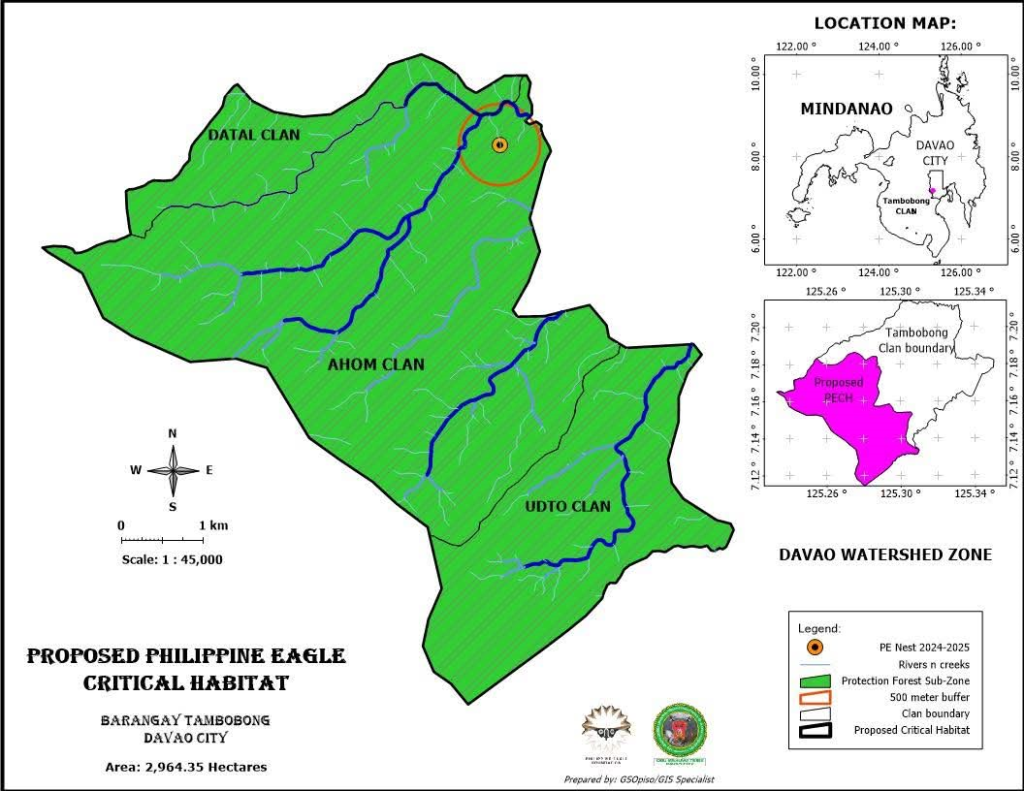
Known to the Obu-Manuvu as “Kuruwonnan Alihowan to Atollun Kahubbarran” (or “a natural area cared for by three clans”), this landscape has already been conserved for generations through Indigenous stewardship.
Kuruwonnan Alihowan to Atollun Kahubbarran (a natural area cared for by three clans)
For Lipatuan Joel Unad, Obu-Manuvu indigenous peoples chief, declaring the area a critical habitat equates to declaring it a “sacred possession” being part of the Obu-Manuvu.
Kuruwonnan is an Obu-Manuvu term that translates to resources, which Unad said requires protection, “dili pagadaoton, dili pagapasipad-an kay kini usa ka kayamanan sa tribung Obu-Manuvu nga naga-base sa kinaiyahan.”
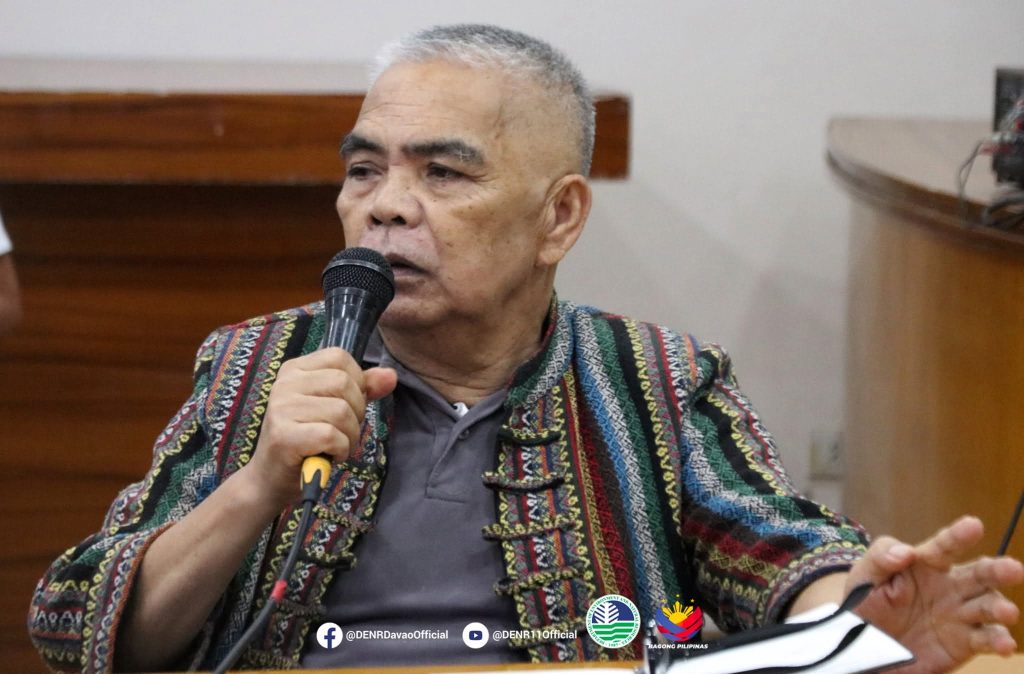
“Ang katubigan, mga ka-sapaan, ka-lasangan, kahayupan, kahanginan, kalanggaman parte ka na sa Kuruwonnan, nagpasabot dili pwede himoan og mga dautan nga binuhatan, kundli pagapanggaon og ampingan ug dili kini pagahilabtan,” Unad told TIMES in an interview.
The word Alihowan means “to avoid” whatever ill intention an individual has for a mountain or an area declared Alihowan. Cutting trees and the abuse of animals are prohibited.
The concept, Unad said, the tribe has long lived amid the forest, rivers, and birds, meaning the lives of the tribe are incorporated with nature, inside the declared “pusaka.”
Pusaka is an indigenous term for sacred heirloom or ancestral possession.
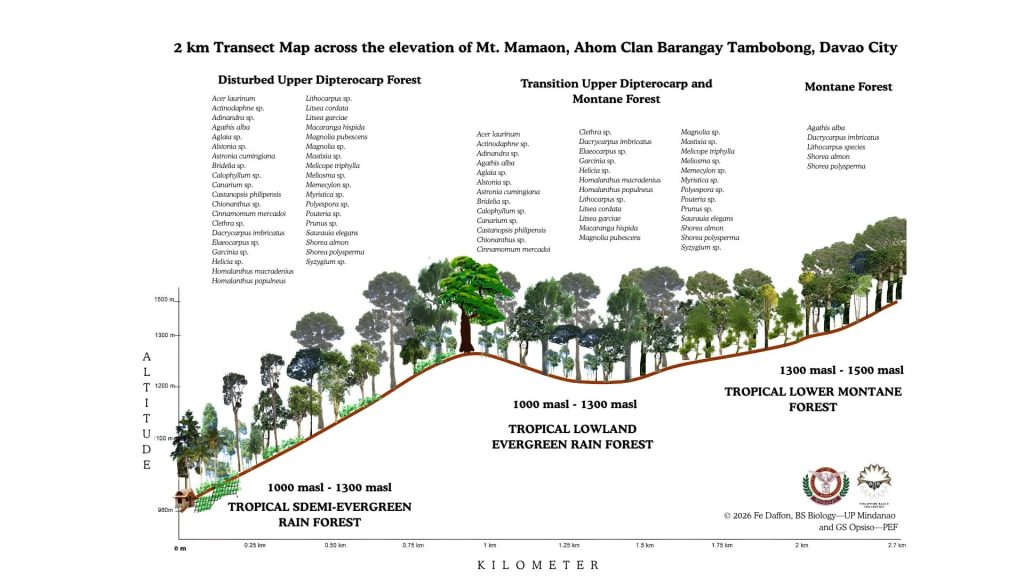
Obu-Manuvu involvement in environmental preservation as “frontliners”
With the proposed critical habitat, concerns about the presence of residents are raised, but DENR stated that such a situation is possible.
Dr. Franklyn R. Buenaflor, DENR Davao Conservation and Development Division chief, explained that under Memorandum Circular No. 2007-02, which provides the guidelines for establishing critical habitats, the area must adopt a harmonized framework for sustainable use and zoning.
Similar to protected areas under the National Integrated Protected Areas System (NIPAS), a Critical Habitat Management Plan (CHMP) is required.
According to DENR, the plan will define zoning classifications such as core zones, strict protection zones, and multiple-use zones, where limited and sustainable indigenous practices may be allowed.
Tribal leader Unad acknowledged the initiatives of the government and how critical communication is between both government and tribe, but emphasized the involvement of Obu-Manuvu as the frontliners.
Unad explained that there are considerations that various parties: DENR, the city government, civil organizations, and the tribe, need to consider for the critical habitat to prevail.
He stressed there is a need for a cultural policy, cultural procedure of communication and relationship, so that not only the DENR or the city government are aware of environmental preservation, but accountability and responsibility are conceptualized to the Obu-Manuvu as frontliners.
The involvement of Obu-Manuvu should be prioritized as they are the ones residing in the proposed critical habitat.
“Komunidad na sa Obu-Manuvu so kinahanglan nga sila unang una makasabot, magkasinabtanay kay walay lain nga mahimong makakita, maka witness, ang Obu-Manuvu lang,” he stressed.
“Ang kinaiyahan parte sa kinabuhi sa tribu tungod kay naa na sila nagdako, ang ilang economic development naa na diha mismo sa gi-declare nga critical habitat,” Unad added.
For Ibañez, the presence of small and remote Indigenous communities within the area does not threaten the Philippine eagle.
On the contrary, Ibañez said the long history of Obu-Manuvu living in harmony with nature manifests that they are “vital partners in conservation.”
“The residents of Tambobong are not threats to wildlife—they are its protectors, serving as eagle-friendly stewards of this Critical Habitat,” Ibañez said.
The Obu-Manuvu community named the eaglet through a traditional naming ritual.
“Tuglivon” is an ancient bird in their stories, believed to have helped form the first land after a great flood.
LGU support
Ocampo said the committee will adopt the resolution of the Watershed Management Council and will be presented to the plenary for approval.
Ocampo said there is no opposition from the barangay, and it was actually supportive of the move.
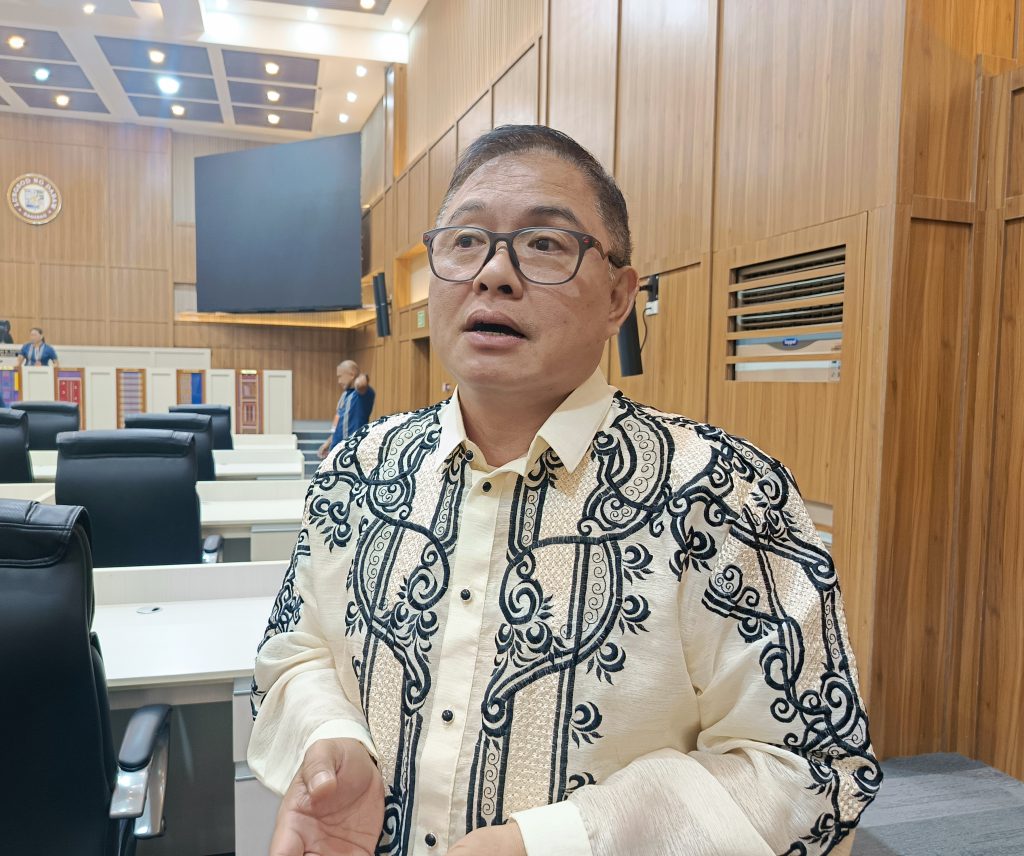
“We are preparing the necessary resolution declaring the area to be a sanctuary for the Philippine eagle,” Ocampo told TIMES in an interview.
He clarified that the adoption of the resolution is not confiscatory but an affirmation of the need to protect the Philippine Eagle’s breeding ground, backed by research and studies from PEF and DENR.
The declaration of the critical habitat will incorporate provisions that respect the existing traditional way of life of the indigenous people and ensure strict enforcement against illegal structures.
For the sustainability of the critical habitat, Ocampo said deputizing the Obu-Manuvu in terms of monitoring and surveillance on the ground would depend on the future plans of the city government to add more Bantay Bukid volunteers.
The councilor acknowledged that the Obu-Manuvu are naturally the stewards of the environment.
“We are all on one page in protecting the environment in that particular area,” Ocampo stressed.
Harmonization of mainstream, cultural policies pushed
Tribal leader Unad hopes the declaration will incorporate the Obu-Manuvu’s own cultural and traditional policies of protecting the environment, and should be harmonized with mainstream policies of DENR.
“Nga dili lamang ang local government o ang DENR nga mao ni among balaud mao ni ipatuman, dili lamang na,” he said.
While the tribe is not scientific, Unad said they understand the importance of protecting the critical habitat for cultural integrity, citing the Indigenous Peoples’ Rights Act of 1997 (IPRA), or Republic Act No. 8371.
The IPRA Law promotes respect for cultural integrity that protects indigenous culture, traditions, and institutions, including the right to preserve their indigenous knowledge systems and practices.
