



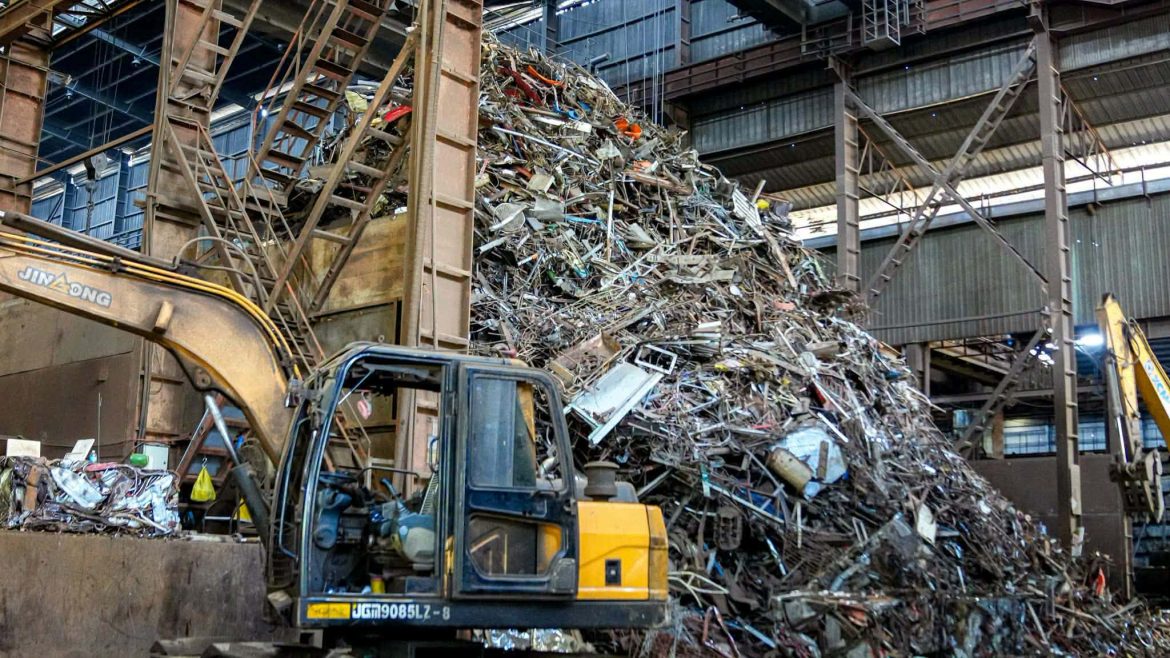
THE NATIONAL Bureau of Investigation (NBI) refuted claims that its Aug 14 raid on a Davao City steel manufacturing facility was politically motivated, revealing that the plant produced radioactive, substandard construction rebars linked to structural collapses.
Speaking at a press conference at NBI national headquarters on Tuesday, Aug. 25, NBI director Melvin Matibag called on the public to stop “putting political color” on legitimate, intelligence-driven law enforcement operations designed to protect worker safety and welfare.
“It is very sad to notice that some politicians put color on what we did at Davao Mighty Steel. You know politics,” Matibag said during a video presentation of the joint raid. “That is unfair to the team of the NBI, PAOCC, and other law enforcement agencies protecting the interest of the Filipino people. The evidence does not lie, and the receipts are right here.”
Matibag clarified that Davao Mighty Steel Corporation, located in Barangay Ilang, Bunawan, Davao City, is the fifth of over 20 steel plants targeted in a nationwide crackdown against defective building materials and hazardous industrial operations.
Radioactive rebars and structural collapses
The multi-agency operation—conducted alongside the Philippine Nuclear Research Institute, Department of Environment and Natural Resources, Department of Labor and Employment, and the Presidential Anti-Organized Crime Commission—uncovered widespread regulatory and physical failures.
According to the NBI, physical testing revealed that four out of eight steel bar samples collected at the site failed Philippine National Standard (PNS 49:2020) requirements—a 50 percent failure rate.
Matibag warned that the facility, which has been in operation since 2012, supplied defective steel bars that compromised structural integrity in regional construction projects.
“If those metals are used in your houses and they collapse… we have seen two-story building structures collapse because of the steel bars that came from Davao Mighty Steel,” Matibag stated. “Can you imagine how many steels were used to construct houses since 2012? We hope the public is not blinded.”
Severe radiation exposure
During the Aug. 14 enforcement of court-issued search warrants, law enforcement rescued 174 Filipino laborers and subjected 194 total site personnel to immediate medical screenings.
Medical evaluations conducted by NBI’s Dr. Tierra revealed that 57 workers exhibited documented medical abnormalities linked to severe occupational hazards and lack of personal protective equipment.
Dr. Tierra reported that workers suffered from swollen lymph nodes in the neck area, first-degree skin burns, abnormal bodily lumps, asthma, fever, hypertension, and skin diseases.
Furthermore, PNRI activity scanning detected high radiation contamination levels in two workers—a forklift operator and a laborer stationed at the waste material and melting storage units.
“I also saw that among those working in the iron smelter, their skin was a little red, while others were burned. When I asked if they used protection, they said none,” Dr. Tierra explained, noting long-term radioactive exposure risks.
21 charged
The NBI confirmed that criminal charges have been filed against 21 key company officers, managers, and technical personnel.
Fourteen suspects, including four Filipino personnel and 10 foreign nationals, are currently in NBI custody undergoing inquest proceedings, while seven unapprehended corporate officers remain at large.
Matibag clarified that the 174 rescued laborers will not face criminal prosecution. Instead, the government is coordinating with DOLE to extend immediate financial aid, employment placement, and TUPAD emergency work programs.
The NBI and Department of Health are also monitoring the long-term medical treatment of exposed workers.
