


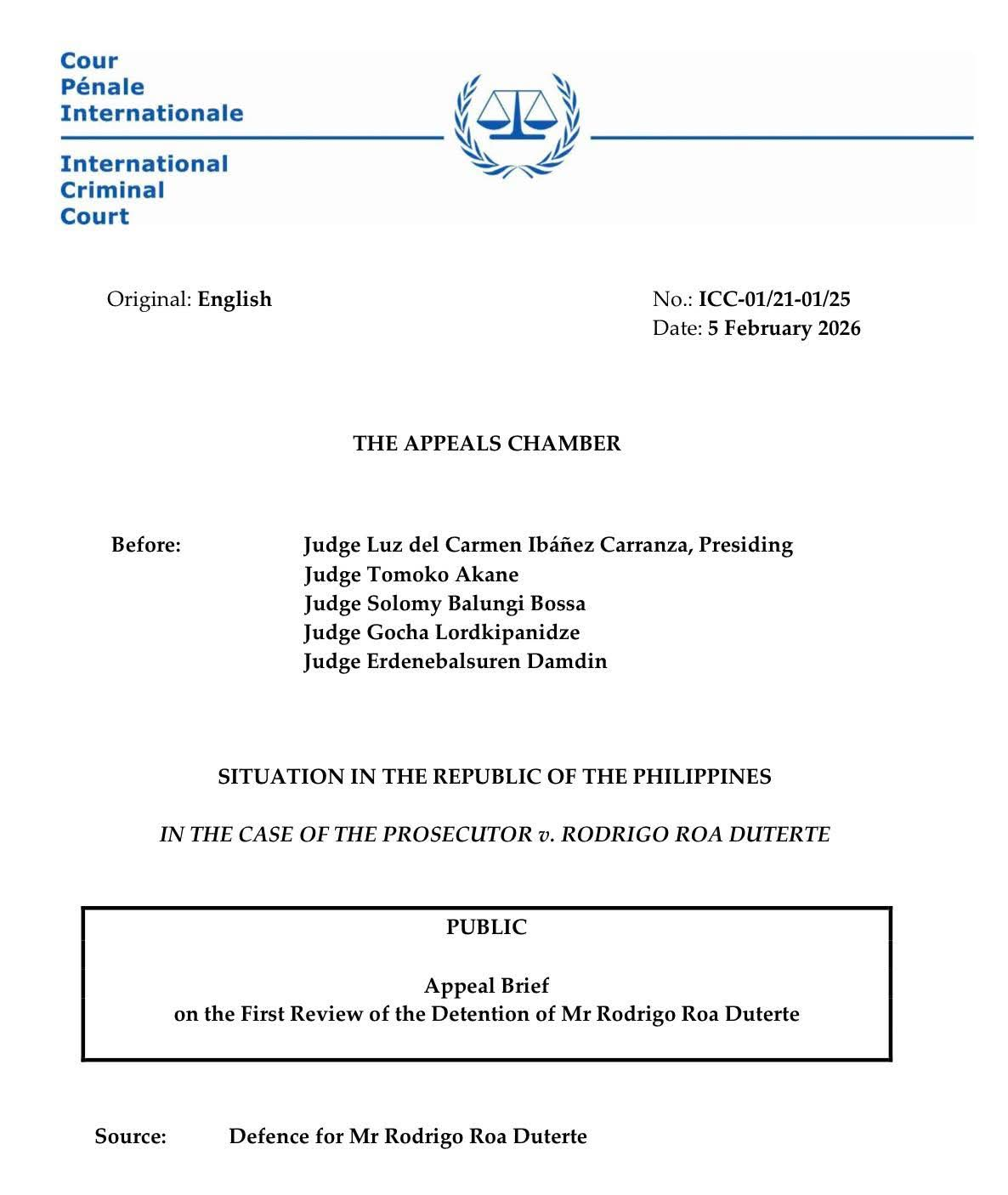
THE LEGAL team for former President Rodrigo Duterte has formally filed an appeal brief with the International Criminal Court (ICC) Appeals Chamber, demanding his immediate conditional release due to what they describe as deteriorating physical and neurological health.
The appeal, led by defense counsel Atty. Nicholas Kaufman, argues that the ICC Pre-Trial Chamber committed “serious legal and factual errors” by refusing to consider new medical evidence that could undermine the original justification for his pre-trial detention.
The “changed circumstances” argument
Under Article 60(3) of the Rome Statute, the Court is required to periodically review detention and reassess its necessity if circumstances change.
The Defense maintains that a new, comprehensive medical report prepared by a neurologist and a neuropsychologist constitutes such a change.
The report concludes that Duterte suffers from significant cognitive and neurological impairments, particularly in executive functioning and decision-making.
According to the filing, these impairments, combined with his physical condition, render him “incapable of fleeing, interfering with witnesses or proceedings, or committing further crimes”.
Defense alleges procedural unfairness
The brief takes aim at the Pre-Trial Chamber’s decision to reject the defense-submitted medical report while accepting reports from a court-appointed panel.
The Defense argues this creates a lack of “equality of arms” and violates ICC jurisprudence, which states evidence should be judged on its probative value rather than its source.
“By ignoring this evidence, the Pre-Trial Chamber rendered the detention review meaningless,” the Defense stated, arguing that health is the only dynamic factor in the case since the gravity of the charges remains static.
The request for release
The Defense is now asking the Appeals Chamber to reverse the previous decision to maintain detention, and order the immediate conditional release of Mr. Duterte to a cooperating State Party.
The Appeals Chamber’s decision will be a critical turning point in the proceedings, determining whether the former leader will remain in custody throughout the duration of his trial.
