

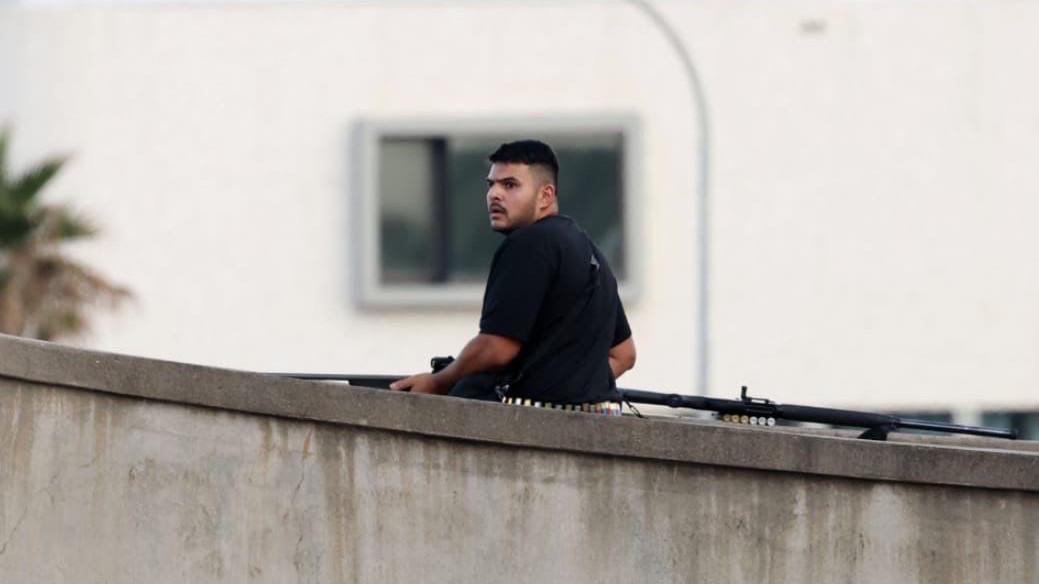
THE NATIONAL Security Council clarified on Monday that two individuals linked to a shooting incident in Sydney, Australia, did not undergo any terrorist training during their recent stay in the Philippines.
National Security Adviser Secretary Eduardo M. Año confirmed the Philippine government is currently investigating the travel history of Sajid Akram, an Indian passport holder, and his son Naveed, who holds an Australian passport.
The two traveled through Manila to Davao City between Nov. 1 and Nov. 28, 2025.
“There is no valid report or confirmation that the two received any form of military training while in the country,” Año said in an official statement.
He noted that a mere visit does not support allegations of extremism and that the duration of their stay would not have allowed for any “meaningful or structured training.”
In a message to the TIMES on Monday afternoon, Dec. 22, Año added that authorities are still investigating the specific activities of the duo in the city.
“Maybe they are waiting for someone who did not come. But they did not undergo any training in Mindanao and they did not meet any local terrorist personality,” Año told the TIMES.
Mindanao no longer a ‘hotspot’
The NSC chief also took the opportunity to push back against media reports labeling Mindanao as a hotspot for violent extremism or Islamic State ideology, calling such descriptions “outdated and misleading.”
According to Año, Philippine security forces have significantly degraded ISIS-affiliated groups since the 2017 Marawi Siege. He emphasized that these groups are now fragmented, leaderless, and operationally weakened.
“There have been no recorded terrorist training activities or significant operations by these ISIS-affiliated groups since 2017,” the statement read, citing assessments from both the United Nations and the U.S. government.
Intelligence coordination: The Philippine government is currently coordinating with Australian counterparts to share information and intelligence and determine the exact purpose of the suspects’ visit.
Año attributed the improved security environment in the south to sustained military operations and the establishment of the Bangsamoro Autonomous Region in Muslim Mindanao, which has granted the region political autonomy and development funds t
The NSC reiterated its commitment to ensuring Philippine territory is not used for terrorism purposes, maintaining a “vigilant, intelligence-driven” counterterrorism program.