

BY ALEX ALAGON

BY ALEX ALAGON

usmile continues to empower Filipinos’ oral care habits with innovative and functional products that help them achieve their everyday dental needs.
Manila, Philippines – First dates, coffee catch-ups, spontaneous meetups, and everyday conversations all have one thing in common: feeling confident enough to be yourself. While choosing the right outfit or making a good first impression often gets the most attention, there’s another part of personal care that deserves a spot in the conversation—a healthy, well-maintained smile.
For Filipinos juggling early mornings, long commutes, and busy work or school schedules, oral care can easily feel like just another task to tick off the daily checklist. Yet, much like skincare and other self-care rituals, maintaining good oral hygiene is a simple way to look after both personal well-being and confidence in everyday interactions.
With this in mind, professional oral care brand usmile is making dental hygiene more approachable through innovative products and relatable lifestyle conversations. Guided by its philosophy, “Prevention Over Treatment,” the brand develops products with purposeful designs that go beyond aesthetics, with features curated to serve specific functions and address everyday oral care needs. It encourages Filipinos to build consistent oral care habits that fit naturally into their routines, helping them take better care of their smiles before dental concerns arise.
Beyond First Impressions: Why Oral Hygiene Matters in Dating
Taking the conversation beyond everyday routines, usmile recently collaborated with the Bare It All Podcast, alongside licensed dentist Joli Alferez, for an episode exploring dating non-negotiables, personal preferences, and the role of good hygiene in relationships.
From fresh breath to personal hygiene habits, the discussion explored how oral care can influence first impressions, personal comfort, and confidence in relationships. It also brought attention to the importance of maintaining healthy teeth and gums, showing that good oral hygiene goes beyond achieving an attractive smile.
After all, feeling confident about one’s oral hygiene can make everyday interactions more comfortable, from meeting someone for the first time to enjoying a meal with a partner. Through this collaboration, usmile encourages Filipinos to view oral care as an essential part of self-care and personal well-being.

Making Everyday Oral Care a Simple Act of Self-Care
A good oral care routine doesn’t have to be complicated. From brushing before heading out for the day to freshening up before an evening out, small, consistent habits can make a meaningful difference in maintaining healthy teeth and gums.
Encouraging preventive oral care is especially important in the Philippines. Data from the Department of Health (DOH) indicate that 92.4% of the population experiences tooth decay, while 78% have gum disease. These numbers highlight the need for greater awareness and more consistent hygiene practices among Filipinos.
Recognizing this, usmile offers technology-driven oral care solutions that help address different consumer needs, combining practical functionality with innovations that make everyday hygiene more accessible and appealing.
For those looking to maintain a brighter-looking smile, usmile Optical White 2.0 features purple color-correction technology that helps neutralize the appearance of yellow tones for a brighter-looking smile. The upgraded formulation now also incorporates all-natural colorants, reflecting the brand’s focus on improving its products for everyday use.
Meanwhile, usmile Strength White offers another approach to daily oral care, focusing on whitening and enamel care for consumers who want to maintain their smiles while being mindful of their teeth’s overall condition.
usmile’s oral care innovations have also gained traction among Filipino consumers, with Optical White 2.0 gaining traction among consumers on TikTok Shop Philippines in October 2026, while Strength White continues to build visibility among consumers interested in incorporating more purposeful products into their routines.
By offering solutions that address different oral care preferences, usmile makes it easier for consumers to find products that complement their lifestyles and personal hygiene habits.
Confidence Starts with Consistent Habits
A brighter-looking smile may boost confidence, but good oral health starts with consistent care. Brushing twice daily with fluoride toothpaste, cleaning between the teeth, and visiting a dentist regularly remain essential habits for maintaining healthy teeth and gums.
Through its innovative products and relatable lifestyle conversations, usmile continues to support Filipinos in understanding and addressing their oral health needs. By encouraging informed choices and consistent habits, the brand hopes to contribute to greater awareness of dental health challenges in the Philippines and reinforce its belief that prevention begins with everyday actions—one routine and one smile at a time.

From left: DOT Assistant Secretary for Branding and Marketing Communications Armand Lorenze Valerio Sapitan; GCash for Business General Manager Paul Albano; DOT Secretary Maria Bernardita Angara-Mathay; GCash International Head of International Payments Juan Carlos Bauza; and Mynt Chief Regulatory Affairs Officer Atty. Cef Sison
The Department of Tourism (DOT) and GCash signed a memorandum of understanding (MOU) to expand digital payment acceptance among tourism-related MSMEs nationwide and accelerate the tourism industry’s digitalization.
GCash tools and training to help local merchants welcome cashless payments from Filipino and foreign travelers
The Department of Tourism (DOT) and GCash, through its mobile wallet operator G-Xchange, Inc. (GXI), have partnered to promote cashless payments among tourists and DOT-accredited micro, small, and medium enterprises (MSMEs). Local merchants will receive digital payment tools and training so they can serve visitors more conveniently.
The memorandum of understanding (MOU) was signed on November 3. Tourism Secretary Dita Angara-Mathay and Assistant Secretary for Branding and Marketing Communications, Armand Lorenze Sapitan, signed for the DOT. Paul Albano, General Manager of GCash for Business, and Juan Carlos “Caloy” Bauza, Vice President and International Payments Head of GCash International. The MOU sets a framework for joint campaigns, merchant onboarding, and financial literacy initiatives in support of Philippine tourism.
As mobile payments become a way of life around the world, travelers increasingly expect to pay with their phones wherever they go. For tourism businesses, offering digital payment options is fast becoming essential to staying competitive. The benefits are greatest in remote destinations, where money changers may be far away or nonexistent. Visitors no longer need to carry large amounts of cash or convert currency before they arrive, and merchants no longer lose a sale because a customer is short on pesos.
This initiative will enable local businesses to seamlessly accept a wider range of payment methods, including supported foreign-issued cards, giving international visitors greater convenience while helping local businesses capture tourism-driven spending.
“Visitors already want to pay digitally, and our accredited enterprises should be ready for them. From homestay hosts to market vendors and local artisans, these are the people who make a destination lively enough to be worth visiting,” said Secretary Angara-Mathay. “This partnership with GCash gives them the tools and the training to accept digital payments, so more of what tourists spend stays in local communities.”
“The DOT will do its part by endorsing and actively promoting the onboarding of our accredited MSMEs, consistent with our Love the Philippines and Discover More to Love campaigns,” she added.
Under the MOU, the DOT will provide guidelines on the proper branding of its marketing campaigns and give GCash access to its digital assets for co-branded efforts, along with relevant tourist arrival data. It will also share lists of accredited entities for outreach and merchant verification, subject to data privacy laws, invite GCash to its events and trade activities where merchants may be onboarded, and coordinate with relevant offices, particularly its regional offices.
On its part, GCash will organize co-branded campaigns in support of the DOT’s tourism advocacy and streamline the onboarding of accredited MSMEs. It will provide merchant incentives, customized digital payment toolkits, and promotional support to drive cashless transactions across key tourism destinations, and will facilitate financial literacy training for MSMEs. GCash will also share insights on campaign performance and consumer trends, and work with the DOT on tourism product development projects that support local artisans and other creative enterprises among the accredited MSMEs.
GCash, in addition, will onboard tourism-accredited MSMEs to GCash for Business and equip participating merchants with payment acceptance solutions such as GCash SoundPay, GCash PocketPay, GCash SoundPay Plus, and GCash EasyPOS. With simplified registration requiring only a verified GCash account to get started, more small businesses can access digital payment facilities without the complexities of traditional banking.
“At GCash, our mission of ‘Finance for All’ means ensuring that every Filipino, including every single micro and small merchant who brings our local tourism destinations to life, can thrive in the digital economy. Through this partnership, we are boosting the Philippine tourism sector by connecting even the smallest local businesses to more tourists, both local and international, and giving them the tools to benefit from global tourism opportunities,” said Albano.
According to the Philippine Statistics Authority (PSA), tourism contributed over ₱2.27 trillion to the economy in 2025, or 8.1 percent of GDP, and supported 7.7 million jobs. By equipping accredited MSMEs to accept digital payments, the partnership aims to help more of that spending reach local communities.

POLICE Regional Office (PRO) XI arrested 76 wanted individuals across the Davao Region during intensified “Warrant Day” operations conducted alongside holiday security deployments for Undas from Oct. 29 to Nov. 3.
Among those apprehended under Oplan Manhunt Charlie were 11 most wanted persons (MWP) and 41 other wanted persons (OWP), according to figures released by regional police headquarters at Camp Sgt. Quintin M. Merecido.
Breakdown of the arrests includes 10 regional-level wanted persons, seven provincial-level wanted persons, and seven city or municipal-level wanted persons.
The Davao City Police Office (DCPO) spearheaded the regional manhunt with 35 arrests. The Davao de Oro Police Provincial Office (DDOPPO) and Davao Oriental Police Provincial Office (DOPPO) recorded 11 arrests each, followed by Davao del Norte with nine, Davao del Sur with seven, and Davao Occidental with three.
PRO XI acting regional director PBGEN Benigno L. Guzman underscored the importance of sustained law enforcement operations during peak holidays to ensure fugitives are brought before the court while public safety is maintained.

MAYOR Sebastian “Baste” Duterte led the second choice (secondary preference) of many voters for the presidency in the first election of 2028, according to a recent nationwide survey by WR Numero Research.
In a survey conducted from Oct. 7 to 13, 2026, Mayor Baste received 21.3% support for the secondary presidential preference. However, according to the survey firm, the figure was only half of what Vice President Sara Duterte received as the primary presidential preference, at 42.4%.
Among the names floated in the survey for primary presidential preference were Naga City Mayor Leni Robredo (15.9%), followed by Baste Duterte (6.9%), Senator Raffy Tulfo (6.7%), Senator Robin Padilla (3.8%), Senator Bam Aquino (2.5%), Senator Risa Hontiveros (2.0%), Senator Kiko Pangilinan (1.9%), and Defense Secretary Gilberto Teodoro Jr. (1.5%).
Secondary choices
For the second choices, however, Baste Duterte dominated the field at 21.3% of the surveyed respondents, followed by Tulfo (10.0%), Robredo (9.4%), Padilla (9.3%), and Sara Duterte (8.6%).
Aquino and Hontiveros also made the list at 6.9% and 5.5%, respectively.
“The support of the voters has been focused on the camp of the Duterte family, but VP Sara continues to be the first choice of a large percentage of the public,” reported WR Numero.
According to the data for each region, Baste Duterte has the highest secondary support in the provinces of Mindanao (41%) and Metro Manila (29%).
The survey was conducted through face-to-face interviews with 1,225 adults throughout the region, with a ±2.6% margin of error.
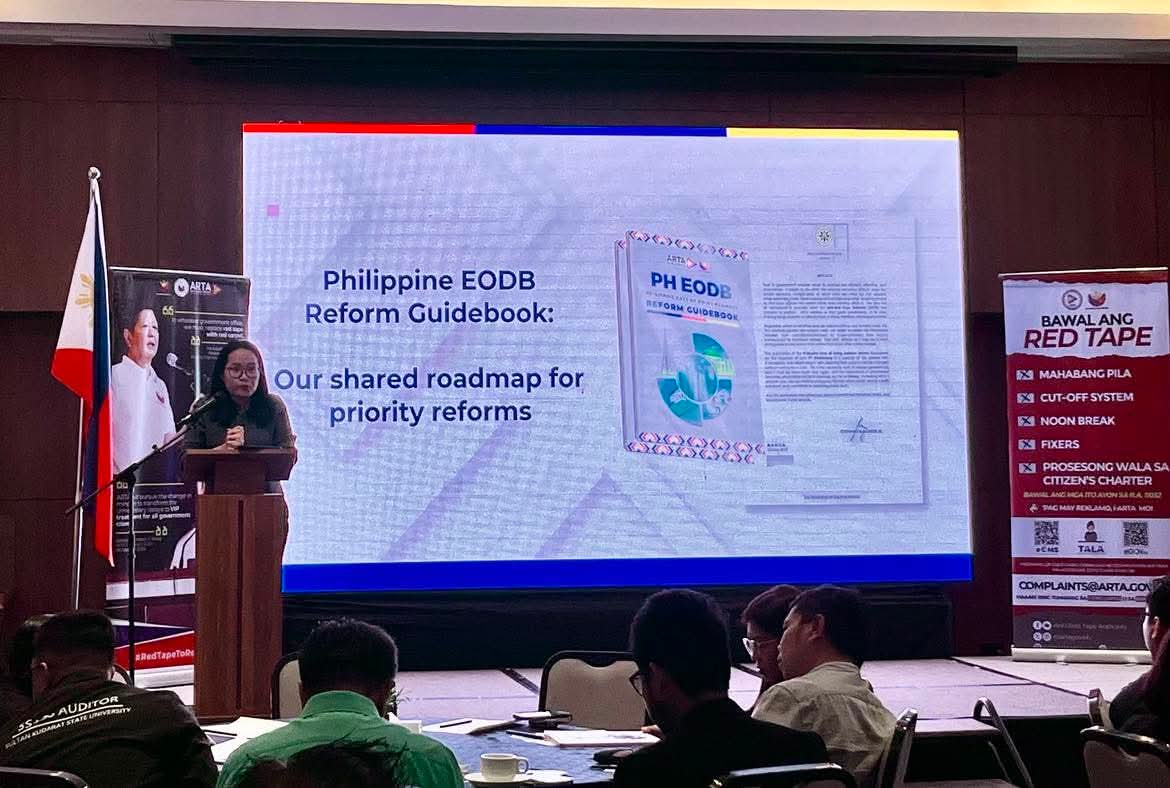
THE ANTI-RED Tape Authority (ARTA) on Thursday, Nov. 5, brought the Philippine Ease of Doing Business Reform Guidebook and the World Bank’s Business Ready (B-Ready) report to the regions for the first time.
ARTA Director IV Marbida L. Marbida emphasized the importance of strengthening local reforms to enhance the country’s business environment and global competitiveness.
She stressed that the involvement of regional offices, local government units, and the private sector is critical to achieve regulatory reform.
Marbida urged local governments and agencies to simplify permits and make processing times predictable.
“A globally competitive business environment relies heavily on predictable, transparent, and accessible public service delivery from the municipal level up to national agencies,” she said.
ARTA enforces Republic Act 11032, or the Ease of Doing Business and Efficient Government Services Delivery Act of 2018, and implements various ease of doing business and anti-red tape initiatives aimed at improving the competitiveness ranking of the Philippines.
Beyond individual complaints, ARTA’s Better Regulations Office works with agencies and local governments to remove unnecessary steps and redesign services, with a focus on regulatory management, digitalization, and capacity building.
To note, the World Bank Group launched the B-READY Report on Oct. 3, 2024, which benchmarks the business environment across economies worldwide.
After its release, ARTA assessed the Philippines’ performance across the report’s indicators to identify regulatory gaps and priority areas for reform.
The assessment served as one of the inputs in developing the PH EODB Reform Guidebook, which ARTA prepared with government agencies and private sector stakeholders and launched on May 22, 2025.
The guidebook lays out priority reforms and an implementation roadmap and serves as a reference for policymakers, agencies, and industry stakeholders.
The official urged local governments to streamline their processes before digitizing them.
“Maybe there’s a need to remove requirements if merong duplicate requirements; remove steps before we digitalize process. Kasi ang ayaw po nating mangyari eh ma-digitalize din po ‘yung red tape,” she said.
She said the B-Ready report, a competitiveness benchmark used by investors, found that Philippine regulations are well written but weakly implemented.
Marbida attributed this partly to a lack of personnel and overlooked provisions and said the report also points to overlaps among agencies’ rules and to regulations present in more developed economies but absent in the Philippines.
The Davao City Chamber of Commerce and Industry Inc. (DCCCII) has underscored the role of public-private partnerships in streamlining local governance.
Speaking on behalf of DCCCII president Dr. Mirasol Tiu, executive vice president Xavier Eric Manalastas emphasized that national administrative reforms must translate into tangible local outcomes.
The chamber highlighted that unnecessary bureaucratic hurdles carry hidden costs that affect business confidence, operational efficiency, and enterprise growth.
To mitigate these delays, he proposed leveraging Information and Communications Technology (ICT) and artificial intelligence to shift away from a reactive, complaint-driven model toward a more proactive system.
Under the proposed framework, digital tracking tools would automatically notify agencies and applicants regarding approaching transaction deadlines even before complaints arise.
Furthermore, he added end-to-end traceability features that would allow entrepreneurs to track permit applications across specific city departments in real time.
“Government and businesses are not opposing forces; we are partners in building a productive economy. The government creates the enabling environment, while businesses create economic opportunities, investments, jobs, and livelihoods,” Tiu stated in her official message.
The forum convened local government officials, national agency representatives, and business stakeholders to evaluate ease-of-doing-business initiatives, compliance frameworks, and digital integration strategies in Mindanao.
ARTA expects that implementing the reforms will improve the country’s standing in key competitiveness indices under the Philippine Global Competitiveness Report Card, including the B-Ready Report.

PROSECUTORS at the International Criminal Court (ICC) have formally requested to admit the prior recorded testimonies of three key witnesses into evidence for the case against former President Rodrigo Duterte.
In a public filing dated Nov. 2, 2026, Trial Chamber III released a redacted version of the Prosecution’s seventh Rule 68(3) application to introduce recorded accounts and associated materials from witnesses identified as P-1097, P-1170, and P-1318.
According to the Prosecution, the witnesses’ statements directly detail the Philippine National Police’s (PNP) implementation of the anti-illegal drug campaign, the targeting of individuals on Duterte’s alleged “narco-list,” and the former president’s alleged individual criminal responsibility.
In a three-day recorded interview, witness P-1097 alleged that Oplan Tokhang involved summary killings rather than standard “knock and plead” police visits, claiming that warning placards were intentionally placed on some victims.
Meanwhile, witness P-1170’s statement addresses the rollout of the drug war following Duterte’s election, detailing public accusations made against suspected drug figures and their placement on the government’s target list.
A third witness, P-1318, detailed operations under Operation Double Barrel and Tokhang, alleging systematic cover-ups, evidence planting, and fabricated “nanlaban” (resisted arrest) police narratives.
The Prosecution argued that the three testimonies corroborate each other alongside anticipated witness evidence. Under Rule 68(3) of the ICC Rules of Procedure and Evidence, admitting prior recorded testimonies aims to shorten court proceedings, although supplementary questioning hours remain redacted in the filing.
All three witnesses are still expected to appear in court to confirm their recorded statements and face cross-examination by the defense.

THE PHILIPPINE Coast Guard (PCG) has deployed one of its largest patrol vessels, the 97-meter multi-role response vessel BRP Teresa Magbanua (MRRV-9701), to intensify maritime security operations across Southeastern Mindanao.
The vessel’s arrival under the Coast Guard District Southeastern Mindanao (CGDSEM) was highlighted during an onboard press briefing on Thursday, Nov. 5, anchored off the Sta. Ana Anchorage Area in Davao City.
According to CGDSEM, the deployment aims to bolster maritime domain awareness, enhance vessel traffic monitoring, and deter illegal sea activities—including smuggling, poaching, and unauthorized incursions—within the district’s area of responsibility.
The 2,260-gross-ton vessel, equipped with extended sea endurance, advanced communication systems, and helicopter landing capabilities, will serve as the district’s primary platform for continuous sea patrols and rapid offshore response.
CGDSEM officials urged coastal communities, vessel operators, and local fishermen to complement the vessel’s presence by reporting suspicious maritime movements or irregularities to nearby Coast Guard stations.
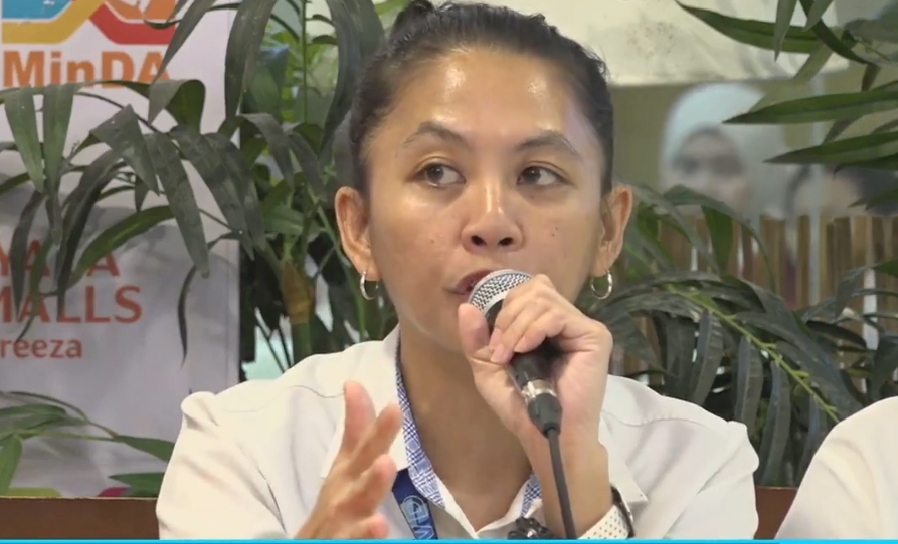
THE DAVAO City Water District (DCWD) is fast-tracking the installation of inline boosters to push water in 24 identified critical locations that would experience low pressure or no water during peak hours of water usage.
During the Habi at Kape media forum, Jovana Cresta Duhaylungsod, DCWD spokesperson, reported that the procurement of materials, which is crucial to the installation of booster pumps, is already ongoing.
“Hopefully we can finish procurement by November and start installation by December and finish around that time,” Duhaylungsod said.
As to the securing of barangay clearances and resolution, the water district is coordinating with the barangays where the boosters are to be installed for the finalization of locations.
The 24 locations are situated in 16 barangays, and of this number, the water district has conducted presentations to 10 barangays.
The district has allocated P15 million for the materials and other necessary items for the installation.
The identified critical areas include Shrine Hills to Langub; Kabacan-Katonggan, Barangay Bucana; Pag-ibig Heights & Villa Corazon, and SANAI Village, Campo Uno, Barangay Catalunan Grande; from Bolton Isla to St. John, Barangay Bucana; and Gaisano Relocation, Barangay Matina Pangi.
Also included are Monteritz Cistern to Victor’s Residences, Barangay Magtu-od; Hillside Subdivision and Malibu Residences, and Margarita Village & Dumanlas of Barangay Buhangin; Belisario Heights; Guadalupe Village & Fortune Homes of Barangay Angliongto; and Hilltop, Bajada, Barangay 19-B.
Jacinto Extension & Piapi Boulevard, of barangays 21-C, 22-C & 31-D were also included, along with Mintrade to South San Juan, Barangay Centro; Jerome, North San Juan & Southbay, Lapu-Lapu & Centro; Old Airport Road & Immediate Environs, Doña Salud, Airview Heights and immediate environs, and Socorro Village and nearby communities of Barangay Sasa; Vista Verde Subd. 1 & 2 and Empress Subd., Panacan Relocation, Sarmiento Village and Luzville Subd., Barangay Panacan, and Biao Tienda, Barangay Ula.
Duhaylungsod said these are the priority areas for installation of the inline booster pumps.
“During normal operations, adequate ang ilahang supply. However, if mo-reduce to critical levels ang atong supply from Apo Agua, while naa tay augmentation sa atong mga groundwater sources, these areas are expected to experience low pressure to no water during peak hours,” she said.
The district said these areas fall into two profiles; some are in elevated locations that depend on natural water pressure and would be the first to lose supply during a shortage.
Meanwhile, others are described as “geographically challenged,” not elevated, but located in clusters served by small pipelines that were never upgraded because of right-of-way constraints, even as the number of service connections they serve has grown.
“The booster pumps will help improve water supply availability in these areas even if we have constrictions in terms of mainline availability,” she said.
The water district said it has enough water to meet daily demand despite the looming El Niño.
Duhaylungsod said that a drop in supply from its bulk water provider to 150,000 cubic meters per day is the threshold at which some areas would begin to feel the effects.
DCWD said it currently has about 688,000 cubic meters of available water, of which 300,000 cubic meters comes from its surface water supplier, Aboitiz, and 388,000 cubic meters from groundwater sources.
Daily operations require only about 381,000 cubic meters to serve the district’s 280,000 service connections, leaving about 301,000 cubic meters in reserve.
The reserve is stored in groundwater sources, as DCWD prioritizes distribution of surface water supply.
DCWD said it is closely monitoring the supply from Aboitiz because surface water is more vulnerable to El Niño, being exposed to higher temperatures and evaporation.
Groundwater, which lies about 150 to 200 meters below the surface, is less affected, as the district has not yet seen any significant effect on its supply.
If supply falls to 150,000 cubic meters, some areas would experience low water pressure to no water, but the official said this would not require rationing orders or long service interruptions.
On whether it would pass on rising costs to consumers, DCWD said a scheduled rate adjustment was already in place before the global crisis, wars, and fuel price increases.
The first tranche, 12.5%, was implemented earlier this year, and a second tranche of 13% is scheduled for 2027.

A LAWMAKER here proposed an ordinance that would keep land acquired for socialized housing under collective community ownership, instead of giving urban poor families individual titles.
City Councilor Temujin B. Ocampo presented the “Davao City Urban Poor Collective Land Tenure Ordinance” in a privilege speech during the 21st City Council’s regular session on Tuesday, Nov. 3.
In his speech, Ocampo said individual titling leaves poor families open to distress sales, predatory developers, and forced displacement.
“Housing is not a mere commodity; it is a fundamental human right and the bedrock of human dignity,” Ocampo said.
He said families are forced to sell their titled lots because of poverty and often end up back in riverbanks, hazard-prone slopes, and new informal settlements.
Under the proposal, land would be acquired through a Collective Land Acquisition Program (CLAP), with Master Titles and Community Land Trusts (CLTs) put in place.
He said land bought for socialized housing would stay under collective ownership “in perpetuity.”
“By enacting this ordinance, we give our urban poor communities not just a roof over their heads, but enduring stability, legal security, and a permanent stake in Davao City’s shared prosperity,” Ocampo stressed.
Under the proposed measure, families would receive long-term Certificates of Occupancy and Usufruct Rights (COUR), which Ocampo said would protect their homes while keeping the land insulated from market speculation.
The ordinance also proposes a Davao City Collective Socialized Housing Trust Fund, to be financed by an initial seed allocation, development funds, and idle land tax collections.
The fund would pay for land acquisition, site development, and direct equity subsidies for senior citizens, persons with disabilities, and single parents.
The proposed measure was considered read on first reading and referred to the Committee on Housing, Rural, and Urban Development (Socialized Housing Projects).